

Clinics that switch from ad-hoc bookings to membership or subscription plans don't just add a new revenue stream. They transform how their practice performs. Research consistently shows that membership models drive higher revenue per patient, better retention and more predictable cash flow. Here's the data behind the 22% revenue boost and how UK aesthetics clinics can capture it.
The 22% revenue uplift: what the numbers show
Studies of medspas and aesthetics clinics that have adopted membership programmes report revenue increases of 20–30% per patient. In 2024, med spas saw a 24% increase in membership sales year on year, with the best-performing practices generating 30–50% of total revenue from memberships alone. For UK aesthetics clinics, a well-designed subscription model typically delivers around 22% higher revenue per patient compared to pay-as-you-go, driven by more frequent visits, higher spend per visit and better retention.
Members visit more often and spend more
The core driver isn't just the monthly fee. It's behaviour change. Patients on membership plans increase their treatment frequency significantly. Neurotoxin patients, for example, go from an average of 1.7–1.8 visits per year to over 3 visits per year when they're on a subscription. Members also spend 35% more per visit than non-members and visit 2.9 times more often. That combination (more visits, higher spend) explains the revenue uplift. One US study found annual patient spending increased by roughly £950 per year when clinics introduced memberships.
Why memberships change patient behaviour
Around 73% of aesthetics patients don't follow recommended treatment intervals. Many wait 7 months between anti-wrinkle sessions instead of the recommended 3–4 months. Cost is the main barrier: 68% of patients cite affordability as the reason they delay. Membership plans solve that by spreading the cost. Monthly payments of £25–40 feel manageable; a £400 annual package paid upfront doesn't. When the financial barrier drops, compliance improves, and revenue follows.
Subscriptions also create commitment. A patient who has signed a 12-month plan and set up recurring card payments is far more likely to book their next session than one who paid once and might "get round to it." That predictability (for the patient and the clinic) is what turns occasional visitors into regular members.
Treatment categories that benefit most
Anti-wrinkle subscriptions (3–4 sessions per year) are the most common and perform strongly. Clinics report 31% higher Botox sales and 43% higher filler sales after introducing membership programmes. Skin booster combos, peel programmes and tiered plans with perks (priority booking, discounts on add-ons) also convert well. The pattern is consistent: treatments that benefit from regular, spaced intervals (and where patients often under-treat) see the biggest gains when offered as a plan.
How to capture the 22% uplift
Price your plans so the effective cost per treatment is 10–15% lower than pay-as-you-go. That discount is enough to incentivise commitment without eroding margin. Use 12-month contracts with monthly recurring card payments. Make sign-up frictionless: digital agreements, online payment, no paperwork. Start with your most popular treatments and add tiers as you learn what converts.
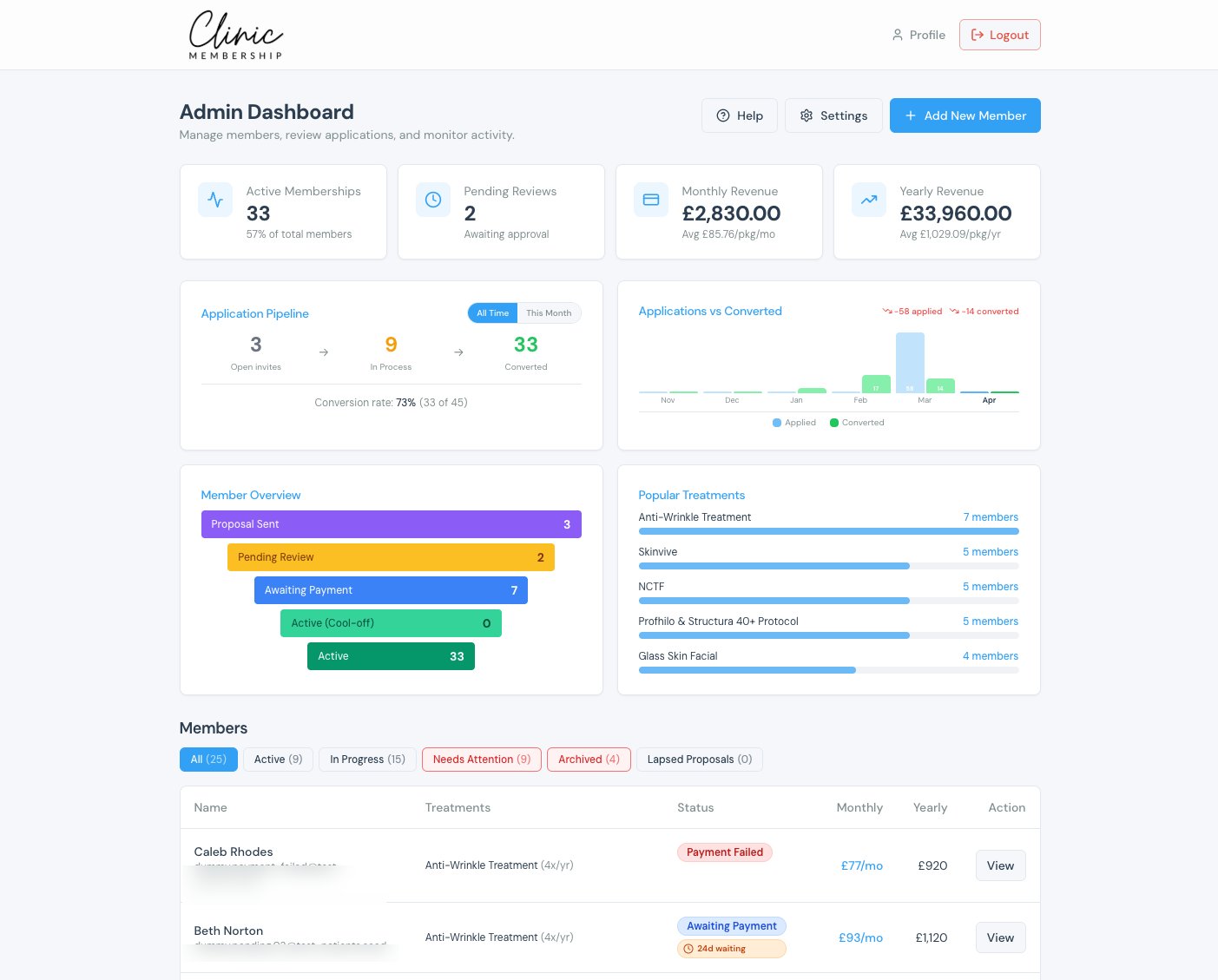
Software matters. Spreadsheets and manual invoicing don't scale. You need clinic membership software that can create bespoke packages, send digital agreements, collect recurring payments via Stripe and give you a clear view of members, renewals and revenue. The clinics seeing 22%+ uplifts are the ones that make it easy for patients to join, and easy for staff to manage.
The bottom line
Membership models aren't a nice-to-have. They're a revenue lever. The data is clear: clinics with well-designed subscription programmes see around 22% higher revenue per patient, better retention and more predictable cash flow. For UK aesthetics clinics, the question isn't whether to offer memberships. It's how quickly you can launch them. Pair this with loyalty features that keep members engaged and a clear subscription model.