

Every aesthetics clinic owner knows the feeling. January is packed, everyone wants a fresh start. Then February slows. Summer dips further as patients head abroad. By October, you're wondering whether to cut hours or push another discount campaign.
This feast-or-famine cycle is the single biggest financial risk facing UK aesthetic clinics in 2026. But it doesn't have to be this way.
Recurring revenue (the kind generated by membership and subscription models) is how the most resilient clinics are smoothing out seasonal volatility and building businesses that grow steadily, month after month.
The seasonal problem in UK aesthetics
The UK aesthetics market is now worth an estimated £3.6 billion, but most of that revenue arrives unevenly. Industry data shows that pay-per-treatment clinics typically experience revenue swings of 30–40% between their strongest and weakest months.
For a solo practitioner or small clinic, that kind of volatility makes it nearly impossible to plan staffing, invest in new equipment, or even cover fixed costs like rent, insurance, and product inventory during quiet periods.
The traditional response (discounting to fill slots) only makes the problem worse. It trains patients to wait for offers, erodes your margins, and devalues the expertise you've worked years to build.
How membership models create predictable income
A clinic membership plan works differently. Instead of charging patients per visit, you offer a monthly or annual subscription that includes a bundle of treatments, priority booking, and member-only pricing on add-ons.
Here's what that looks like in practice:
Example: A skin clinic membership at £79 per month
The plan includes one facial treatment per month, 10% off injectables, priority booking, and a quarterly skin health review. The patient pays by card regardless of whether they book this month or not.
The result for the clinic is transformative. Even if a member doesn't visit in August, the revenue still arrives. And the data backs this up, research shows that patients on membership plans visit on average 2.9 times per year, spend 35% more overall, and are 2.5 times more likely to rebook after their initial plan ends compared to pay-per-treatment patients.
Five ways recurring revenue protects your clinic
1. Cash flow stability through quiet months
The most obvious benefit is the one that matters most: money in the bank when footfall drops. If 40 members are paying £79 per month, that's £3,160 arriving on the first of every month regardless of season, weather, or school holidays. That covers a significant portion of fixed costs before you even open the door.
2. Better financial planning and investment
With predictable monthly revenue, you can forecast accurately three, six, or twelve months ahead. That means you can commit to training courses, invest in new technology, or hire additional staff with confidence rather than crossing your fingers.
3. Reduced dependence on discounting
When your baseline costs are covered by membership income, you don't need to slash prices to fill slots during quiet periods. You can reserve those open appointments for new patient consultations or higher-value treatments, which actually grows your revenue instead of shrinking your margins.
4. Stronger patient relationships and retention
Membership creates a commitment loop. Members feel invested in your clinic, visit more regularly, and are more likely to follow recommended treatment plans. This leads to better clinical outcomes, which leads to better reviews and referrals. It's a virtuous cycle that advertising alone can't replicate.
5. Higher practice valuation
If you ever plan to sell your clinic or bring in a partner, recurring revenue is the metric buyers care about most. A clinic generating £5,000 per month in membership subscriptions is worth considerably more than one generating the same amount from unpredictable walk-in treatments.
What you need to make it work
Running a membership programme effectively requires more than a spreadsheet and a payment form. You need to manage sign-ups, track which treatments each member has used, handle renewals and cancellations, collect payments reliably, and give members a way to manage their own account.
This is where dedicated clinic membership software becomes essential. Purpose-built platforms handle the operational complexity (automated billing, member portals, digital agreements, usage tracking) so you can focus on delivering treatments rather than chasing payments or updating spreadsheets.
When evaluating membership software, look for:
- UK-specific features: GBP pricing, Stripe integration for UK card payments, and compliance with UK data protection requirements
- Flexible plan builder: The ability to create different membership tiers with varying treatment bundles and pricing
- Member self-service: A portal where patients can view their plan, check remaining treatments, and manage their details
- Automated billing: Recurring payment collection without manual intervention
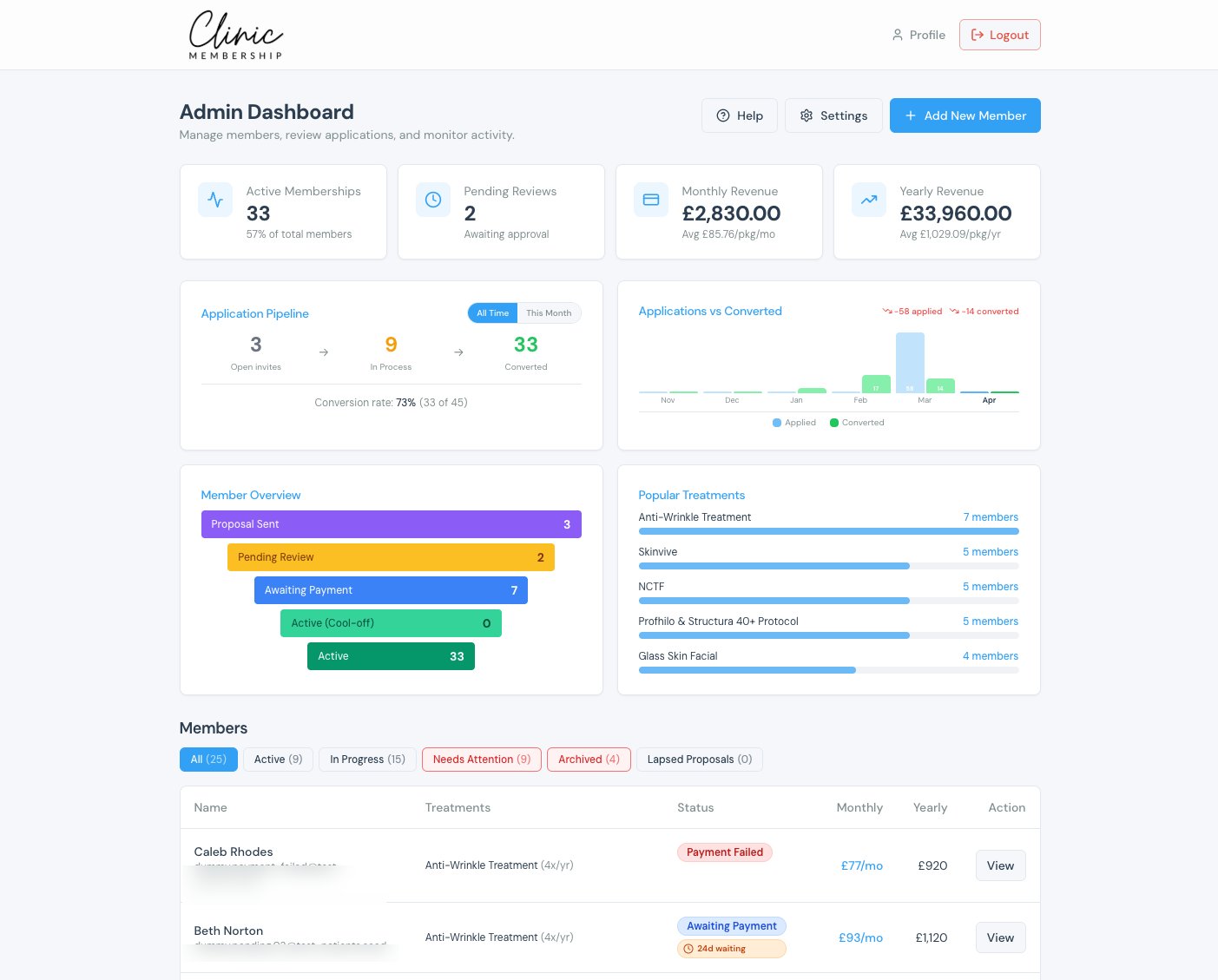
- Analytics: Clear visibility into member numbers, churn rate, and revenue trends
Getting started: a practical first step
You don't need to overhaul your entire business model overnight. Many clinics start with a single membership tier (often a skin maintenance plan) and offer it to their most loyal existing patients first.
A simple approach:
- Design one plan around your most popular repeat treatment (e.g., monthly facial, quarterly skin booster, or maintenance injectable package)
- Price it so the patient gets genuine value compared to paying per session, but you maintain healthy margins
- Launch to existing patients first. They already trust you and are the easiest to convert
- Use membership software to handle sign-ups, billing, and tracking from day one (starting on spreadsheets creates problems you'll have to unpick later)
- Grow gradually: add new tiers and promote to new patients once you've refined the model
The bottom line
Seasonal revenue dips aren't inevitable. They're a symptom of a business model that relies entirely on one-off transactions. UK aesthetic clinics that build a membership base are creating a financial foundation that sustains them through quiet months, funds growth during busy ones, and ultimately builds a more valuable practice.
The clinics that start building recurring revenue now will be the ones best positioned to thrive as the UK aesthetics market continues to grow and regulation tightens in 2026 and beyond.