

Two pieces of software sit on a UK clinic owner's screen every day. Both are billed monthly. Both are pitched as "the operating system for your clinic". Both are used by the same front-of-house team. They are not the same product - and the difference matters as soon as you start thinking honestly about membership software vs scheduling software at a UK clinic.
The UK aesthetics market sits at around £3.6B and is growing 8-9% a year (UCL / PolicyBee, 2026), and more than 70% of UK aesthetic clinics now run subscription models in some form (Consulting Room / Anti Wrinkle Clinic, 2026). The category is real. The confusion about which software does which job is also real. Here is how to tell a booking calendar apart from a true membership engine.
What a booking calendar is built to do
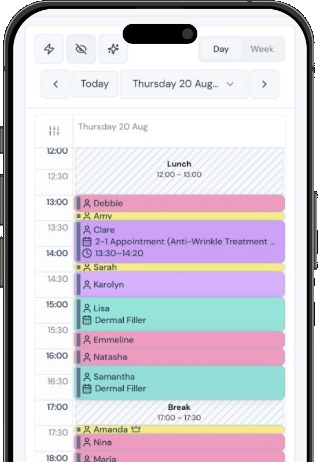
The diary is the product. A booking calendar's job is slot optimisation - getting the right patient into the right room with the right practitioner at the right time. The latest generation of scheduling software has moved well beyond the wall planner. It now includes AI redistribution of flexible appointments between team members, treatment rooms managed independently of staff calendars, and real-time slot capture for bookings that would otherwise drop off the diary.
That is genuinely useful. A clinic filling 95% of its slots is in a very different financial place from one filling 70%. But every feature in that list points at the same thing: the slot.
What scheduling software alone does not solve is what happens around the slot. Clinics on disconnected operational tech see roughly 45% more no-shows than clinics on unified platforms (ProspyrMed, 2026; InDesk corroboration). When the relationship sits outside the calendar - patient plan, agreed visit cadence, recurring payment, drift signals - the relationship does not get protected. The calendar fills the next slot. It does not ask whether the patient should have been in last week. For the no-show angle in depth, the no-show stat lineage covers it.
What a membership engine is built to do
The recurring contract is the product. A membership engine's job is not to fill the slot - it is to structure the relationship that produces the slot in the first place.
That looks different in practice. A real membership engine runs a few jobs the booking calendar does not:
- Structures the visit cadence - every six weeks, every three months, whatever the protocol calls for. The pattern is set when the plan is signed, not negotiated week by week.
- Runs the recurring-revenue ledger per member - each member has a payment record, a plan record, and a months-paid record, all on one row.
- Flags drift signals on the member record - late payment, missed cadence, declining visit count - before churn shows up in the diary.
- Treats the bespoke treatment package as the unit of value - not the individual appointment.
The gap between an average UK aesthetic clinic and a top-performing one is well documented across the industry literature. Top performers keep a meaningfully larger share of their patients coming back, year after year - and the rest see a meaningful slice walk out the door after their first or second visit and never return. Between those two outcomes sits one structural choice: whether retention shows up as an operational metric on somebody's screen each week, or as a hope that the diary will somehow refill itself.
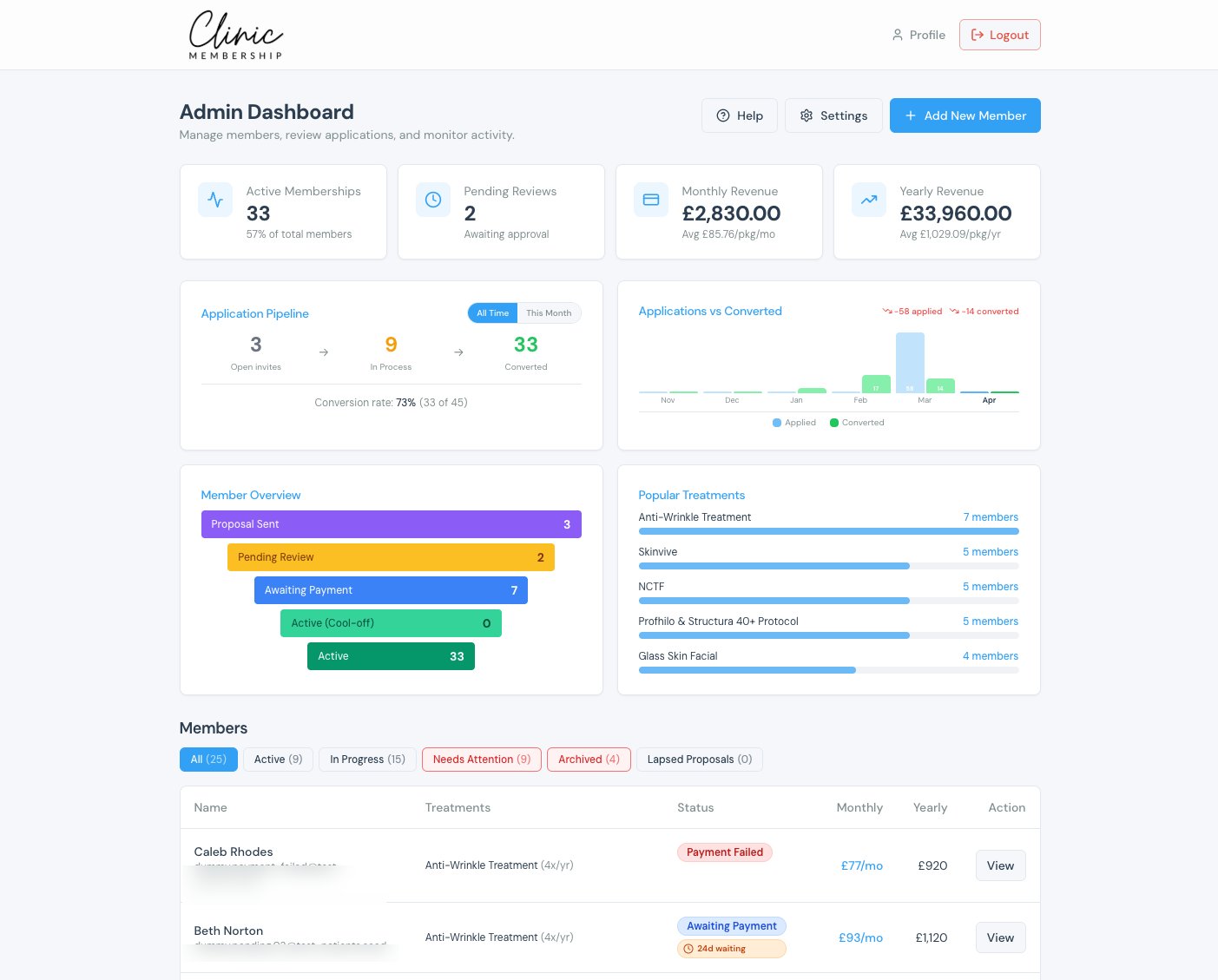
A membership engine is what makes retention operational. Patient X is on the £85/month skin plan, has paid eleven of twelve months, last attended six weeks ago, is due next week, is flagged amber on the drift signal. That whole row of facts lives on a membership-first clinic dashboard, not on the booking calendar. The booking calendar only knows whether next Wednesday at 10:30am is free.
Why "both" doesn't mean "either"
Most UK clinics will run both kinds of software side by side. The booking calendar fills the slot. The membership engine compounds the relationship. The mistake is treating one as a substitute for the other.
A booking calendar with a "memberships" tab bolted onto checkout is still a booking calendar with a tab. A membership engine that cannot see your diary is still a membership engine. The structural test is what each product is built around. Does the data model centre on the appointment, or on the member? Does the daily dashboard show today's diary first, or this month's recurring revenue first? Does churn live as a flag on a patient record, or nowhere at all?
The clue is usually in the screens your team opens first. If the morning ritual is the day's schedule, your software's centre of gravity is the diary. If the morning ritual is a list of members due that week, new sign-ups overnight, and amber drift flags to action, the centre of gravity is the relationship. Two different products, two different daily habits, two different sets of numbers reported at the end of the month.
The relationship economics are the reason the distinction matters. A 5% lift in retention can drive a 25-95% lift in profit (Bain & Company / Harvard Business Review). Acquiring a new patient costs 5-25× more than keeping an existing one (Bain & Company). Those are not small numbers, and they do not get unlocked by tightening the diary further. They get unlocked by the software that runs the recurring contract.
That is the reason the membership-first software category exists at all. A clinic built around relationships rather than slots needs a product whose data model agrees.
A four-question software audit
If you want to know which kind of software your clinic is actually running, four questions will tell you.
- Is the unit of value the slot, or the relationship? If your team's daily view is today's diary, you are running a calendar. If their daily view is this month's active members and recurring revenue, you are running an engine.
- Can your team see the recurring-revenue ledger per member, or only the appointment list? A real membership engine puts plan, payments and cadence on one row per member.
- Is the bespoke treatment package built into the plan, or bolted onto checkout? Aesthetics consultations produce personalised packages, not flat tiers. The plan should reflect that natively.
- Is there a drift-signal flag on the member record, or only a payment-status field? "Failed payment" is not the same warning as "this member is about to leave".
If the answers point at the calendar, you are running a booking calendar. If they point at the relationship, you are running a membership engine. Most UK clinics will benefit from running one of each - but only once they know which is which.
If your clinic is structured around relationships rather than slots, your software should reflect that. See how Clinic Membership compares at clinicmembership.co.uk/pricing.