

Polynucleotides have a retention shape that is hard to read. UK clinics train on a 3-session induction, 2-4 weeks apart (Harley Academy 2026), then a maintenance tail every 3-6 months (Harley Academy; Interface Aesthetics; Dr Haus) or 6-9 months (Courtyard Clinic IW; Save Face 2026; Aesthetic Health UK). Both are inside published UK norms - your member doesn't know that. They booked a course, came back twice, missed the third, and the calendar is quiet.
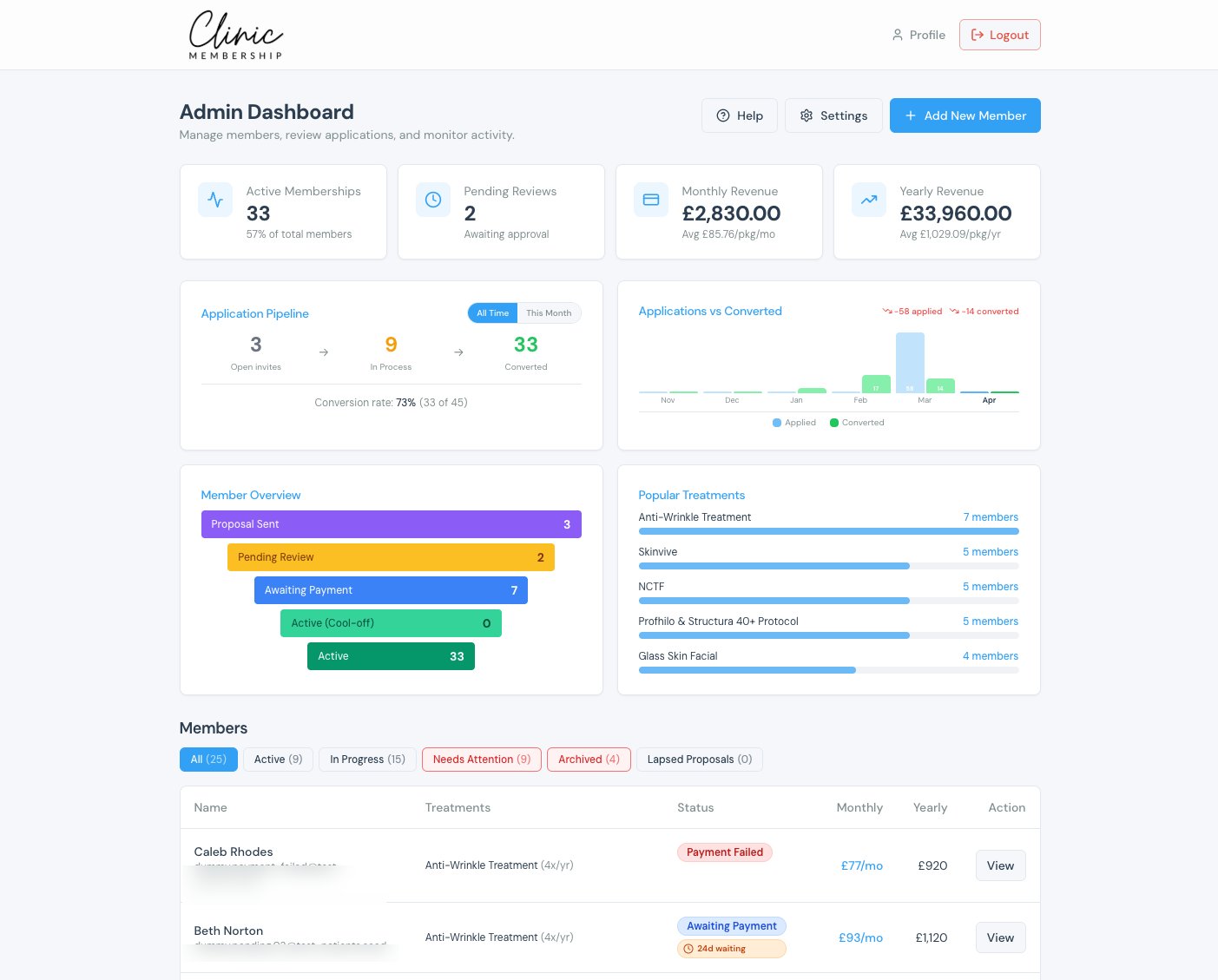
This is the re-engagement playbook: five numbered steps, one specific text you can send today, and the structural answer your clinic gets when a Clinic Membership carries the maintenance reminder for you.
Why the maintenance window is where members drift
The course has two phases and the cliff between them is steep. The induction is a tight, predictable cadence: three sessions every 2-4 weeks, results visible at the 3-4 week mark. The clinic books them; the member sees what the protocol does.
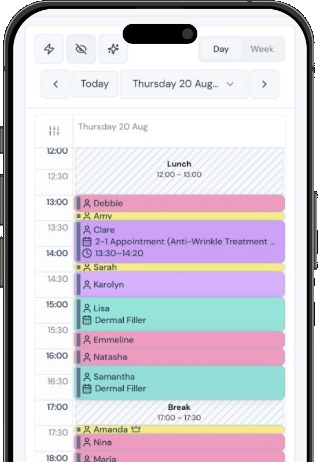
The maintenance tail is the opposite. The interval is long enough that the appointment system stops surfacing the member, and long enough that the memory of why to come back fades. A member who finished induction in February on a 6-month interval is due back in August - and an appointment-led CRM will not flag them in May, June or July.
Then add the regenerative framing. Save Face 2026 is explicit: "the era of over-filling is behind us, and the focus now is on regeneration before correction". Polynucleotides reduce hyaluronic acid degradation by around 40% (Save Face 2026) - the long-arc benefit pattern that makes the protocol valuable and the maintenance cadence invisible. The member is not dissatisfied. They are quietly drifting.
Step 1 - Flag the maintenance-window drift in your CRM
Open your appointments database and pull every member who completed at least two of three induction sessions in the last 6-9 months and has no booked next appointment. That is your drifting cohort.
Most UK clinic software will not surface this list natively. If yours is appointment-led, the closest report is usually "no future appointment + last session date in the last X months", filtered to the polynucleotide treatment code. Pick a house maintenance standard (3-6 or 6-9 months) and apply it consistently. What you have built is a maintenance-tail watchlist. Run it weekly.
Step 2 - Send the one text
The single highest-leverage retention action a UK clinic can take with a drifting course member is a one-line text from the clinical lead - not from the front desk, not from a marketing automation. The wording matters less than the source. The member needs to feel the clinical answer to "should I come back?" has been pre-resolved.
A working UK script - adapt to your tone:
Hi [first name] - it's [clinical lead name] at [clinic]. You finished your 3-session polynucleotide induction in [month]. Your maintenance window opens [month-month]. Want me to book you in or text you again in [3/4] weeks?
Three reasons it works: it is signed by the clinician, not the brand; it offers two no-pressure options (book or wait); and it names the maintenance window so the protocol is reactivated in the member's mind before they have to ask. Send it from a number the clinic owns - not a third-party SMS gateway that strips the clinic name from the sender ID.
Step 3 - Offer the structural answer, not the one-off
This is the step most clinics miss. When the member texts back, the temptation is to book the maintenance session and move on. Resist.
The clinical reality of polynucleotides is that the protocol is a multi-year arc - three induction sessions, then a maintenance contact every 3-6 or 6-9 months. Over 24 months, an active patient will have 5-7 clinical contacts with the clinic. At the UK band of GBP 200-GBP 900 per session that is 5-7 separate purchase decisions, each one a chance to drift.
The structural answer is to convert the next session into a Clinic Membership. Last Friday's post on turning a single consultation into a 12-month plan walks through the same logic from the consultation side - the maintenance text is the same conversation, six months later. The member spreads the GBP 600-GBP 2,700 induction plus the maintenance tail across monthly billing; the clinic books the maintenance reminders into the membership calendar; the member's purchase decision shrinks from 5-7 to one.
Subscribed patients visit clinics 2.9x per year on average, against 1x for ad-hoc patients (ProspyrMed 2026). The polynucleotide protocol is already a 2.5-3.5x per year cadence by clinical design. The membership matches the protocol; the ad-hoc model fights it. (Illustrative only - assumes flat basket size; we do not multiply ratios into a GBP-per-year claim.)
Step 4 - Surface the next session's clinical reason
Whether the member converts to a Clinic Membership or stays ad-hoc, the next-session booking needs a clinical reason attached. Without one, you are asking the member to book because of the calendar. Calendars do not retain anyone.
The clinical progress note from session three is your most useful artefact. Pull it, find the one observation the clinician made - texture change, line softening, a specific area still building - and attach it to the booking confirmation. "Booking your maintenance for [month] - last session note flagged the [forehead area] still building, so we'll re-assess at the appointment."
This is not marketing. It is the same clinical reasoning you used to recommend the protocol in the first place, with the "regeneration before correction" framing (Save Face 2026) as the through-line. The booking now reads as continuity of care.
Step 5 - Log the outcome and re-set the cadence
Whatever the response - booked, deferred, lapsed, churned - log it against the membership record, for three reasons.
First, the next maintenance window needs a known starting date: if the member books, the next contact is 3-6 or 6-9 months from this session, not from the original induction.
Second, the proportion who re-engage on the one-text outreach is the most useful single metric for whether your retention infrastructure is working. A 5% increase in retention is worth a 25-95% profit boost (Bain & Company / Harvard Business Review); acquiring a new patient costs 5-25x more than retaining one (Bain). The one-text outreach is the cheapest retention action a clinic can take - track it.
Third, the pattern will tell you which members are course-completers and which are induction-only. The induction-only cohort is the most expensive customer your clinic has, and will not come back without the membership economics carrying the maintenance reminder. (Our UK onboarding playbook covers the 90-day retention-cliff context.)
What a Clinic Membership fixes
A polynucleotide course is a membership-shaped problem: multi-year, multi-session, with a long-arc benefit profile that does not surface in an appointment-led CRM. The maintenance reminder needs to be carried by something other than the member's memory.
A Clinic Membership does three things. It smooths the GBP 600-GBP 2,700 induction and maintenance tail into monthly billing via automated infrastructure (industry framing: ~34% revenue uplift plus 10-15% cost reduction, per Convesio / PayAtlas - cited as context, not a derivative claim). It bakes the maintenance window into the cadence. And it changes what the clinic sells - from individual polynucleotide sessions to a regenerative protocol over a 12- or 24-month term.
What to do this week
Three actions.
- Pull the drifting cohort. Filter your CRM for members who completed at least two of three polynucleotide induction sessions in the last 6-9 months and have no booked next appointment.
- Send the one text to the top five. Focus on those whose induction finished most recently and whose maintenance window is open. Track replies.
- Set up a recurring weekly review. The drifting cohort is a maintenance discipline, not a campaign. Run the report every Tuesday morning. Send the one text every Tuesday afternoon.
For the broader retention frame, our five UK-tested tips for keeping clinic patients in 2026 is the companion read.
Build the maintenance window into the membership - clinicmembership.co.uk/pricing.