
Most UK aesthetic clinic owners can tell you their monthly revenue to the pound. They can name their best-selling treatment. They probably know their average basket.
Ask them their rebooking rate and the room goes quiet.
That is not a small gap. UK aesthetics is a GBP 3.6 billion market growing 8-9% a year (UCL / PolicyBee, 2026), and the difference between a clinic that compounds and a clinic that grinds usually shows up in three numbers most owners are not looking at. None of them sit on the front page of the booking software. All of them quietly run the business.
This is a Thursday data piece. Three numbers, what good looks like, and what a Clinic Membership setup changes about each.
Number 1 - Annual patient-base attrition
The number: 30-40% (EQUALS3, 2026).
That is not a churn rate on a subscription. It is the share of a UK aesthetic clinic's patient base that stops coming back over the course of a year. Roughly one in three names on the patient list this April will not be on the list next April.
It pairs with a long-standing benchmark: about 65% of first-time patients return, 35% never come back (American Med Spa Association). The first figure is the long fade; the second is the short cliff. Together they describe the same underlying shape - the patient list is leaky, both fast (after visit one) and slow (across the year).
If a clinic is acquiring 40 new patients a month and quietly losing 30, the headcount looks busy, the diary looks healthy, and the business is treading water. Acquisition is doing the work that retention should be doing - and it costs five to twenty-five times more to acquire a patient than to retain one (Bain & Company industry standard).
Most of the leak also starts earlier than clinic owners think. Attrition starts in week three, not month three - which is why the onboarding window is the first lever to pull.
Number 2 - Rebooking rate
The number: 65%+ target. Industry average is 40-50%. Clinics over 50% see "improved revenue stability and higher patient satisfaction" (EQUALS3 + Cliniq Apps, 2026).
The rebooking rate is the share of patients who book their next visit within seven days of the last one - usually before they have walked out of the building. It is the single most actionable number on this list, because every appointment is a chance to move the figure.
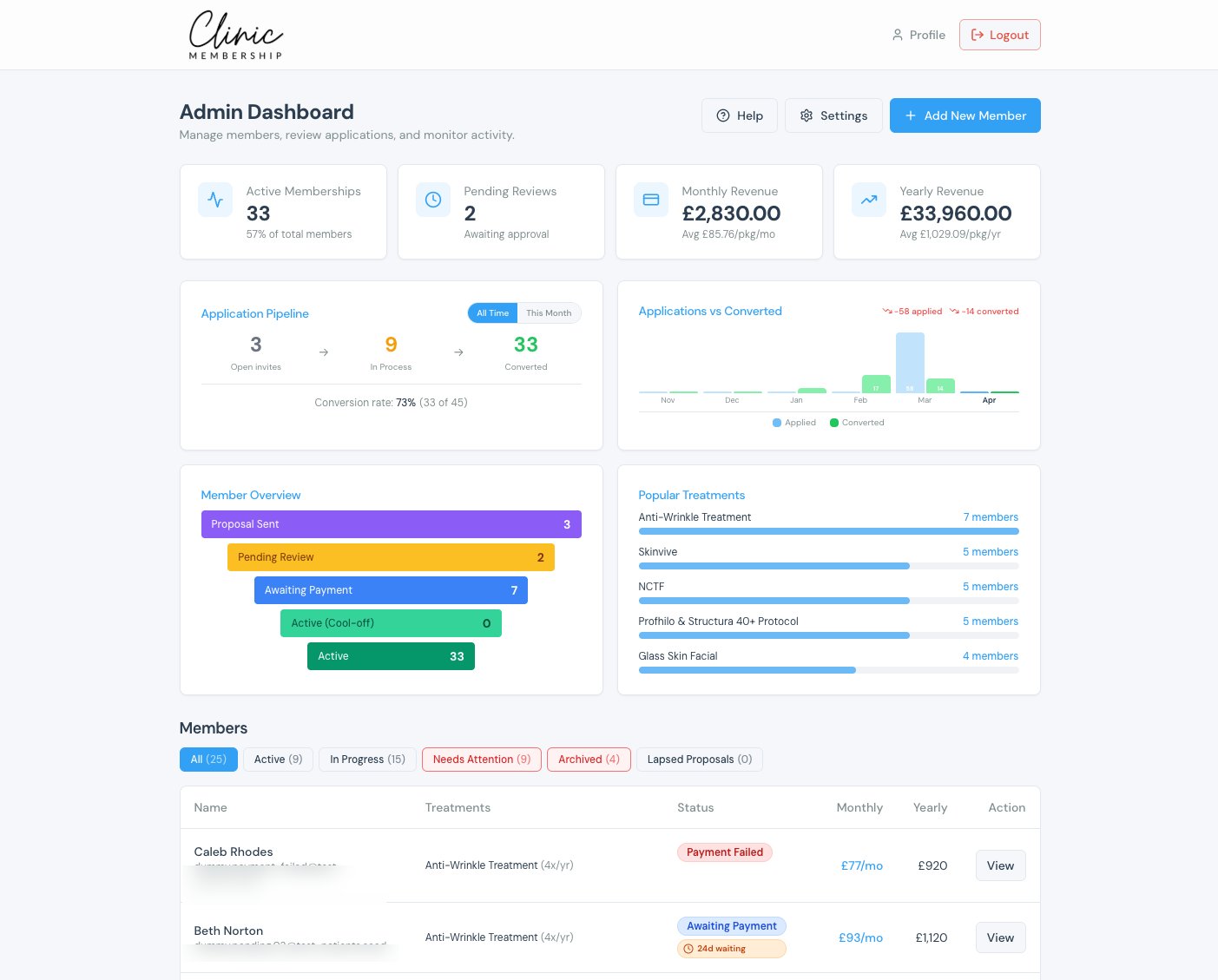
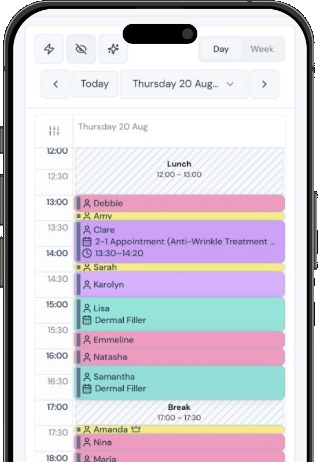
This is the one number most clinic software still hides - yesterday's blog covered the 8am dashboard view that puts it on screen. The booking diary shows what is on the calendar; it does not surface what should be on the calendar but is not. So clinic owners measure visits, not the gap between a visit ending and the next one being booked. The gap is where retention quietly leaks.
A clinic running at 45% rebooking is a clinic where more than half of patients leave the room without a next appointment in the system. Those patients re-enter the acquisition pipeline by default - at acquisition prices.
A clinic at 65%+ has built the rebooking moment into the appointment itself. Aftercare conversation, next-visit nudge, payment authority already in the system. None of this requires new software in itself. It requires knowing the number well enough to coach to it.
Number 3 - Quarterly patient churn rate
The number: under 10% per quarter (EQUALS3, 2026).
A patient is "active" if they have visited within the last 90 days. Churn is the share who drop out of that active list each quarter. Under 10% is the published benchmark - and it is only measurable if your dashboard tracks it.
This is the number most aesthetic clinic owners will never think about, because aesthetics has historically been measured in visits, not in active accounts. The fitness industry made this shift a decade ago - gyms stopped measuring sweat sessions and started measuring active members. The aesthetic clinics that compound in 2026 are quietly making the same move.
Why under 10% matters: members visit 2.9 times a year on average, versus around once for ad-hoc patients (ProspyrMed, 2026). That ratio compresses sharply if the active list churns at 15-20% per quarter. The recurring economics only work if patients stay active long enough for the membership to do its job.
Quarterly churn is also what makes January feel quiet - or not. Sessions are an outcome. Active patients are the input.
What these three numbers have in common
Most UK clinic software was built around the booking. The booking is a transaction. These three numbers are not.
- Annual attrition is a yearly shape.
- Rebooking rate is a moment-of-visit shape.
- Quarterly churn is a 90-day-active-list shape.
Three different time horizons, three different views of the same underlying question: are patients staying with the clinic, or quietly drifting away?
A 5% increase in customer retention can lift profits by 25-95% (Bain & Company / Harvard Business Review). Small movements in retention compound because every retained patient is a fixed-cost-already-paid relationship.
The prize is also concrete. UK aesthetic patient lifetime value sits in the GBP 4,000-GBP 6,000 range over multi-year relationships (Maven FP / BoutiqueSEO UK / Sprypt, 2026 - Sprypt's data is US-leaning, so treat as the upper bound). A clinic with 200 patients on the active list is sitting on roughly GBP 800,000-GBP 1.2m of future revenue - most of which depends on whether those patients stay active.
Practical follow-up: five UK-tested ways to keep more of the patients you already have. The three numbers are the leading indicators.
What a Clinic Membership setup changes about each
This is not "use software to fix it". It is "membership structure makes the numbers measurable, then the numbers make the structure better".
Annual attrition: A membership turns the patient base into a list of active accounts with month-on-month status. Drift-signal flags built into onboarding cadence make an at-risk patient visible in week three, not month nine. The 30-40% figure becomes a number on screen - and clinics that know the number can move it.
Rebooking rate: A monthly billing cycle creates a natural cadence question - "you have your next session credit available, should we get it in the diary now?" Recall windows tied to the membership tier trigger automatically. Members align to recommended intervals; ad-hoc patients align to whenever they next remember. The rebooking rate climbs almost mechanically once a membership scaffolds the next visit into the conversation.
Quarterly churn: Membership status is binary - active or lapsed. A deferred-revenue ledger surfaces the at-risk member before they cancel, not after. A clinic owner can see at a glance how many active members started the quarter, how many ended it, and what the churn shape looks like. It is the number most aesthetic clinics still cannot pull.
The membership does not replace clinical judgement. It does not replace the conversation in the room. It just makes the three retention numbers visible - and visible numbers move.
What to do this week
- Pull the rebooking rate for the last 30 days. If the booking software does not show it, count manually for one week.
- Pick one number to focus on for the next quarter - not all three. Most clinics should start with the rebooking rate.
- Look at the 90-day active list once. Everyone outside it is in some stage of drift.
Three numbers, one morning, no new software required. Knowing the numbers changes what the clinic looks at, which changes what the clinic does, which changes the numbers.