

Every UK aesthetic clinic owner we speak to asks the same question in the first five minutes: "what should my monthly revenue actually look like?"
It's the right question, and for a long time in the UK, there was no clean answer. US benchmarks don't translate. Big-platform "average revenue" numbers lump spas, salons and clinics together. Nurse-led clinics, multi-practitioner clinics and flagship medical spas all get averaged into the same soup.
This year, that's changed. Between the Skytale Group 2026 Aesthetics Industry Report, ProspyrMed's rebooking research, Consulting Room's UK adoption data, and our own search data from clinic owners hunting for clinic growth benchmarks UK, there's finally enough signal to draw a proper picture of what a healthy UK aesthetic clinic looks like in 2026.
Here's what the numbers say, and, more importantly, what the clinics at the top of each benchmark are doing that the median ones aren't.
The four UK aesthetic clinic benchmarks that matter
Forget the vanity numbers. These are the four benchmarks that actually predict clinic growth. The UK aesthetics market is on track to grow from £3.6B to £5.4B by 2026, and non-surgical treatments are up 14% year on year (industry reports). The tide is rising. The question is whether your clinic is rising with it.
1. Monthly revenue
The median UK aesthetic clinic is doing £18k–£35k a month in 2026. Nurse-led single-room clinics land at the lower end. Multi-practitioner clinics with two to four injectors cluster around £45k–£80k. The top decile, clinics with strong retention, structured protocols and recurring revenue programmes, are regularly clearing £100k+ per month.
The spread between the median and the top decile is bigger than most owners realise. And almost none of that gap is explained by location or pricing. It's explained by the next three benchmarks. (For the underlying month-by-month figures, see our deeper dive on average clinic revenue in the UK in 2026.)
2. Visit frequency per patient per year
The single most predictive benchmark for clinic revenue isn't price per treatment. It's visit frequency.
ProspyrMed's 2026 data shows that subscribed patients visit 2.9× per year on average. Ad-hoc patients visit between 1.1 and 1.4× per year. That 1.5–1.8× difference in frequency is worth more than any price increase. A £300 treatment seen 2.9× is £870 per patient per year. The same treatment seen 1.2× is £360.
If your median patient is visiting less than 1.8× a year, that's your single biggest revenue lever. Not pricing. Not marketing. Frequency.
3. Retention rate (12-month)
The American Med Spa Association reports a 65% repeat rate across the industry, meaning 35% of first-time patients never return. The UK mirrors this closely. Top-performing UK clinics run at 60–70% 12-month retention.
A 5% retention improvement is worth a 25–95% profit boost (CareCredit / ProspyrMed), because acquiring a new patient costs five to twenty-five times more than retaining one. Retention isn't a soft metric. It's the compounding lever that separates the median clinic from the top.
The warning signs of a patient about to leave are predictable: fewer visits, unused benefits, late payments, declining engagement. Most UK clinics have no system to catch any of them.
4. Recurring revenue share
This is the benchmark almost nobody tracks, and it's the one that separates the top decile most cleanly.
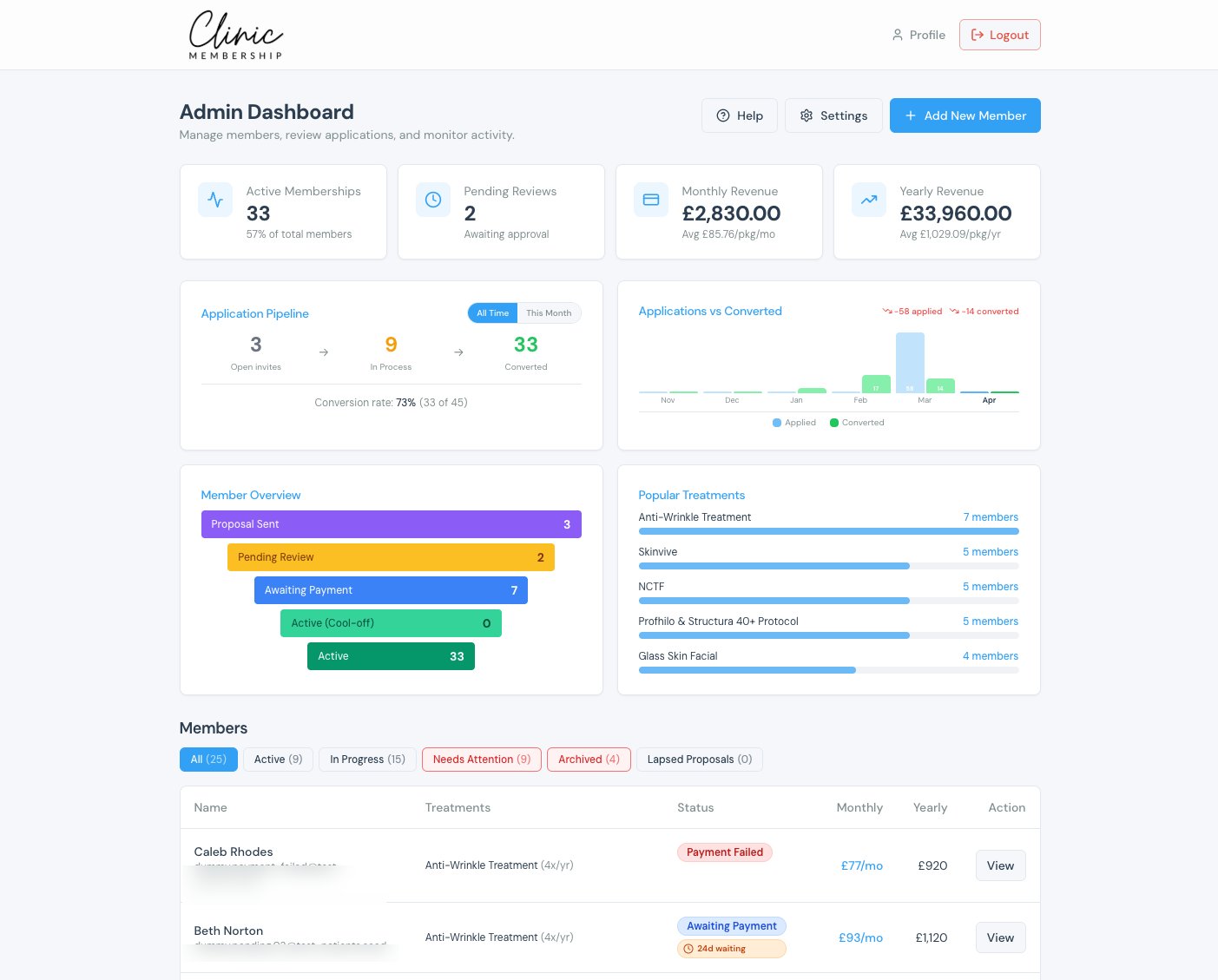
By 2026, 70%+ of UK aesthetic clinics now offer membership-based payment models (Consulting Room, Anti Wrinkle Clinic). The Skytale Group 2026 Aesthetics Industry Report names memberships the #1 growth lever for the sector. But offering a programme and running a healthy one are two different things. Clinics with a well-designed membership programme see 22% higher patient spending and stronger lifetime value, and report recurring revenue between 25% and 45% of total monthly revenue.
If more than 25% of your monthly revenue is recurring, you've solved the three problems that kill most clinics: cashflow predictability in quiet months, patient retention gravity, and the frequency gap from benchmark #2. If it's under 10%, you're leaving the single biggest growth lever on the table.
What the top 10% actually do differently
We've looked at a lot of clinic data this year: our own, industry reports, and what we can see in search behaviour. The clinics at the top of each of these four benchmarks share three habits.
They bill recurring revenue on autopilot. Automated billing drives a roughly 34% revenue increase and a 10–15% cost reduction (Convesio / PayAtlas). Clinics still manually chasing failed cards or juggling three or four disconnected tools are losing close to 10% of revenue to the cracks.
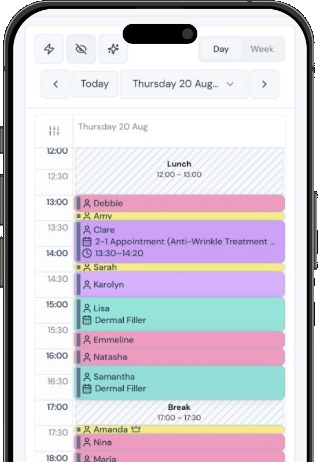
They design treatment around frequency, not price. Top clinics build protocols (polynucleotides, regenerative stacks, prejuvenation packages) that require four to eight visits a year. Membership billing turns those protocols into scheduling gravity. The patient doesn't have to remember to rebook; the programme does it for them. (If you're starting from scratch, our walkthrough on how to start a membership programme in a UK clinic is the simplest place to begin.)
They watch retention as a weekly KPI, not an annual one. The clinics clearing £100k+ monthly are looking at early-cancellation signals weekly. The ones at £18k–£35k are looking at their bank balance monthly and wondering where the shortfall came from.
Where to start if your numbers are below the median
If monthly revenue is under £18k, the lever is acquisition, but only after you've fixed retention. Acquiring new patients into a leaky bucket is the most expensive mistake in UK aesthetics.
If monthly revenue is between £18k and £35k, the lever is almost certainly recurring revenue. Moving from 0% recurring to 25% recurring is usually a two-to-three month project with the right software, and we've seen it outperform every marketing campaign on a like-for-like budget. See our pricing for plans from free. Why recurring revenue is the benchmark that matters most walks through the maths.
If monthly revenue is above £35k and the clinic still feels fragile, the lever is frequency. Look at your top 20% of patients. If they're visiting less than 2.5× a year, you don't have a sales problem. You have a scheduling gravity problem.
The top decile didn't get there by charging more. They got there by being the 70% of UK clinics that built recurring revenue properly, and then by being the 10% inside that 70% who designed it around frequency and retention, not around "adding a membership option" as an afterthought.