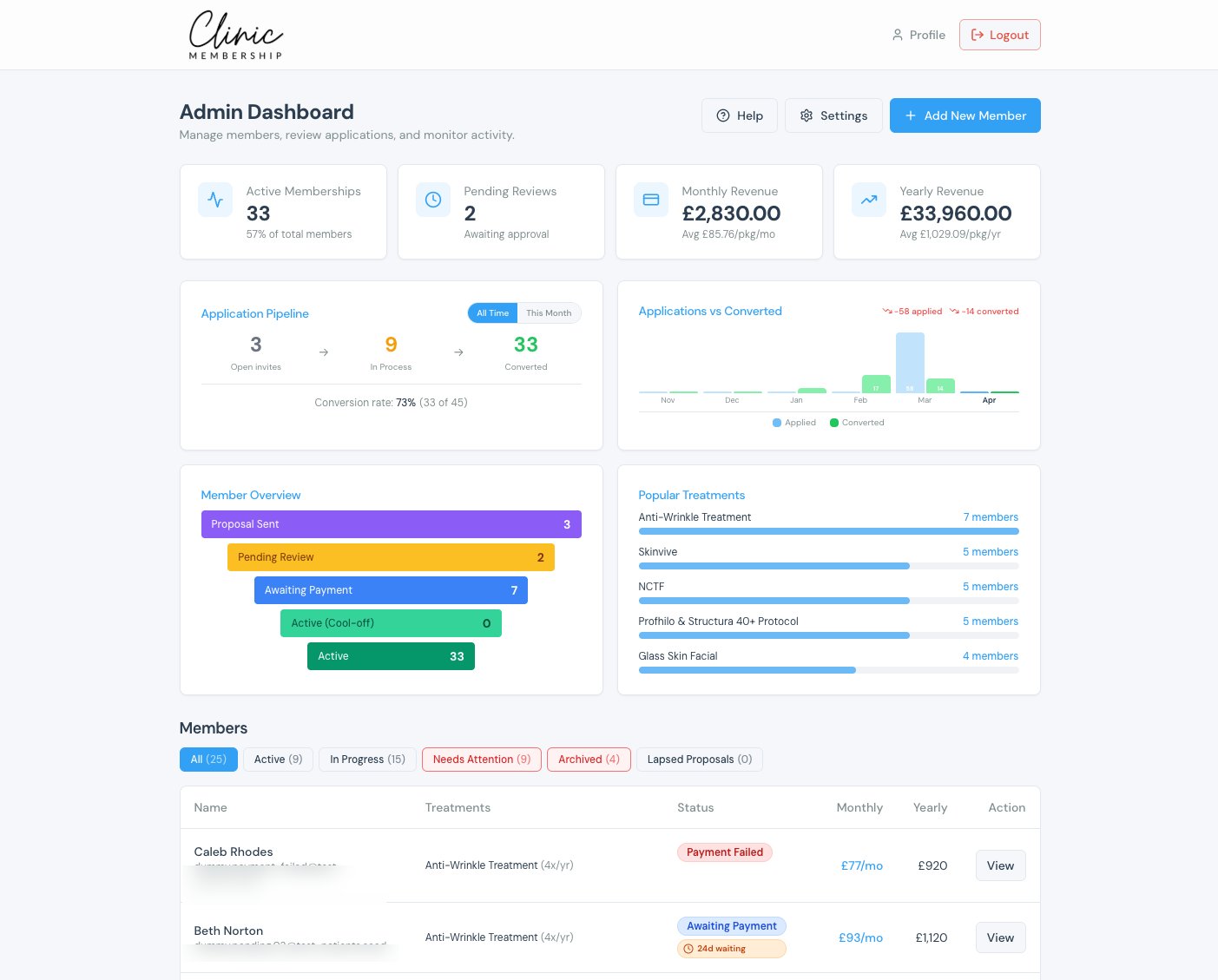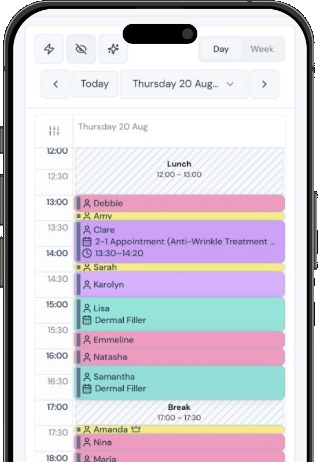


Every cancellation has a warning shot. Usually three or four of them. The trouble is that they're easy to miss when you're busy seeing patients, training the new aesthetician, and remembering to chase the lab on Tuesday's order.
Catching them early matters more than most clinic owners realise. A five percent lift in retention has been shown to boost profits by 25 to 95 percent (Bain & Company / Harvard Business Review). And it costs five to twenty-five times more to acquire a new patient than to keep an existing one (Bain & Company). The maths is brutal - and it sits in your favour every time you keep a member who was thinking about leaving.
Here are the five signs to watch for, what each one usually means, and what to do about it before the cancellation email lands.
1. Their visit rhythm breaks
The first thing that goes is the pattern. A member who used to book the next treatment as they walked out of reception now needs a reminder. Then two. Then a "let me check my calendar and come back to you" that never lands.
Subscribed patients on a structured plan visit roughly 2.9 times more often per year than ad-hoc patients (ProspyrMed 7 Retention Metrics, 2026). When that gap closes - when your member starts behaving like an ad-hoc patient again - you've got a problem. The membership has stopped feeling like a structured pathway and started feeling like a recurring charge.
What to do this week: Run a list of members who haven't booked their next session within the cadence their plan expects. For anyone overdue by more than two weeks, send a short personal note from the practitioner who treats them - not a marketing email. Ask if anything's changed at their end.
2. They ask about "pausing" the membership
A pause request is almost never about money - it's about doubt. The member is testing whether you'll let them off the hook quietly, before they have to write the cancellation email.
The honest read is that they've already started mentally cancelling. They're checking the exit.
What to do this week: Pick up the phone. Not an email. The script is one question: "Before we talk about pausing - what's changed for you?" About half the time the answer is something fixable in fifteen minutes (a treatment that didn't suit them, a billing date that landed badly, a new schedule). The other half, you've at least had the conversation rather than losing them silently.
3. A failed payment they don't fix within a week
Around 35 percent of aesthetic patients never come back after their first visit (American Med Spa Association). On the membership side, you've already done the hard work of getting past that 35 percent - but a stuck card payment can quietly undo all of it.
A failed payment that's resolved in 48 hours is admin. A failed payment that's still sitting there a week later is a signal. The member has noticed it and chosen not to act.
What to do this week: Check that your retry sequence isn't only emails. The clinics with the highest retention treat a failed card payment as a soft cancellation event, not a billing event. One automated retry, then a phone call from a real human within 72 hours. If your current system can't do that, it's worth checking whether you've got a membership engine or just a recurring-billing module. They look the same on the homepage and behave very differently when it matters.
4. Their spend per visit drops
This one is sneakier than the others because the member is still showing up. They're just spending less. The 0.5 ml top-up instead of the 1 ml. The cleanser instead of the full skincare set. The shorter session.
Repeat clients spend roughly 67 percent more per visit than new patients at top-performing UK clinics (ProspyrMed 2026). When a member's basket starts shrinking back toward the new-patient average, they're either pulling back financially, losing confidence in the results, or quietly looking elsewhere.
What to do this week: Have your reception or practitioner flag any member whose last two visit totals are at least 20 percent below their twelve-month average. Book a no-charge review consultation. The conversation is about treatment results, not sales - but it's also where you find out whether they're shopping around.
5. They go quiet between treatments
Industry-average patient retention sits at roughly 50 percent. Top-performing UK clinics achieve 60 to 70 percent, and repeat clients account for up to 65 percent of revenue at those top-performing clinics (ProspyrMed 2026). The single biggest difference between the average clinic and the top-performing one isn't the treatment menu - it's the relationship between visits.
A member who was opening your aftercare emails, asking questions about upcoming protocols, replying to the practitioner's check-in messages - and then suddenly isn't - has mentally checked out before the cancellation form arrives. The clinics that turn one 250 GBP first visit into 3,000+ GBP across two years do it on the strength of the between-visit relationship, not the in-chair conversation.
What to do this week: Look at the last 90 days of engagement for every member. Anyone who hasn't opened a reminder, replied to a check-in, or interacted with your aftercare content in that window goes on a re-engagement list. A practitioner-signed message, not a marketing one. "Just checking in" is the entire script.
A simple system beats a clever one
You don't need a complex churn-prediction model to spot these. You need a system that surfaces the five signals on a Monday morning, in front of the person who can do something about each one.
That's a software problem more than a strategy problem. Most clinic platforms in the UK can tell you who paid this month. Fewer can tell you who's quietly drifting. The ones that can are the ones building memberships as the product, not as a feature - and it's why their clinics keep showing up with retention well above the 50 percent industry average.
If you can't pull these five lists for your clinic in under ten minutes this morning, that's the gap worth closing first. Even before the next marketing push. The cheapest patient to win back is the one who hasn't cancelled yet.
For the spreadsheet side of retention economics, see how to calculate patient lifetime value at a UK aesthetic clinic.