
Male aesthetics enquiries to UK clinics are up around 30% year-on-year, according to Adoreal's March 2026 industry read. Men now account for roughly 21% of all aesthetic patients, with an average age of 58. That is no longer a niche demographic. It is the fastest-growing patient segment in the UK aesthetics market, and most clinic membership plans were not designed for it.
If your current membership runs on a one-size-fits-all template - fixed monthly fee, fixed treatment basket, fixed visit cadence - there is a strong chance it is silently underselling to the segment that's growing fastest. Here's how to design a plan that actually fits.
Why male patients are a membership demographic in the first place
The treatments male patients ask about have one thing in common: they are repeat-visit by design.
- Hair restoration - PRP, exosomes, topical protocols. None of these are one-off. The clinical literature is consistent that a meaningful response needs a structured course, followed by maintenance.
- Skin health - programmes around tone, texture, and pigment require regular treatment cadence, not a single appointment.
- Preventive injectables - small, frequent, often quarterly. The whole logic of preventive aesthetics is to treat early and often, not late and once.
- Testosterone and hormone optimisation - typically a six-to-twelve-month protocol, not a single consultation.
That treatment shape is structurally aligned with a membership model. The patient is not paying for a single appointment; they are paying for a relationship with a clinic across the year. The membership is the contract that makes the relationship explicit - agreed cadence, agreed bundle, agreed monthly figure.
The problem is that most clinic membership plans on the UK market today were built around the typical female aesthetics patient: roughly monthly visits, mix of injectables and skin services, weighted toward face. That basket does not map cleanly onto what a 50-something man is signing up for. So men either sit outside the membership entirely (paying per visit, then drifting), or they sign up for the wrong plan, redeem half of it, and quietly cancel.
What's structurally different about male memberships
Three things change when you build a plan for male patients specifically.
1. Visit cadence is longer, not shorter
Male preventive injectable patients typically run on quarterly or four-monthly cadence, not monthly. Hair restoration protocols cluster: a tight initial phase (every two to four weeks) followed by a longer maintenance window (every three to six months). Testosterone monitoring is bloods plus consult, often quarterly.
If your membership credits expire monthly, the male patient bank balance keeps drifting positive. A plan that sounded affordable at sign-up starts to look like the patient is paying for visits they never use. That is a churn signal hiding in plain sight - and a real membership engine treats the unused credit balance as a flag to action, not an accounting curiosity.
2. The treatment basket is broader than face
A female-default membership basket is usually weighted toward injectables and facial skin treatments. A male-default basket needs to handle hair, skin, body, and sometimes hormone health, often in the same plan. The pricing logic changes accordingly - the high-margin services are not necessarily the ones the patient redeems most often.
Designing the plan around what each visit costs the clinic to deliver - chair time, consumable cost, practitioner level - is the cleaner approach. A plan that bundles a quarterly preventive injectable + a quarterly hair PRP + an annual skin assessment is a coherent year for a male patient. It also produces a predictable monthly figure that is easier for the patient to commit to than a per-visit price list.
3. The sign-up conversation is different
The female aesthetics consultation conversation is, broadly, a well-worn pattern. The male aesthetics consultation often is not. Male patients tend to come in with a specific concern (hair, skin, weight, energy) and want a clear treatment plan with a clear timescale and a clear monthly cost. They are typically less responsive to ad-hoc upsells inside the appointment.
This is, in fact, a better fit for a membership conversation than the typical injectables-only sign-up. A male patient asking "how often am I going to need to come in, and what does it cost a month?" is asking, almost verbatim, for the membership pitch. The clinics getting it right are the ones treating the first consultation as a 12-month plan conversation, not a list of services with prices.
Three practical design choices
Three concrete choices separate a male-aesthetics-friendly membership from a default plan with men awkwardly bolted on:
- Allow rollover on unused visits inside a quarter. Male cadence is longer; a strict monthly use-it-or-lose-it rule penalises the demographic you want to grow.
- Build at least one plan tier around a hair or skin protocol, not an injectable. Otherwise the plan reads as "membership = botox subscription" and the male segment self-selects out.
- Make the consultation outcome a written 12-month treatment plan with a monthly figure attached. Not a "next appointment". The treatment plan is the membership pitch.
None of those changes require new clinical capability. They are software and operational choices about how your plans are structured, how they're billed, and how the team talks about them.
What this looks like on the dashboard
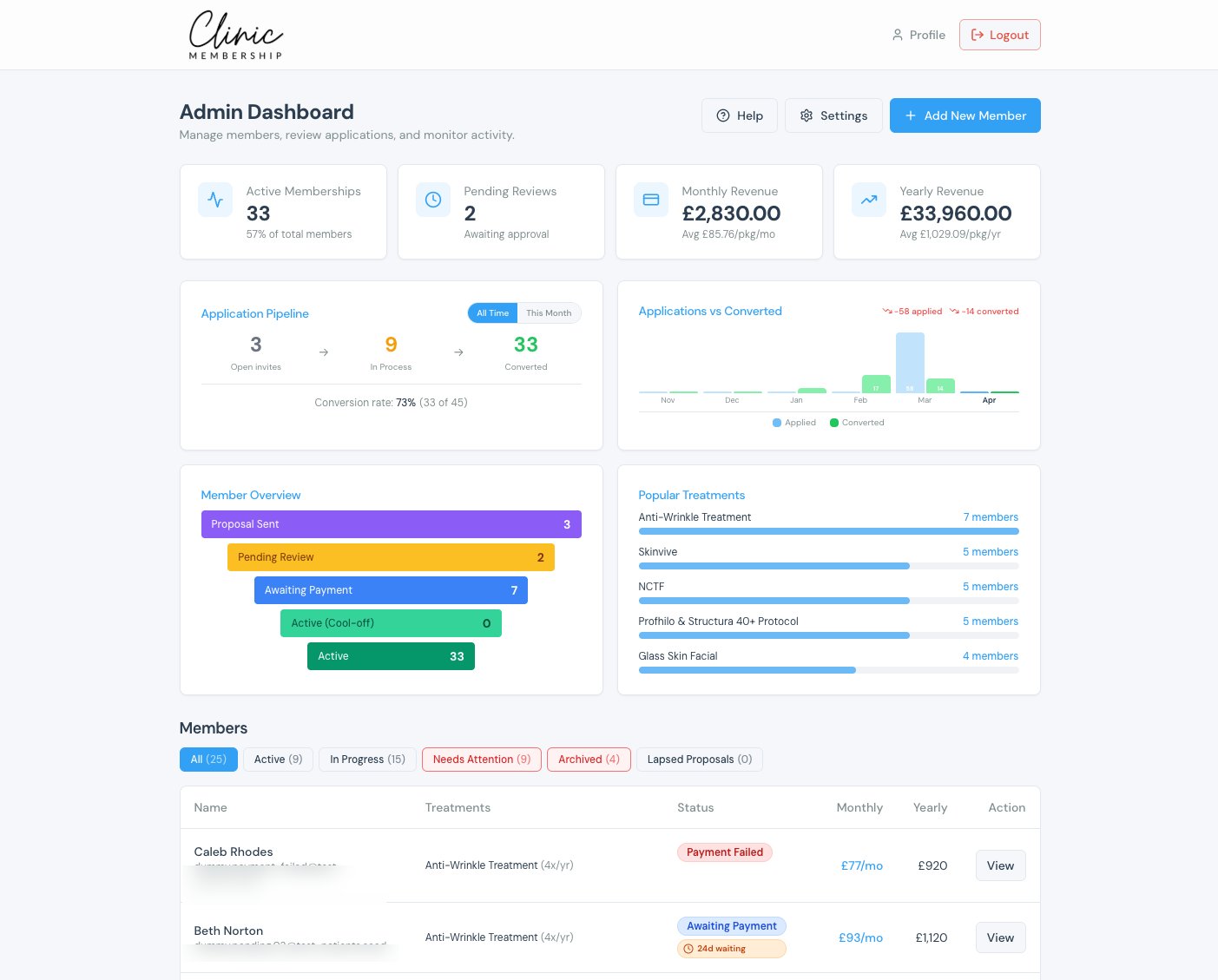
A clinic running male aesthetics memberships well will see three things on the membership-first clinic dashboard that a default-plan clinic will not:
- A meaningful share of members on plans whose cadence is quarterly or four-monthly, not monthly.
- A separate plan tier where hair restoration or skin protocols are the headline service, not the throw-in.
- A consultation-to-membership conversion rate that holds for male first-time enquiries the same way it holds for female ones - not 10-15 points lower.
The third one is the cleanest read on whether your current setup actually fits. If male sign-up conversion is materially lower than female, the plan isn't the issue. The plan is the issue.
The bigger frame
This isn't a tweak to a single tier. It's a recognition that membership-led UK aesthetic clinics in 2026 need plan architecture flexible enough to serve more than one default patient. The 30% YoY growth in male enquiries (Adoreal, 2026) is a leading indicator. The lagging indicator - the share of clinic recurring revenue that comes from male members - is the one that compounds.
If your clinic is seeing more male enquiries this year, your pricing should reflect what those patients actually need - quarterly cadence, broader treatment basket, written 12-month plan. If your current membership software cannot model that without forcing it into the same template as everything else, it is not a feature gap. It is the wrong product. See how Clinic Membership compares.
Source: Adoreal UK Aesthetics Industry Read, March 2026.