
Scheduling artificial intelligence is having a moment in UK aesthetics. New tools are rolling out across the beauty and wellness category that promise to reshuffle your diary in real time, fill cancellation slots automatically, and price unused capacity dynamically. For clinic owners watching the demos, it can feel like the next big lever for clinic revenue, and a reason to question whether clinic membership software in the UK still belongs on the stack.
It is a lever, but it is a different lever from the one most UK clinic owners reach for first. Scheduling AI optimises the day in front of you. A membership-led operating model shapes the year ahead of you. Both matter. They do not compete. And the most resilient clinics in 2026 will use both.
What scheduling AI actually solves
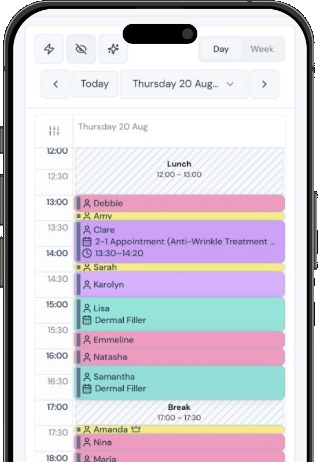
Scheduling AI is built around a specific problem: empty slots and last-minute changes. The new generation of scheduling tools in the beauty and wellness category use machine learning to reassign bookings between team members, allocate physical resources like treatment rooms, configure buffers around multi-stage services, and price off-peak and last-minute slots dynamically.
That is a real problem worth solving. A no-show at a single-room aesthetic clinic on a Tuesday afternoon is not a minor inconvenience. It is a hole in the day that cannot easily be back-filled by hand. If a tool can shuffle that slot to a patient on the waitlist before the chair goes cold, that is incremental revenue every week.
The honest framing is this: scheduling AI is about today's diary. Today, this week, this fortnight. The shorter the window, the more value the optimisation captures.
What scheduling AI does not solve
What scheduling AI does not solve is what happens to the same patient three months later, six months later, twelve months later. It does not change whether they come back. It does not change how much they spend per visit. It does not change whether their next treatment is booked the day they leave the consultation, or whether it is left to chance.
That is the structural problem in UK aesthetics. The clinics we work with report rebooking gaps that have nothing to do with capacity. The chair is open. The diary has space. The patient has the budget. They just have not booked the next visit because no one has asked them to, and there is no automatic mechanism doing it for them.
Operationally, the right tool for that gap is not a smarter scheduling engine. It is a structured recurring billing relationship: a membership. Patients on a structured plan are billed on a cadence regardless of whether they booked their next visit yet, which gives the clinic a continuous reason to bring them back. Concierge-style automated reminders attached to that membership relationship close the rebooking loop that a scheduling tool cannot reach, because they are triggered by the membership cadence, not by a one-off booking window.
For more on how UK clinics build that rebooking discipline into the week, our companion post on how to lift your rebooking rate walks through the practical mechanics.
The structural difference
The cleanest way to frame this is by timescale.
Scheduling AI is a daily tool. It looks at the next 24 to 72 hours and asks: where is the wasted capacity, and can I fill it before the day ends? When it works, you recapture a few percentage points of revenue you would otherwise lose to gaps and no-shows.
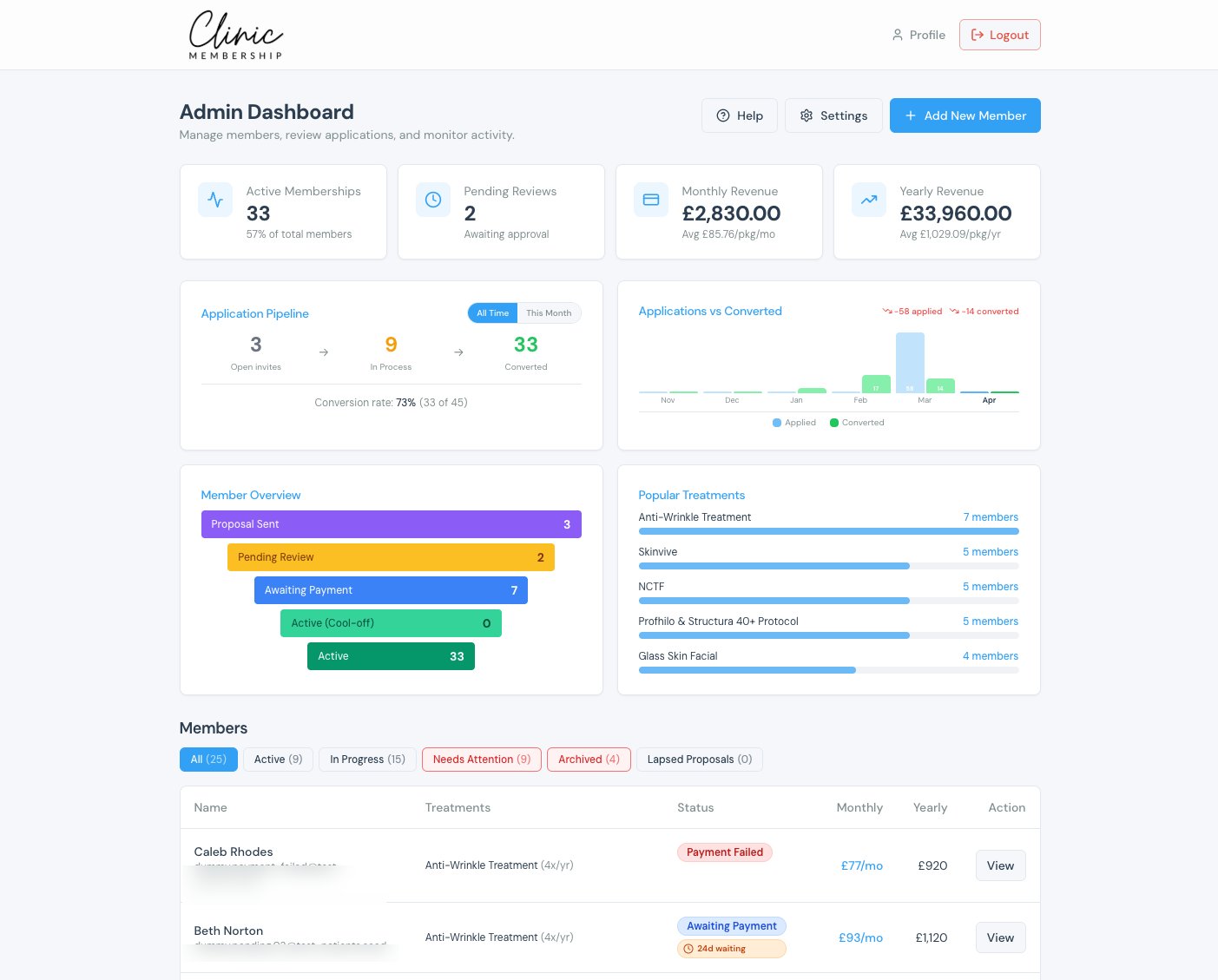
A membership programme is a quarterly and annual tool. It looks at the next twelve months and asks: how do I turn each new patient into a planned cadence of visits, billed on a structured contract, with predictable cash flow between peaks? When it works, you smooth out the quiet months, reduce reliance on paid acquisition, and shift the conversation in your consultation room from "would you like to book another visit?" to "what would you like to add to your plan?"
These are different operating layers. Scheduling AI is utilisation optimisation. Membership is revenue architecture. The first asks "is this chair earning today?" The second asks "is this patient retained this year?"
The Skytale Group 2026 industry report frames recurring revenue, memberships, and integrated service offerings as the defining operational shift in aesthetics this year, naming them as the lever practices are pulling to drive retention and enterprise value (Skytale Group, 2026). That is the long-cycle play. Scheduling AI is the short-cycle play. The UK aesthetics market, now home to roughly 19,701 practitioners working across 5,589 clinics (UCL News, February 2026), is large enough that both plays scale.
What this means for clinic membership software in the UK
Clinic Membership is built deliberately as standalone clinic membership software for UK aesthetic clinics: a focused recurring revenue layer rather than an all-in-one practice management system. That means it is designed to sit alongside whatever booking, scheduling, or PMS tool you already use, including the scheduling AI tools now rolling out across the wider beauty and wellness category.
Concretely, that looks like this. Your scheduling tool keeps doing what it does well, filling the diary, reshuffling slots, managing buffers. Clinic Membership handles the recurring billing relationship, the membership tiers, the payment retries, the cancellation policy, and the structured cadence of every member. The two tools work on different time horizons and do not duplicate each other. Most clinics we onboard keep their existing booking or PMS in place and bolt Clinic Membership onto the side as the dedicated recurring revenue layer.
For UK clinic owners running the numbers on which retention numbers actually matter, the question is not "scheduling AI versus membership". The question is "have I built both layers?" Most clinics have neither. Some have started on the scheduling side. Almost none have the membership side properly engineered. That is the gap in 2026.
The takeaway
Scheduling AI fills today. Memberships fill the year. The two tools answer different questions, and the most resilient UK aesthetic clinics in 2026 will run both: a smart scheduling layer for the diary, and a standalone membership layer for the recurring revenue floor underneath.
If your clinic has invested in scheduling and is now ready to engineer the recurring revenue layer alongside it, that is exactly what Clinic Membership is built for. See how the standalone membership product compares at clinicmembership.co.uk/pricing.
Sources: Recurring revenue and memberships as a defining 2026 operational shift: Skytale Group 2026. UK practitioner and clinic counts: UCL News, February 2026.