
If you've ever searched for how to set up a clinic membership plan, you'll have noticed something: most of the best advice out there is written for dentists. Dental practices have run membership and "plan" models for years, predictable monthly fees that cover check-ups, hygiene visits and a discount on extra work. It's a proven engine, and there's plenty worth learning from it.
But here's the trap. An aesthetic clinic that simply copies the dental template tends to build a plan that quietly loses money or leaves patients underwhelmed. The two businesses earn in very different ways. So before you lift a dental plan wholesale, here are the five differences that matter, and how to set your membership up so it fits an aesthetics clinic, not a dental surgery.
What dental plans get right (steal this part)
Start with the bit worth keeping. Dental membership works because it turns irregular, easy-to-postpone visits into a routine the patient has already paid for. The fee is small enough to feel painless, the value is obvious, and the practice gets steady, predictable income instead of a feast-or-famine diary.
That principle travels perfectly to aesthetics. The UK aesthetics market is worth around £3.6 billion and growing at 8–9% a year (UCL, 2026), and the clinics pulling ahead aren't the ones chasing one-off bookings. They're the ones building recurring relationships. The membership mechanic is sound. It's the design that needs to change.
Difference 1: Your treatments carry real, deferred value
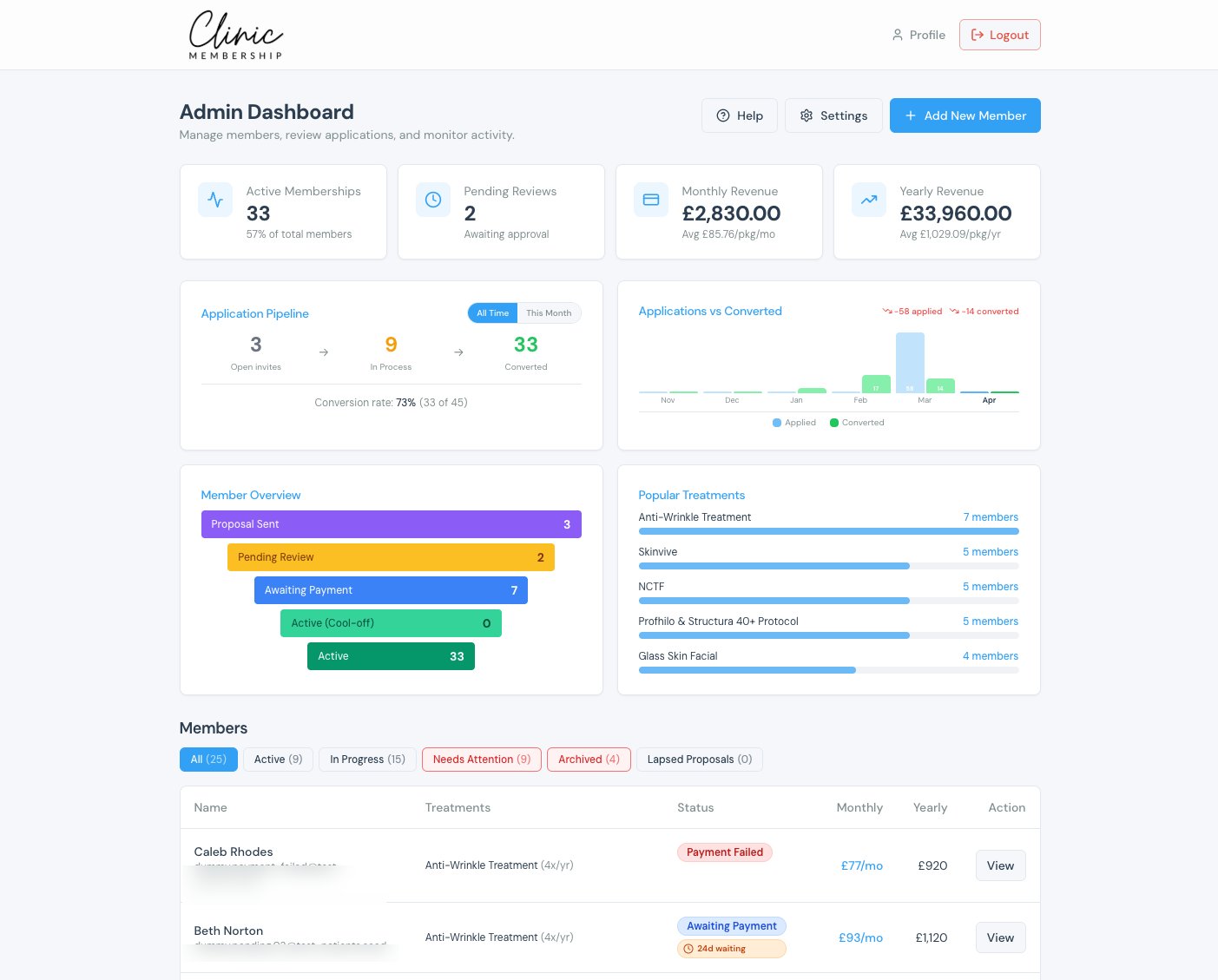
A dental plan mostly bundles low-cost, high-frequency care: a hygiene appointment costs the practice relatively little. Aesthetic treatments are different. A member might pay every month but only come in quarterly for something that costs you a great deal more to deliver. That gap between what's paid and what's redeemed is deferred value, and if you don't track it, a generous-looking plan can hand patients far more than they paid for.
So the first design rule is: don't copy flat "unlimited-ish" dental pricing. Build plans where the value a member banks each month is tracked against what they actually use. Good clinic management software shows that balance in real time, for you and the patient, so nobody's guessing.
Difference 2: Bespoke packages, not one-size hygiene plans
Dental plans are largely standardised: a handful of tiers, the same for everyone. Aesthetics doesn't work that way. A skin-health member, a regular-injectables member and a regenerative-course member all want different things, on different cadences.
That's why the dental "pick tier A, B or C" approach falls flat. You want to build bespoke packages: names you choose, durations (monthly, quarterly, annual or something in between), the specific treatments included, and the perks that make each one feel worth it. The goal is a plan that maps to how patients actually return, not a generic loyalty card.
Difference 3: Billing and agreements need more care
Dental membership is well-trodden ground with mature billing norms. Aesthetics is a faster-moving, more scrutinised space, and your plan is a recurring consumer agreement, so the admin around it has to be tighter.
In practice that means recurring billing that can recover a failed payment without you chasing it, and proper digital agreements: an e-signed plan with clear, versioned terms and a 14-day cooling-off period built in. Dental templates rarely spell this out. For an aesthetic clinic, getting the billing and agreement side right is what keeps a membership programme clean as it scales.
Difference 4: Retention is the entire game
Both models love recurring revenue, but the stakes are higher in aesthetics because acquiring an aesthetic patient is expensive and the repeat-visit relationship is where the margin lives. The American Med Spa Association puts the repeat-client rate at around 65%, meaning roughly a third of first-time patients never come back. A membership exists to move people from that "never return" group into a planned, ongoing cadence.
A dental plan can coast a little on routine. An aesthetics plan has to earn the next visit. Look for the small automations that do this quietly: a patient self-service portal that reminds members when their last appointment was and nudges them toward the next, so retention doesn't depend on you remembering to call.
Difference 5: Booking is more complex, so automate it
A hygiene visit is a single, repeatable slot. Aesthetic members often have several treatments to fit in, sometimes with required gaps between sessions. Copy a simple dental booking flow and you'll create friction.
Instead, let members book all their plan treatments in one flow, with remaining credit and any gift vouchers visible as they go, and let the system enforce minimum spacing between treatments automatically. That's the difference between a plan patients use and one they forget they're paying for.
How to set yours up properly
You don't need to reinvent anything. You need to adapt the dental playbook to aesthetics. In short:
- Map how your patients actually return (skin, injectables, regenerative courses) before you design a single tier.
- Build bespoke packages around those journeys, with included treatments and clear perks.
- Track deferred value so a member's banked credit never quietly outruns what they've paid.
- Put recurring billing, failed-payment recovery and e-signed agreements (with the cooling-off period) in place from day one.
- Lean on automation (rebooking nudges, one-go booking, spacing rules) so the plan runs without adding to your admin.
If you'd like the aesthetics-specific version step by step, our guide to setting up a membership plan for an aesthetic clinic walks through it, and you can see how clinics compare purpose-built options on our membership software guide.
Dental clinics proved that memberships work. Your job is to build one that fits the way an aesthetic clinic actually earns. See how Clinic Membership can help at clinicmembership.co.uk/pricing.