
UK aesthetics has quietly become an industry of independents. The most recent mapping of the sector counts roughly 19,701 practitioners working across around 5,589 clinics: a striking jump from the 3,667 practitioners recorded in a 2023 study (UCL, 2026). Some of that rise reflects genuine, rapid expansion; some of it reflects better visibility of the online and social-first providers who were always there but harder to count. Either way, the shape of the market is clear: a large and growing share of those clinics are small, independent, and very often run by a single nurse.
That single-operator model is one of the defining stories of the sector right now. And it changes what "good software" has to mean.
When you are the clinic, admin is the bottleneck
In a multi-practitioner clinic, the admin load is shared. There's a receptionist to answer the phone, someone to chase a failed payment, perhaps a practice manager keeping the diary honest. In a solo, nurse-led clinic, all of those jobs sit on one person, and that person also happens to be the clinician whose hands are the actual product.
Every hour spent rebooking patients by text, reconciling a card that bounced, or re-typing details from a booking form into a record is an hour not spent treating, and not spent earning. The constraint on a solo clinic is rarely demand. The UK aesthetics market is worth around £3.6 billion and still growing 8–9% a year (UCL, 2026); there is plenty of work to go round. The constraint is the owner's time. When one person is the clinic, the admin is the bottleneck, and software either widens that bottleneck or it quietly closes it.
This is why "less admin" has stopped being a nice-to-have line on a feature list and become the deciding factor. A solo operator doesn't need more dashboards to look at. They need the system to do the looking, and the chasing, and the typing, for them.
What "software that does the admin" actually looks like
The phrase gets used loosely, so it's worth being concrete about what it means in practice for a one-person clinic.
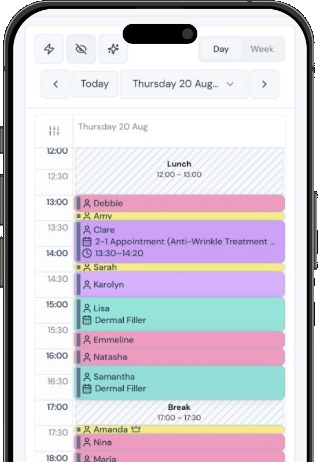
It means a patient self-service portal, so people can book, rebook and manage their own appointments without a single phone call landing on the owner. It means the system nudging a patient toward their next visit when it's due: the gentle "you're about due for your next appointment" prompt that a busy solo nurse simply has no time to send by hand, but which is the difference between a patient who drifts and one who comes back.
It means a smarter approach to gaps in the diary. Rather than the owner phoning round a waiting list every time someone cancels, the better tools let patients register the days and times that suit them and opt in to be told if something earlier opens up, then fill the slot automatically when it does. And it means setup that doesn't eat a weekend: software that can read a clinic's existing website and pull through its branding and settings, so the owner confirms it looks right rather than configuring it from scratch.
None of that is glamorous. All of it is time handed back to the one person who has the least of it. (Exactly how each of these features works varies by platform, and some are still rolling out, so it's worth asking any provider to show you the specific workflow rather than taking the headline at face value.) The underlying principle is simple, and it's the one a solo clinic should judge every tool against: does this do the admin, or does it just give me a nicer place to do the admin myself? For a fuller checklist, our guide to what to look for in clinic management software walks through the same question across the whole suite.
The search data backs up what nurses are actually looking for
You can see this shift in what people type into Google. "Aesthetic nurse software" draws around 6,600 searches a month in the UK, at strikingly low competition (Semrush, 2026): one of the clearest demand signals anywhere in this niche. (It's a partly brand-influenced term, so it's the intent that matters more than the precise figure.) Read it plainly and it says something simple: nurses aren't searching for enterprise practice-management suites built for big multi-site groups. They're looking for software built for the way they actually run a clinic, alone, on their feet, between appointments.
That's a meaningful gap. Much of the category is built for clinics with front-desk teams and IT support. The nurse-led operator is a different buyer with a different bottleneck, and the tools that win with them will be the ones that assume there is no one else to pick up the slack.
Where memberships fit: the standout core, not the lede
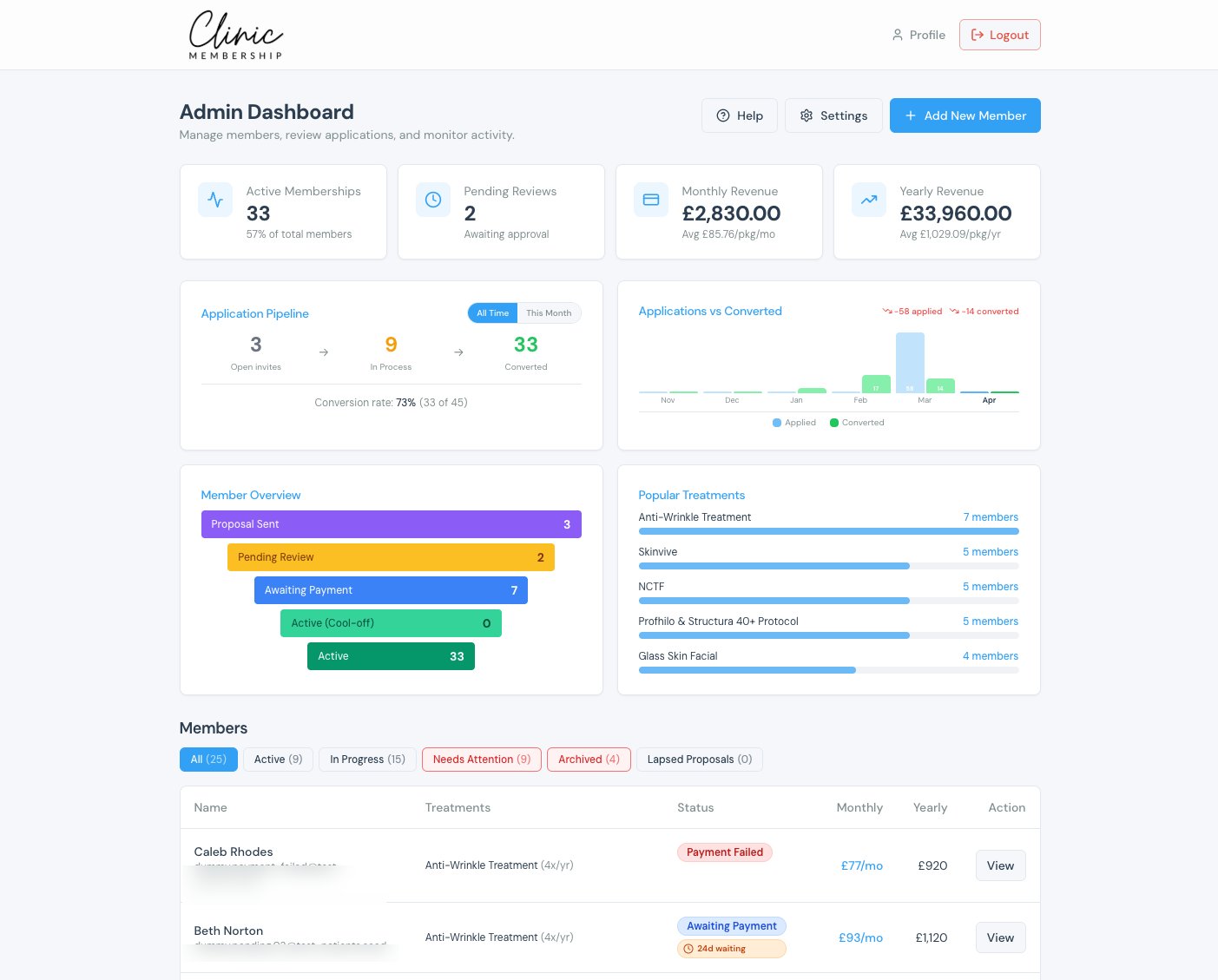
Automation answers the "how do I get my time back" question. There's a second question every solo clinic eventually runs into: how do I make the income predictable enough to plan around? That's where memberships come in, and it's the part of the suite we built Clinic Membership around.
The link between the two is closer than it looks. The same automation that handles rebooking nudges and self-service booking is what makes a membership programme runnable by one person in the first place. Recurring plans only work if the billing, renewals and reminders look after themselves; a solo owner cannot personally administer fifty monthly memberships on top of a full treatment diary. And the payoff is exactly the cadence a single-handed clinic needs: subscribed patients visit roughly 2.9 times a year, against about once for ad-hoc patients (ProspyrMed, 2026), more predictable demand, from people the system is quietly keeping warm on the owner's behalf.
That's the bridge from automation to recurring revenue. We go deeper on the membership side specifically for single-handed clinics in our piece on membership plans for nurse-led clinics, and on the broader picture of running the whole operation from one place in our clinic management software overview.
The deciding factor
The rise of the solo, nurse-led clinic isn't a niche curiosity, on the current numbers it's a large slice of where UK aesthetics is heading. For the people running those clinics, the choice of software is no longer about which tool has the longest feature list. It's about which one removes the most admin, because admin is the only thing standing between a fully booked diary and a sustainable business.
If you're running the whole show yourself and want to see how an automation-first, membership-ready system is priced, you can compare the plans at clinicmembership.co.uk/pricing.