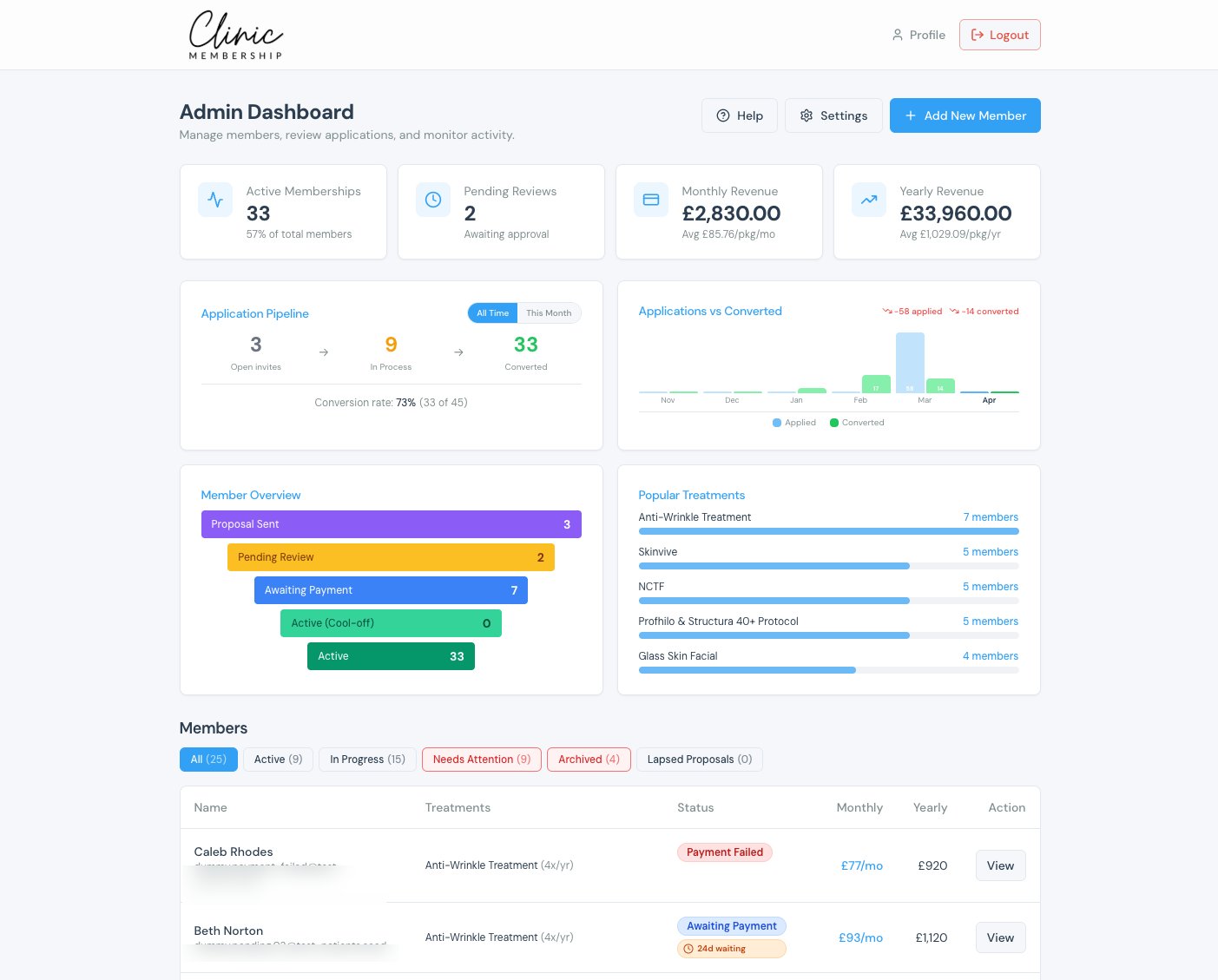

Two numbers explain why memberships compound for an aesthetic clinic.
2.9×: the average number of visits per year for a subscribed patient (ProspyrMed, 2026).
35%: the uplift in spend per visit for members vs non-members (Hamilton Fraser coverage, April 2026).
Same patient. More visits. Higher spend per visit. That's the maths a membership programme is built on, and it's the reason "membership" stops being a discount tactic and starts being the most reliable growth lever in the building.
The first number: 2.9× visits
A subscribed patient comes back almost three times a year. An ad-hoc patient does not. That gap doesn't sound dramatic on a single transaction line, but stretch it across a 200-patient book and you've added several hundred extra appointments to the diary without spending a pound on acquisition.
Three things are driving the visit gap:
- Cadence is pre-decided. A member has already agreed to a rhythm. The next visit isn't a sales conversation; it's a calendar reminder.
- The plan does the chasing. Renewal billing, treatment top-ups, scheduled reviews. These run automatically against the plan. Front-of-house aren't fishing for the next booking.
- The patient feels like a regular. Membership reframes the relationship from "occasional customer" to "this is my clinic." That changes how they think about cancelling, switching, or trying somewhere new.
The visit number is the easiest one to underestimate. A 1.5× increase looks fine on paper. A 2.9× increase quietly rewrites your monthly capacity plan.
The second number: 35% spend uplift
A member doesn't just visit more often. They spend more each time they're in the chair. Hamilton Fraser coverage published in April 2026 puts the uplift at roughly 35% per visit versus non-member spend.
The reason is simpler than it looks. When a member arrives for a treatment that's already covered by the plan, the upsell is a top-up rather than a cold pitch. A skin booster on top of a facial. A polynucleotide course tacked onto a routine review. A higher-strength product because they trust you and the price isn't the conversation.
Compare that with the ad-hoc journey. Patient books a treatment. Treatment is the entire transaction. Anything else feels like an add-on you're trying to push at the end. The same nurse, in the same room, having the same consultation, but the buying psychology is different.
That difference compounds. If 35% extra spend on each of 2.9 visits is the new baseline, the lifetime value of a member is roughly four times that of an equivalent ad-hoc patient. You don't need a spreadsheet to feel it; the front desk just needs a quieter quarter to notice it isn't quiet.
Three reasons membership maths actually compound
The two numbers are the headline. The compound effect is what happens when you stack them and let them run.
1. Members have already pre-decided to come back. Cadence is set. You're not re-selling them every quarter, and you're not paying to acquire them a second, third, or fourth time. The cost of the next visit is approximately zero, and that's where the operating margin starts to look very different from a one-off treatment business.
2. The upsell is a top-up, not a cold pitch. Conversion is higher because the conversation is different. The member is already buying. The decision is "what else this visit?" rather than "should I come at all?" That's why the 35% uplift holds across product mixes, treatment types, and clinic styles.
3. Members show up in your quiet months too. January, August, and December stop being a problem. Members don't disappear because school holidays land or the sun comes out: the plan reschedules them. The benefit isn't bigger peaks; it's a flatter, more predictable trough. (We've written about this in detail in How recurring revenue protects your clinic during quiet months.)
Stack those three (known cadence, easier upsell, smoothed seasonality) and a membership book of 100 patients does not behave like an ad-hoc book of 100 patients. It behaves like an ad-hoc book of roughly 400.
Membership as the product, not a discount
Most clinics that have tried memberships and quietly stopped did one thing in common: they treated the membership as a 10% off voucher with extra steps. A discount on the treatment menu. A loyalty card in disguise. A monthly card payment attached to the same buying behaviour the patient already had.
That's not membership maths. That's a discount with admin.
The version that compounds treats membership as the product. The plan is the thing the patient is buying: a relationship with the clinic, on a cadence, with a price they understand. Treatments sit inside the plan. Top-ups happen because the relationship is already in place. The clinic isn't selling the next session; it's running it.
This is also why the operational set-up matters. Auto-renewal that just works. Failed-card retry logic (which on its own is worth up to a 34% uplift on recovered revenue: Convesio/PayAtlas, 2026). Pause-and-resume that doesn't take a phone call. Deferred-revenue tracking so you know which members have paid but not yet booked. None of these are exciting on a feature list. All of them are the difference between membership-as-the-product and membership-as-a-discount.
What to do this week
If you've been wondering whether memberships are worth doing properly, run the maths against your own book.
- Take your current average annual visit frequency. Multiply it by 2.9× / your current number to see what compound visits would look like.
- Take your average spend per visit. Add 35%. That's a member-baseline figure.
- Multiply the two. That's a member's annual revenue contribution.
- Compare it with what an ad-hoc patient currently delivers.
If the gap is uncomfortable, the bottleneck isn't the patient. It's the tool you're using to manage them. (More on that in Clinic Software UK: why membership-first beats a 4-app stack and our step-by-step guide to launching a clinic membership programme.)
70%+ of UK aesthetic clinics now offer subscription-based payment models in some form (Consulting Room, 2026). The clinics pulling away from the rest aren't the ones with the most plans. They're the ones treating memberships as the product, including regenerative and longevity menus where regenerative aesthetics membership plans are becoming the default packaging.
Sources:
- ProspyrMed (2026): Subscribed patients visit 2.9× per year vs ad-hoc
- Hamilton Fraser coverage (April 2026): ~35% higher spend per visit for members vs non-members
- Consulting Room (2026): 70%+ UK clinics on subscription-based payment models
- Convesio / PayAtlas (2026): 34% revenue uplift from automated billing retries