
Walk into almost any UK aesthetics conference this year and one word keeps coming up: regenerative. Polynucleotides, biostimulators, exosomes and skin boosters are the treatments everyone is talking about, and the trade press agrees: the defining shift of 2026 is away from simply adding volume and towards treatments that prompt the skin to repair itself over time. It is a genuinely exciting clinical moment. But there is a quieter business story underneath it that very few clinic owners are talking about, and it has nothing to do with the science. It is about how you bill.
This is not a treatment problem. It is a structure problem.
Regenerative treatments don't work as one big appointment. They work as a planned sequence, and if your diary and your billing still treat every visit as a fresh, standalone transaction, you are quietly leaving the best part of this trend on the table.
The treatments changed. The billing model didn't
Here is the thing about the regenerative shift: these are course-based treatments by design. The broad UK clinical consensus for polynucleotides, for example, sits at around three sessions spaced three to four weeks apart, followed by maintenance every four to six months (Harley Academy, Interface Aesthetics, 2026). Biostimulators and skin-quality protocols follow a similar rhythm: a build-up phase, then ongoing upkeep. That is the entire point of regenerative medicine: results compound when treatments are planned and repeated, not when they happen once.
Yet most clinics still bill the way they did when the headline treatment was a single syringe of filler: book a slot, take the payment, hope they rebook. That worked when treatments were one-and-done. It works badly when the treatment itself is a course. Every gap between "I should book my next session" and actually booking one is revenue that leaks, and with regenerative protocols, those gaps are now built into the clinical plan.
Why this is a bigger deal than it looks
The market backdrop makes the stakes clear. The UK aesthetics market is worth around £3.6 billion and growing 8–9% a year (UCL), and the global regenerative aesthetics segment specifically is forecast to grow from roughly $4.04 billion in 2026 to $7.15 billion by 2034 (Precedence Research). More patients are starting course-based protocols every month. The question for a clinic owner is simply whether your systems capture that as predictable, recurring revenue, or as a series of hopeful one-off bookings you have to chase.
The retention maths is unforgiving here. Members who are on a structured plan visit roughly 2.9 times a year, against about once a year for ad-hoc patients (ProspyrMed, 2026). Around 35% of first-time patients never come back at all (American Med Spa Association). And it is 5 to 25 times more expensive to win a new patient than to keep an existing one, while a 5% lift in retention can raise profit by anywhere from 25% to 95% (Bain & Company / Harvard Business Review). Course-based treatments are, in other words, the ideal candidates for a retention structure, because the clinical plan already assumes the patient is coming back.
Turning a course into a membership
So how do you actually capture it? The shift is less dramatic than it sounds. You are not changing the treatment. You are changing the container it's sold in.
The cleanest approach is to package the course and its maintenance as a bespoke membership or treatment plan rather than a stack of separate invoices. The patient signs up once, at the start, when their motivation is highest. The build-up sessions and the four-to-six-month maintenance visits are scheduled and billed automatically, so the "should I rebook?" decision never has to be made again. The patient gets a clear plan and a predictable monthly cost; the clinic gets recurring revenue and a diary that fills itself. This is exactly the logic we walk through in detail for polynucleotide courses, and it generalises to any regenerative protocol.
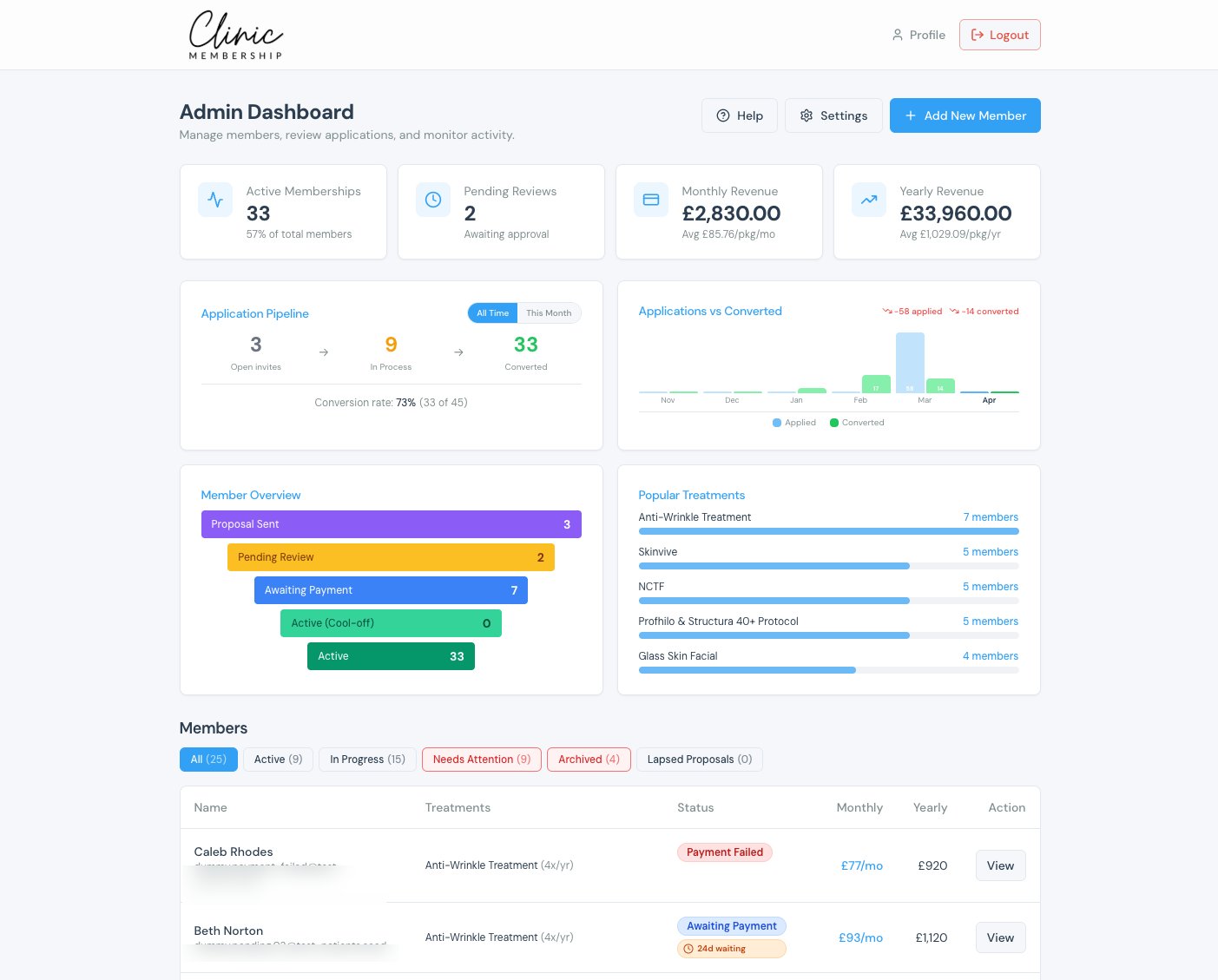
It is also a small operational change rather than a clinical one. The right membership software is built around exactly this pattern: Clinic Membership lets you define a bespoke plan with its own sessions, durations and pricing, attach the maintenance cadence, and let recurring billing and renewal reminders run in the background. The patient signs a digital agreement once; the system handles the rest. You don't need new treatments, new rooms or new staff to do this. You need a container that treats a course as a course.
Crucially, this is the model the next wave of patients already expects. The younger, prevention-minded patients driving much of the regenerative trend are comfortable with subscriptions for everything else in their lives. A clinic membership simply meets them where they are, which is why membership-led clinics are pulling ahead.
Why course-based treatments compound your recurring revenue
Put the numbers together and the structural advantage is obvious. A patient on a one-off footing books when they remember to, which (given that a third never return) is often not at all. The same patient on a structured plan visits nearly three times as often, stays longer, and costs a fraction as much to retain. Multiply that across a clinic's worth of regenerative courses and you are not talking about a marginal gain; you are talking about the difference between revenue you can forecast and revenue you have to hope for.
That is also what smooths out the quiet months. Course maintenance schedules don't care that August is traditionally slow. They keep the diary moving year-round. The treatments your patients want most in 2026 happen to be the ones best suited to recurring-revenue billing. The clinics that notice this first get to bank it first.
None of this requires a clinical change. It requires a structural one: the same shift in thinking we cover across the retention numbers most UK clinics never measure. The regenerative wave is handing the industry a rare gift: treatments that are designed to be repeated. Whether that becomes predictable monthly revenue or a pile of missed rebookings comes down to one decision, do you sell the course, or do you sell the visit?
Start your own UK-built clinic membership, your first 10 patients are free forever → clinicmembership.co.uk/pricing