
Your aesthetic clinic booking software is the first thing a new patient touches and the last thing you want to think about on a busy clinic day. Get it right and the diary fills itself, reminders go out without you lifting a finger, and your front of house spends its time with patients rather than the phone. Get it wrong and you are back to missed calls, double bookings, and a calendar that never quite matches reality.
If you are comparing aesthetic clinic booking software in 2026, it helps to know what actually moves the needle for a UK aesthetics clinic, and what is just a longer feature list. Here is a practical guide to what to look for.
Online booking that works the way patients book
Most enquiries now arrive outside clinic hours: an evening scroll, a lunch break, a link tapped from an Instagram bio. Booking software that only takes appointments while your reception is staffed quietly loses those patients to whichever clinic answers first.
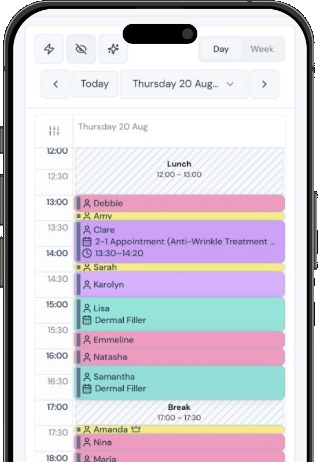
Look for online booking that lets a patient see real availability and confirm a slot themselves, on any device, at any hour. The booking should land straight in your single clinic diary, not a separate inbox you have to copy across by hand. The closer the online journey is to how patients actually behave, the fewer enquiries leak out of the top of your funnel.
Reminders and no-show control built in
No-shows are the quiet tax on every clinic. A missed appointment is an empty chair you cannot resell at short notice, and the cost compounds across a week. Good booking software reduces them without adding to your admin: automated confirmations and reminders by the channels patients actually read, clear rebooking links, and a tidy way to manage the gaps when life happens.
This is also where joined-up systems pull ahead of patchwork ones. Clinics running disconnected tools see around 45% more no-shows and billing errors than clinics running one connected system (ProspyrMed, 2026). When the booking, the patient record, and the payment all live in the same place, far less falls through the cracks, because there are fewer cracks.
A modern booking tool should also do something useful with a late cancellation rather than just flagging it. A smart wait list, for example, can offer a freed-up slot to the next suitable patient automatically, turning a gap into a filled hour with no phone calls from you. We covered exactly how that works in filling last-minute cancellations at a UK aesthetic clinic.
One diary, not five tabs
It is easy to end up with a booking app over here, a payment tool over there, patient notes in a third place, and a spreadsheet holding it together. Each one works fine on its own. The problem is the gaps between them: the manual re-typing, the double entry, the appointment that exists in one system but not another.
The booking software you choose should keep the diary in sync with the patient record automatically, so when an appointment is made, moved, or cancelled, everything updates together. That is the difference between software that saves you time and software that just relocates the admin. (If you are weighing up the wider system rather than booking alone, our guide to what to look for in clinic management software walks through the whole picture.)
To be clear, a booking system is not the same as full medical-records software, and you should not expect it to be. What you want is the operational core, diary, online booking, reminders, and the patient details that go with each appointment, working as one.
Treatment rules that protect clinical standards
Aesthetics is not haircuts. Some treatments need a minimum gap between sessions, and some patients will happily try to book sooner than they should. Booking software built for clinics (rather than generic salons) lets you set those rules once so they are enforced automatically at the point of booking. It keeps your diary clinically sensible without anyone having to police it by hand.
Where booking meets recurring revenue
Here is the part most booking tools miss. A booking system tells you who is coming in this week. It does not, on its own, tell you who is coming back next month, or turn a one-off treatment into an ongoing relationship.
The UK aesthetics market is worth around £3.6 billion and growing 8–9% a year (UCL, 2026), and the clinics growing fastest are the ones turning regular treatments into predictable, repeating revenue rather than chasing a fresh diary every month. That is where booking and memberships belong together: the booking journey is also the moment a patient can join a plan, and from then on their visits are planned, prompted, and paid on a schedule.
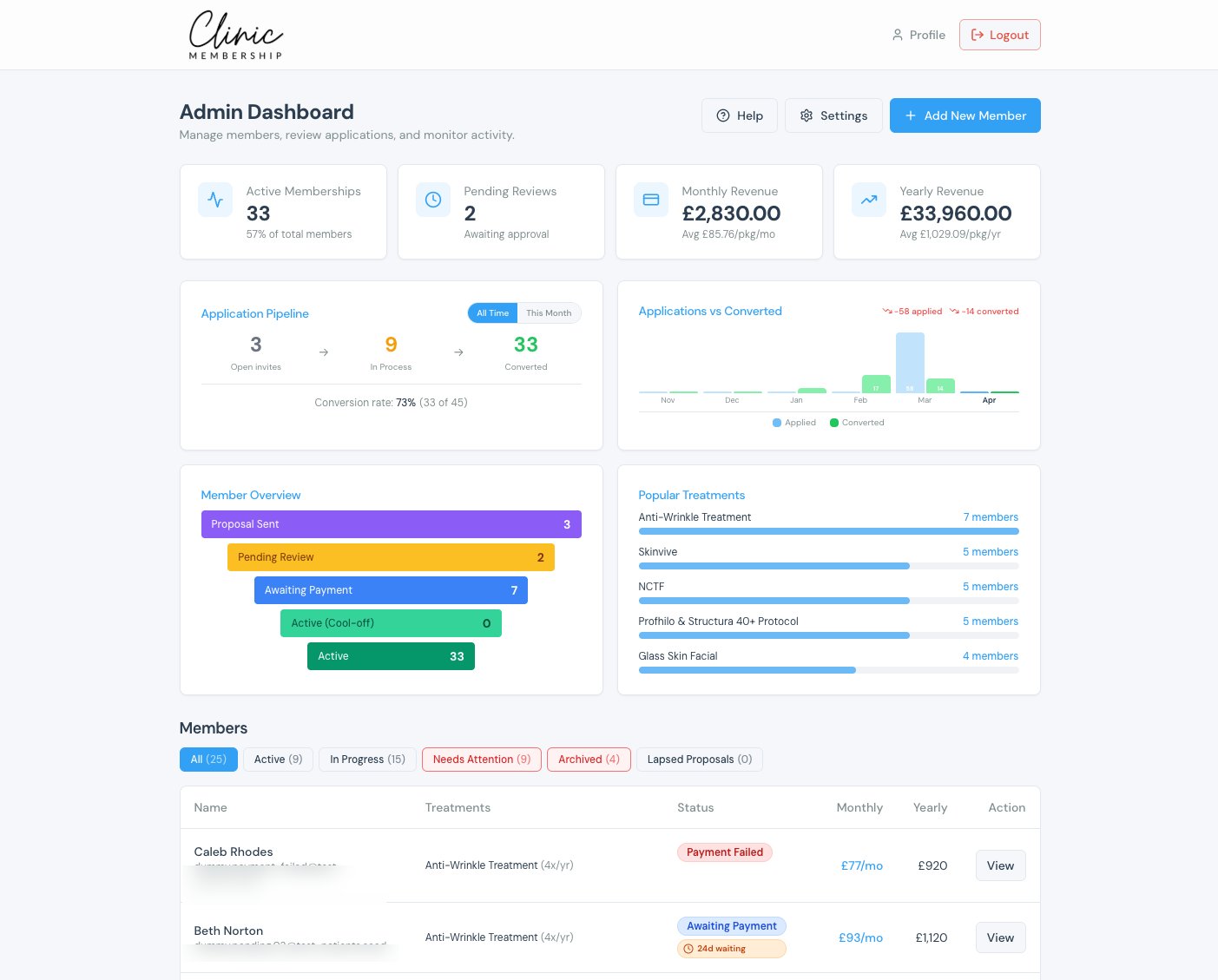
When your booking software and your membership billing are the same system, a member can book their plan treatments in one flow, see what they have left, and get nudged when their next visit is due: all without your front of house chasing anyone. The diary stops being a record of this week and starts being an engine for next year.
Your aesthetic clinic booking software checklist
When you sit down to compare your options, run each one past a few simple questions:
- Can patients book online, on any device, at any hour, straight into one diary?
- Do reminders and rebooking happen automatically, and is there a smart way to fill late cancellations?
- Does the booking stay in sync with the patient record, so you are not re-typing anything?
- Can you set treatment-spacing rules that are enforced at booking?
- Does it connect to payments and memberships, so booking feeds recurring revenue rather than just logging appointments?
The best answer is rarely the longest feature list. It is the system that quietly removes admin, keeps your diary honest, and gives every booking somewhere to go next.
Clinic Membership brings booking, patient records, payments, and memberships into one place built for UK aesthetics clinics, so the diary runs itself and every appointment can become an ongoing relationship. See how it fits your clinic on our clinic membership software page, or compare plans on pricing.