
Here's a sign of where the aesthetics market has landed in 2026: even the big general booking platforms are now shipping membership features. One of them (a booking marketplace valued at around a billion dollars, built to run salons, spas and gyms as much as clinics) has publicly rolled out flexible membership plans, perks, the option to give a first month free, and a way to turn a client's next appointment into the start of a membership. When a general-purpose giant adds recurring billing to its roadmap, it settles a question clinic owners have been circling for a couple of years: memberships aren't a fringe idea any more. They're table stakes.
For a UK aesthetics clinic owner, that shift changes the question worth asking. It's no longer "should I run memberships?" The whole sector has answered that. It's "does the software I use actually run memberships the way aesthetic treatments work?" And that's where purpose-built aesthetic clinic membership software and a generic membership feature stop being the same thing.
Understanding the gap is the difference between a membership that quietly loses you money and one that becomes the most valuable asset in your clinic.
Memberships going mainstream is good news
First, the positive read. When general platforms invest in membership billing, it's a signal that the model works. Recurring revenue has moved from something a few clinics were experimenting with to something the whole industry now treats as standard.
The reasoning is well established. Roughly a third of first-time aesthetic patients never come back after their initial visit (American Med Spa Association, 2026), which means the patients who do return are where the real value sits. A membership turns "I hope they rebook" into a planned, predictable relationship. And the upside of holding on to those patients is large: research from Bain & Company, popularised by the Harvard Business Review, found that a five percent lift in retention can raise profits by anywhere from 25 to 95 percent.
In a market worth around £3.6 billion and still growing 8 to 9 percent a year, that's not a rounding error. It's the difference between a clinic that lurches from a busy month to a quiet one and a clinic that knows roughly what next month looks like before it arrives.
So the trend is welcome. The catch is that "has a membership feature" and "is built to run aesthetic memberships properly" are two very different things.
Why aesthetic memberships don't behave like gym memberships
Most general booking platforms treat memberships the way they treat everything else: as a recurring charge attached to a customer. That works perfectly well for a yoga studio selling ten classes a month or a salon selling a blow-dry package. Aesthetic treatments don't behave like that.
An aesthetic membership has to reflect how the treatments actually work, courses with a build-up phase and maintenance, sessions that must be spaced a minimum number of weeks apart, value that's paid for now but delivered over months, and agreements that carry real clinical and consumer weight. A generic recurring charge doesn't know any of that. It just takes the money.
That's not a knock on those platforms; it's simply a different job. A membership designed around clinical care needs to handle four things a general tool tends to leave out:
Bespoke packages, not fixed tiers. Aesthetic clinics rarely fit a neat Bronze/Silver/Gold structure. A membership built for clinics lets you design packages with your own names, durations and inclusions, priced to match your treatment menu rather than a template. (We wrote about why bespoke packages beat fixed tiers in more detail.)
Agreements that hold up. A membership is a commitment on both sides. Purpose-built systems capture that with proper digital agreements (e-signed, versioned, with a cooling-off period built in) rather than a tick-box at payment. That matters when a plan is questioned six months later.
Value tracking that reflects reality. When a patient pays monthly but banks treatments for later, that unredeemed value has to be tracked accurately, as credit that belongs to the patient and a liability you can see. Generic billing tools rarely account for it, which is how clinics end up guessing at what they actually owe.
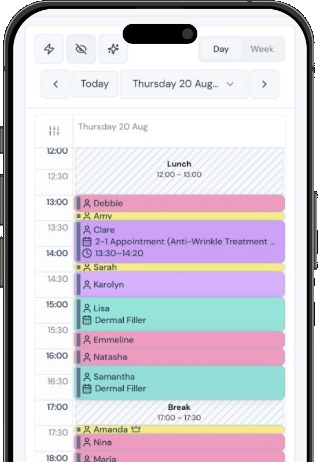
Scheduling that enforces the clinical rules. Membership treatments still need to respect minimum gaps between sessions and be booked in a way the patient can follow. When the membership and the diary are the same system, those rules enforce themselves instead of relying on someone at reception to remember.
None of these are extras. They're the parts of a membership that decide whether it's profitable and defensible, and they're exactly the parts that a tool built for a broader market tends to gloss over.
What to look for in aesthetic clinic membership software
When you're comparing systems this year, the membership tick-box will be almost universal. The more useful questions sit underneath it:
- Can I build packages that match my treatments, or only pick from set tiers?
- Does the system produce a proper signed agreement, or just take a payment?
- Can I see the value patients have paid for but not yet used?
- Do membership bookings respect treatment spacing automatically?
- Are memberships, the patient record, the calendar and payments genuinely one system, or a feature sitting alongside a booking tool?
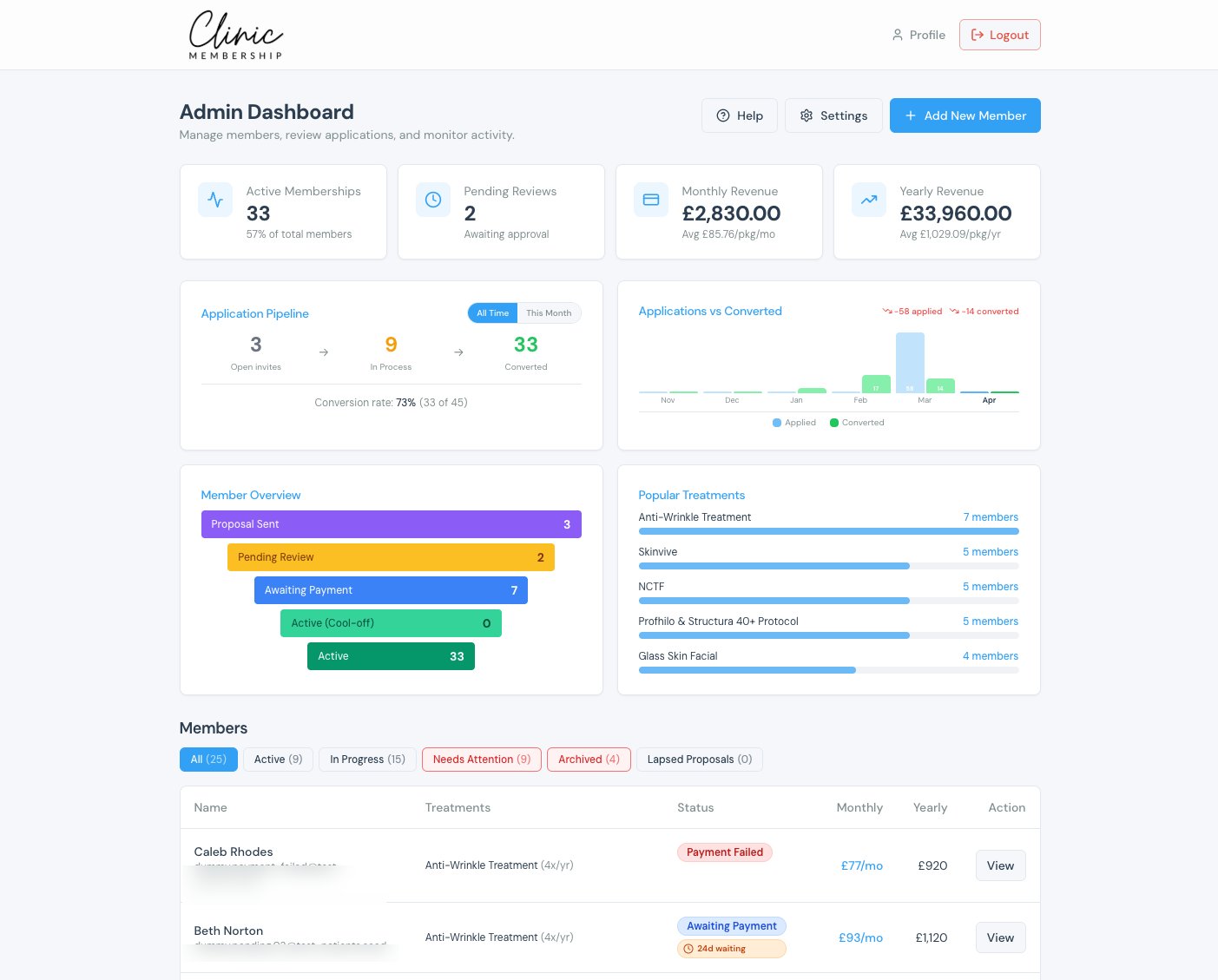
That last question is the quiet one, and it's really a question about fit. A membership that's designed around clinical care treats recurring revenue as the spine of the clinic, with the patient hub, calendar, payments and reporting arranged around it. For a small or independent UK aesthetics clinic, that's the difference between adding a feature and running the whole business from one place. (It's worth noting this isn't full medical-records software. It's a connected patient hub, not an EMR.)
What this means for your clinic
The mainstreaming of memberships is a good thing. It validates a model that turns unpredictable months into a base you can build on, and it means no clinic should feel like recurring revenue is out of reach.
But "everyone has memberships now" is a reason to look harder, not to relax. The value of a membership isn't in switching the feature on. It's in the details that a purpose-built system gets right: packages that fit your treatments, agreements that hold, value you can actually see, and a diary that enforces your clinical rules for you.
If you're setting memberships up for the first time, or you've outgrown a plan that was never really built for aesthetics, it's worth seeing what a purpose-built approach looks like. You can explore how it works on our clinic membership software page, compare the best membership software for UK clinics, or check pricing to see where you'd start.
Memberships becoming standard is the industry catching up to something good clinics already knew. The clinics that win from here are the ones that run them properly.