

Most conversations about aesthetic clinic pricing in the UK start in the wrong place. They start with the price list: what to charge for a unit of toxin, where to pitch a filler appointment, whether to hold the line or discount to fill a quiet Tuesday.
New national data suggests the price list is the least interesting number on the page.
What the new data says about aesthetic clinic pricing in the UK
University College London's national cohort analysis of the UK injectable aesthetics market, published in Aesthetic Surgery Journal Open Forum in 2026, did something nobody had done before at this scale: it mapped what practitioners across the whole country actually charge, broken down by professional background.
The headline is not the growth figure everyone quoted. It is the pricing spread.
Compared with non-medical aestheticians, the study found that nurses charge only 2% to 4% more. Dentists charge 28% to 33% more. Doctors charge 32% to 38% more. (Source: UCL / Aesthetic Surgery Journal Open Forum, 2026.)
Read that first number again. A registered nurse, years of clinical training, an NMC registration, professional indemnity, the accountability that comes with all of it, commands a per-treatment premium of roughly the price of a coffee.
Why the premium has compressed
The same study found that the proportion of non-medical aestheticians in the UK market doubled, from 12% to 24.8% (Source: UCL / Aesthetic Surgery Journal Open Forum, 2026). A quarter of the market is now made up of practitioners who entered recently, priced to win a first appointment, and set the local reference price for everyone around them.
Once a reference price is set on a high street, it is very hard for an individual clinic to move it. Patients compare the number on the treatment page, not the letters after the practitioner's name. That is the mechanism behind the 2–4% gap: not a failure of marketing, but the arithmetic of a market that grew faster than its ability to signal quality.
If you run a nurse-led clinic, this is the uncomfortable conclusion: per-treatment price is no longer where your growth comes from. You can spend a year fighting for 4%. Or you can look at the other number.
The other number
Bain & Company's work with the Harvard Business Review, still the most quoted study in retention economics, found that a 5% lift in customer retention can raise profits by anywhere from 25% to 95% (Source: Bain & Company / Harvard Business Review).
These are two separate findings from two separate studies, and they should not be multiplied together into a promise. But set them side by side and the strategic picture resolves quickly. Price is where the market has compressed you. Retention is where the market has not.
That is not an argument for ignoring pricing. It is an argument about where to point scarce attention. A 4% price rise is a fight with your patients and your local competitors. A 5% retention improvement is a fight with your own operations, and unlike the first fight, you control both sides of it.
What should a clinic measure instead of price?
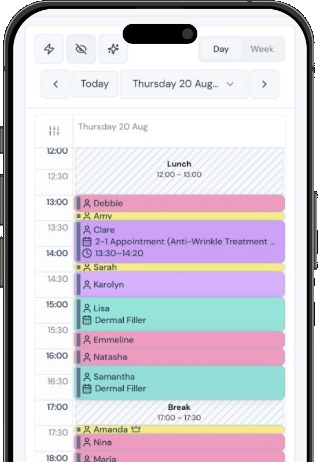
Here is where most UK clinics come unstuck. Ask an owner what their retention rate is and you will usually get a feeling, not a figure. The diary lives in one app, the payments live in a card terminal, the treatment history lives in a records tool, and nothing joins them up. Nobody can tell you what proportion of last quarter's first-time patients came back, because nothing is counting.
Running a clinic by the numbers means being able to answer four questions on any given morning, without opening a spreadsheet.
How much revenue is contracted for next month? Not forecast. Contracted, money that will arrive whether or not the diary fills. This is your monthly recurring revenue, and for most clinics it is currently zero.
What proportion of members are still with you 90 days in? The 90-day mark is where casual interest and genuine commitment separate. If you cannot see the drop-off, you cannot intervene before it happens.
What is your churn rate, and how much of it is involuntary? A failed card payment is not a decision to leave. It is an administrative accident that looks identical to churn on a bank statement and is entirely recoverable. If something is watching for it.
Which plan is actually working? Not which one you like. Which one holds members longest and generates the most value over the life of the relationship. Most clinics have never compared their plans side by side because the comparison was never possible.
None of these are pricing questions. All four are measurement questions, and all four become answerable the moment memberships, payments and patient records live in the same system rather than three.
The operational bridge
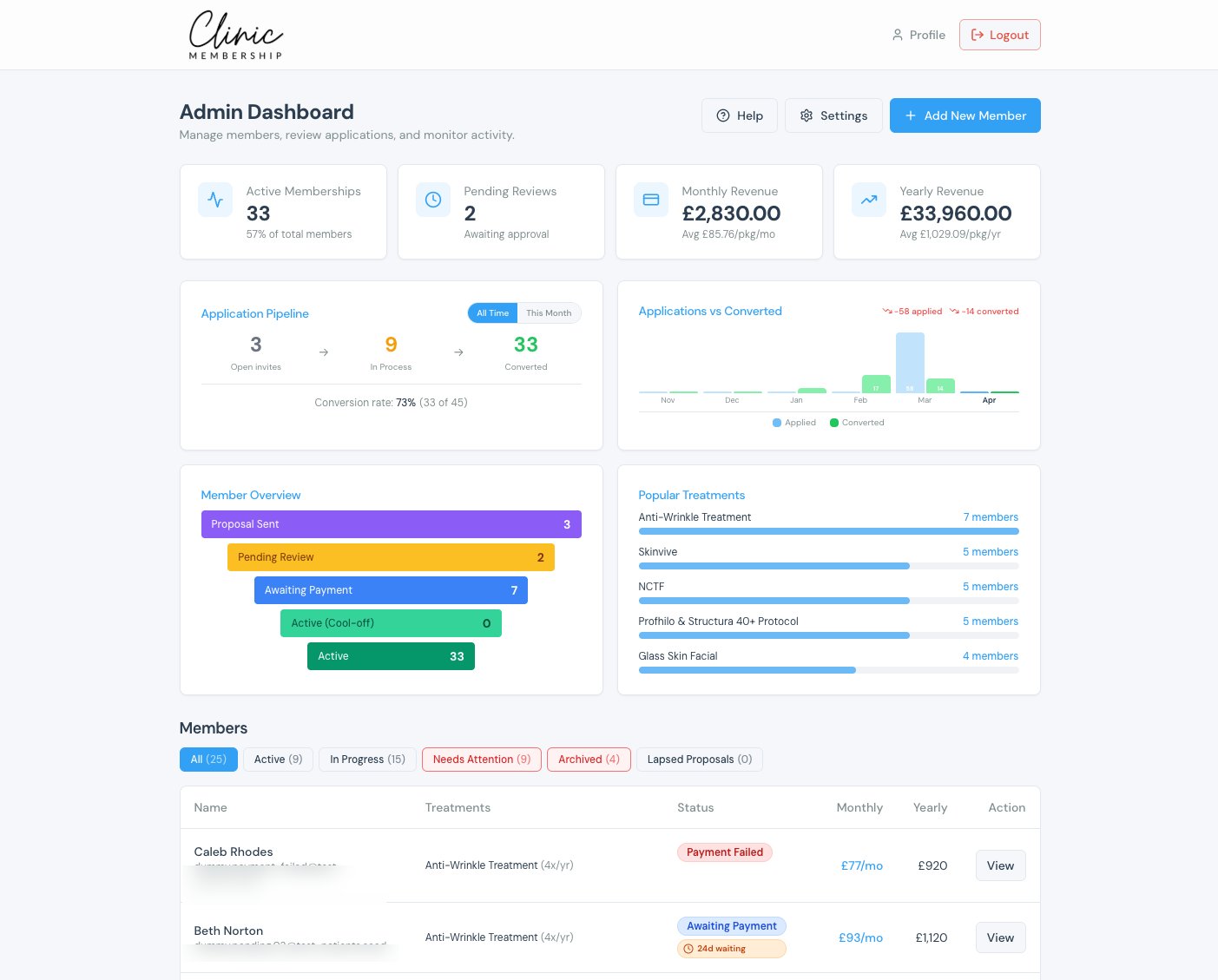
This is why we built Clinic Membership around reporting rather than bolting reporting on at the end. Recurring revenue, active member count, churn, conversion and plan breakdown update in real time, because they are calculated from the same patient record that holds the agreement, the payment history and the treatment plan.
There is a quiet consequence to that. When the numbers are computed rather than assembled, nobody has to assemble them, which means the report you look at on a Monday morning is the report that was true on Sunday night, not a reconstruction of what somebody remembered to type in. Reporting stops being a monthly chore and becomes something closer to a dashboard on a car: always on, only interesting when it changes.
A membership is the instrument that makes retention measurable. Before a membership, "retention" is a story you tell yourself about how often you think patients come back. After a membership, it is a line on a dashboard that moves.
That is also the practical answer to the pricing squeeze. A patient on a plan is not comparing your toxin price with the salon down the road every eight weeks, because the decision was made once, at the start, and the relationship is doing the work. You are not selling appointments any more. You are running a book of members, and a book of members has a value that a price list never will.
Where to start
If you are looking at the 2–4% figure and recognising your own clinic in it, the sequence matters.
Start by measuring what you already have. Your rebooking rate is the cheapest retention metric to establish and the fastest to move. It needs no new software, only a decision to count.
Then work out what a membership actually needs from the system underneath it. A membership button is not a membership engine. The things that make one work are e-signed, versioned agreements; tracking of credit and deferred value so a patient always knows what they have left; automatic recovery when a recurring card payment fails; and real recurring-revenue reporting rather than a total in a spreadsheet. Our built-in memberships checklist walks through what to look for before you commit.
Then build the plan. Not a discount card. A structured relationship with a cadence, a price the patient agrees to once, and a system that tells you (every morning, without being asked) how many people are still in it.
Clinic Membership is clinic management software for UK aesthetics clinics: patients, calendar, memberships, payments and reports in one place. It is not medical-records software, and it does not try to be. You can start free with your first ten patient records, or compare the options on our guide to the best membership software for UK clinics.
The 2–4% is not your fault. What you do about the number next to it is entirely within your control.
Sources: UCL / Aesthetic Surgery Journal Open Forum, 2026 (national cohort analysis of UK injectable aesthetic practitioners; DOI 10.1093/asjof/ojag006). Bain & Company / Harvard Business Review, retention economics.