
If you've ever set out to consolidate patient records at your clinic, you'll know the first challenge is simply finding them all. Ask most UK aesthetics clinic owners where a patient's information lives, and the honest answer is: everywhere. Contact details sit in one booking tool. Consent forms and before-and-after photos are in another. Payments run through a card reader with its own dashboard. Treatment notes are half in a folder and half in someone's head. And the membership spreadsheet? That's on the laptop at reception.
None of it talks to each other. Which means you are the integration layer: the person who remembers that Mrs Patel is due a top-up, that her card expired last month, and that she's on the quarterly plan. That works right up until it doesn't. A missed note becomes a missed appointment. A card that quietly failed becomes a member who drifts away without ever deciding to leave.
It's not a small problem, either. Clinics running on disconnected tools see 45% more no-shows than clinics whose systems are joined up (ProspyrMed, 2026), because reminders, records and the diary aren't reading from the same source of truth.
The good news: pulling your records into one place is a project you can finish in an afternoon, not a re-platforming nightmare. Here's a practical five-step way to do it.
Step 1: Map where a patient actually lives
Before you move anything, list every place a single patient's information currently sits. For most clinics it's five or more: the calendar, the payment tool, the consent/forms app, the photo library, the email inbox, and a spreadsheet or two.
Write down, for each one: what it holds, who has access, and whether it exports (most do, usually a CSV). This map is the whole job in miniature. It tells you what you're consolidating and, often, how much duplicated admin you've been absorbing without noticing.
Step 2: Decide what "one patient record" needs to contain
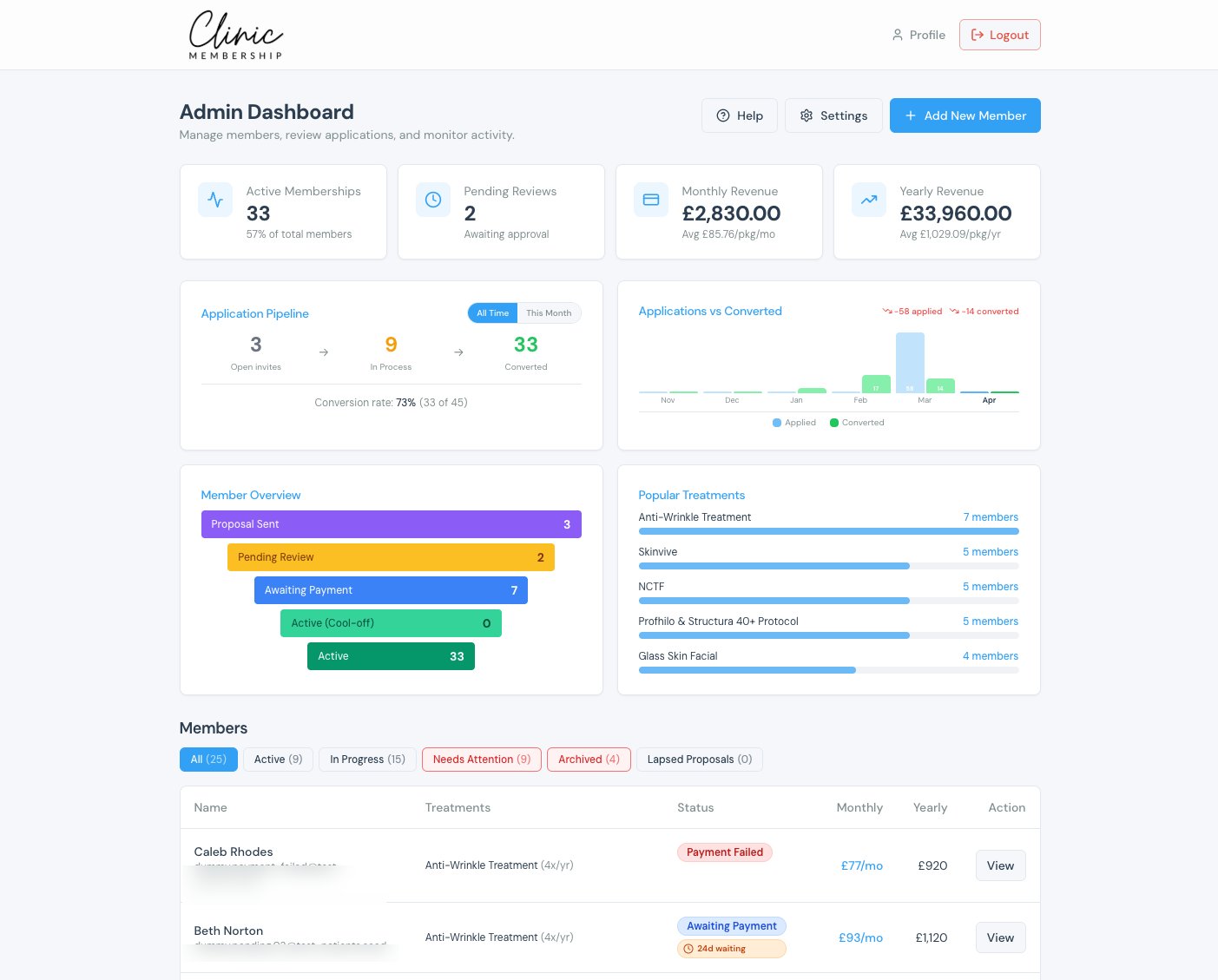
A single patient hub should bring together the things you currently chase across tabs: contact details, appointment history, membership or package status, invoices and payment history, and treatment history. That's the record that lets anyone at reception answer "when was she last in, what's she on, and is she paid up?" in one glance.
A quick clarification, because it matters: this is a patient records hub, not a full medical-records or EMR system. You're not trying to replace clinical record-keeping. You're trying to stop the operational side of a patient's life being scattered across five logins.
Step 3: Consolidate patient records, don't just copy them
The temptation is to export everything and dump it into a new tool. Resist. Consolidating is a chance to clean up, so do it deliberately:
- De-duplicate. The same patient often exists twice with slightly different spellings or two email addresses. Merge them.
- Flag the actives. Mark who's a current member, who's mid-package, and who hasn't been in for six months. This is the list you'll actually work from.
- Standardise the basics. One format for names, phone numbers and plan names now saves hours of confusion later.
Then migrate in priority order rather than all at once. Start with your active members and mid-package patients (the people whose next appointment or next payment is imminent) because that's where a dropped record costs you money the same week. Move the six-months-dormant contacts last; they can wait, and some won't need bringing across at all. Doing it in this order means that even if you only get through the first batch on day one, the part of your clinic that's actually generating revenue is already running off the clean, single record.
Modern clinic software can take a lot of this weight off you. Some systems can scan your existing website and pull in your branding and settings at setup, so you're confirming a tidy result rather than configuring from scratch. Ask any platform you're weighing up exactly how its onboarding works before you commit an afternoon to it.
Step 4: Connect the record to the things that move
A static record is just a nicer address book. The point of consolidation is that the record connects to the parts of the clinic that change: the diary, payments and reminders.
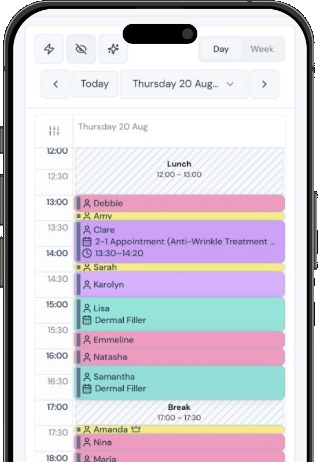
When the patient hub and the calendar read from the same place, a booking updates the record automatically and reminders fire off the real appointment, which is exactly where that 45% no-show gap closes. When payments sit against the record, you can see at a glance whose card has lapsed instead of finding out when they don't turn up. And when a patient can see their own upcoming and past visits, the rebooking conversation starts itself. If you want to go deeper on what that joined-up setup looks like, our guide to clinic management software walks through it.
Step 5: Layer memberships on top of the tidy record
Here's where consolidation quietly pays for itself. Once every patient's history, payments and status live in one record, recurring revenue stops being a spreadsheet you maintain by hand and becomes something the system runs for you.
Bespoke treatment packages, e-signed agreements, recurring card payments and automatic recovery when one fails: all of it hangs off the same patient record, so you can see your active members, your monthly recurring revenue and your churn without exporting anything. That's the difference between "we offer memberships" and "we can actually see how our memberships are doing." It's also why memberships work far better built into the record than bolted on beside it: a distinction worth understanding when you compare patient management software options.
The point isn't tidiness. It's time
Getting your records out of five apps isn't really an admin exercise. It's about handing back the hours you currently spend being the glue between systems, and closing the small gaps (the lapsed card, the forgotten recall, the missed reminder) that leak revenue one patient at a time.
The UK aesthetics market is worth around £3.6 billion and growing 8–9% a year (UCL, 2026). A market growing that fast rewards the clinics whose operations keep up, not the ones whose patient information is scattered across a patchwork of tools. Stop the patchwork, and the system starts working for you instead of the other way round.
If you'd like to see how Clinic Membership brings patients, calendar, memberships and payments into one place, take a look at how it works and what's included at clinicmembership.co.uk/pricing.