

Here is the number to pin above reception, and only this number: about 1 in 3 first-time patients never return (American Med Spa Association). That figure comes from a US med spa trade body. It is not a UK clinic census, and it is not your own rate. Treat it as a warning about the first visit.
First-time patient retention in an aesthetic clinic is usually lost at the desk, in the quiet days after, not in the treatment room. The patient often liked the visit. They meant to come back. Then nobody captured the next appointment, nobody sent a useful reminder, and the route back in was a phone tag they never won. You paid to fill a first slot. You are paying again to fill the same slot.
Why first-time patients leave after a good visit
It is tempting to assume a patient who does not rebook was unhappy. Usually they were not. They liked what happened. They meant to come back. Life got in the way.
Look at the first-timers who drift and the same gaps show up. Nobody took the next appointment at checkout, so they left with "I'll book when I'm ready." No reminder followed, so the visit dropped down the list. When they did think of you, the route in was a form, a voicemail, or a message that sat unanswered.
None of that is a clinical failure. It is a workflow gap. Because it happens at reception, it is easy to miss if you only judge the clinic on results in the room.
Your own rebooking rate beats any trade-body warning. Count first visits this month. Count how many of those people have a second appointment on the book. That is the number that belongs on the desk, beside the American Med Spa Association figure.
Win first-time patient retention at the desk
First-time patient retention in an aesthetic clinic is a front-of-house job, not a marketing campaign. The moment to secure the second visit is while the patient is still in front of you, not three weeks later in a re-engagement email.
Treat the end of the first appointment as a checkpoint, not a goodbye. Before they leave, someone confirms what the next step is and when it should happen. Frame that as operations: a diary slot, a named person, a way back in. Do not frame it as medical advice, and do not invent a treatment interval. The clinic already knows what it usually books next. The software's job is to make that booking happen in the room.
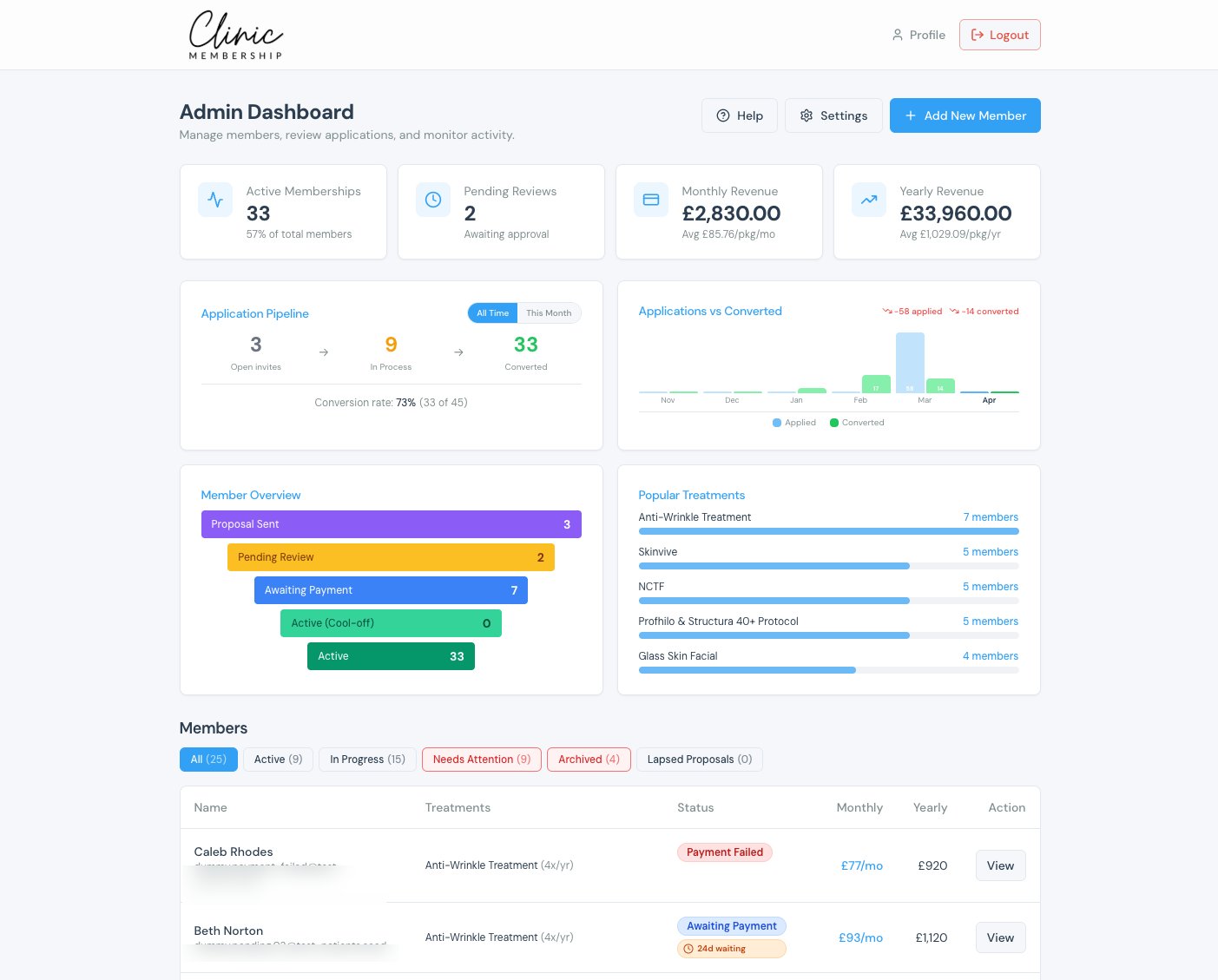
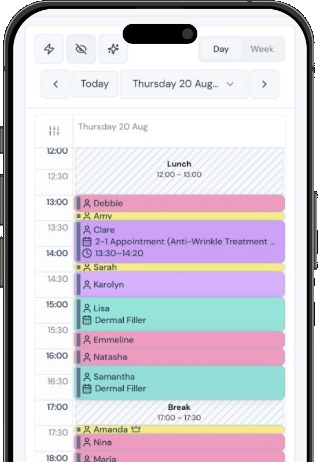
If reception is juggling three systems to find the next available slot, the patient will leave with a smile and no date. One place for patients, calendar, memberships, payments and reports cuts that friction at the exact moment it matters.
Close the gap between visits
Capturing the next step at checkout is half the job. The other half is the quiet week that follows, when good intentions go cold.
A patient portal lets a first-timer see their last visit and book the next one without a phone call. A rebooking nudge can sit on that last appointment and ask for the next slot, so follow-up does not depend on someone remembering to chase. Reminders keep the next visit visible at the moment it is easiest to act.
If your reminders only fire for people who already booked, you are protecting the diary you have. You are not recovering the first-timer who left with nothing. The first-timer needs the same tools, pointed at a blank next slot.
Train one starter this week to end every first visit with two questions only: "When shall we book the next one?" and "Shall I send the reminder to this number?" Write the answers into the same record the diary uses. Measure how many first-timers leave with a date by Friday.
Where a membership fits
Everything above turns one visit into a second visit. A membership is what turns second visits into a habit. It is the return path this front-of-house work is protecting, not a substitute for it.
A plan gives a first-timer a reason to come back on a rhythm rather than whenever they remember. Joining is offered at the end of a good first visit, as an easy default, not as a separate decision they have to hunt for later. Recurring card payments, a digital membership agreement, included treatments and a running credit balance all have to sit on the same record reception can see when that person walks back in.
If the membership lives in one tab and the diary in another, you will lose the second visit the same way you lost the first: somebody has to remember. Built-in means the plan and the diary share the patient. For the line between a points scheme and a membership, see Loyalty vs Memberships: What UK Clinic Software Really Does.
How can a UK clinic improve first-time patient retention?
Start at the desk. Capture the next appointment before the first-timer leaves. Make sure a reminder follows without someone remembering. Give them a self-service route back in. Offer a plan at the moment they are happiest, which is the end of a good first visit.
Clinic Membership is clinic management software for UK aesthetics clinics. Patients, calendar, memberships, payments and reports sit in one place. Recurring card payments sit on the same record as the plan. Free covers up to 10 patient records, with no card required to start. Amounts after that live on pricing.
About 1 in 3 first-time patients never return, on the American Med Spa Association figure. You cannot change a US trade-body number. You can change whether your own first-timer leaves with a date in the diary.