

Something has shifted in the last few weeks. The biggest names in aesthetics (the brands and the generalist booking platforms) have started talking about "memberships" again. Look closely, though, and most of what they're describing is a loyalty programme wearing a membership's coat: points for treatments, a perk tier, a discount for coming back. It's a good idea. It is not the same idea. And after eighteen months building software for UK aesthetic clinics, the question of aesthetic clinic membership vs loyalty programme is the thing I think about most.
So let me put it plainly, founder to clinic owner: a loyalty card rewards a visit. A membership bills, recovers and reports on its own. Confuse the two and you'll end up with a points scheme that looks lovely on a website and does nothing for the part of your clinic that actually keeps the lights on, predictable, recurring revenue.
What a loyalty programme actually does
A loyalty scheme is a marketing layer. The patient pays as normal, you stamp a metaphorical card, and after enough stamps they get something: a discount, a free add-on, early access. The value flows after the behaviour you wanted. It's a thank-you, not a commitment.
That's fine for a coffee shop. In a clinic, it has a quiet flaw: it does nothing to smooth the gap between visits. Your patient still decides, appointment by appointment, whether to come back. You're still hoping. And hoping is expensive. It costs somewhere between five and twenty-five times more to win a new patient than to keep one you already have (Bain & Company). A loyalty tier nudges the margins of that problem. It doesn't change the shape of it.
What a membership actually does
A membership is a financial relationship, not a reward. The patient commits to a plan (monthly, quarterly, a course of treatments) and from that moment three things happen on their own:
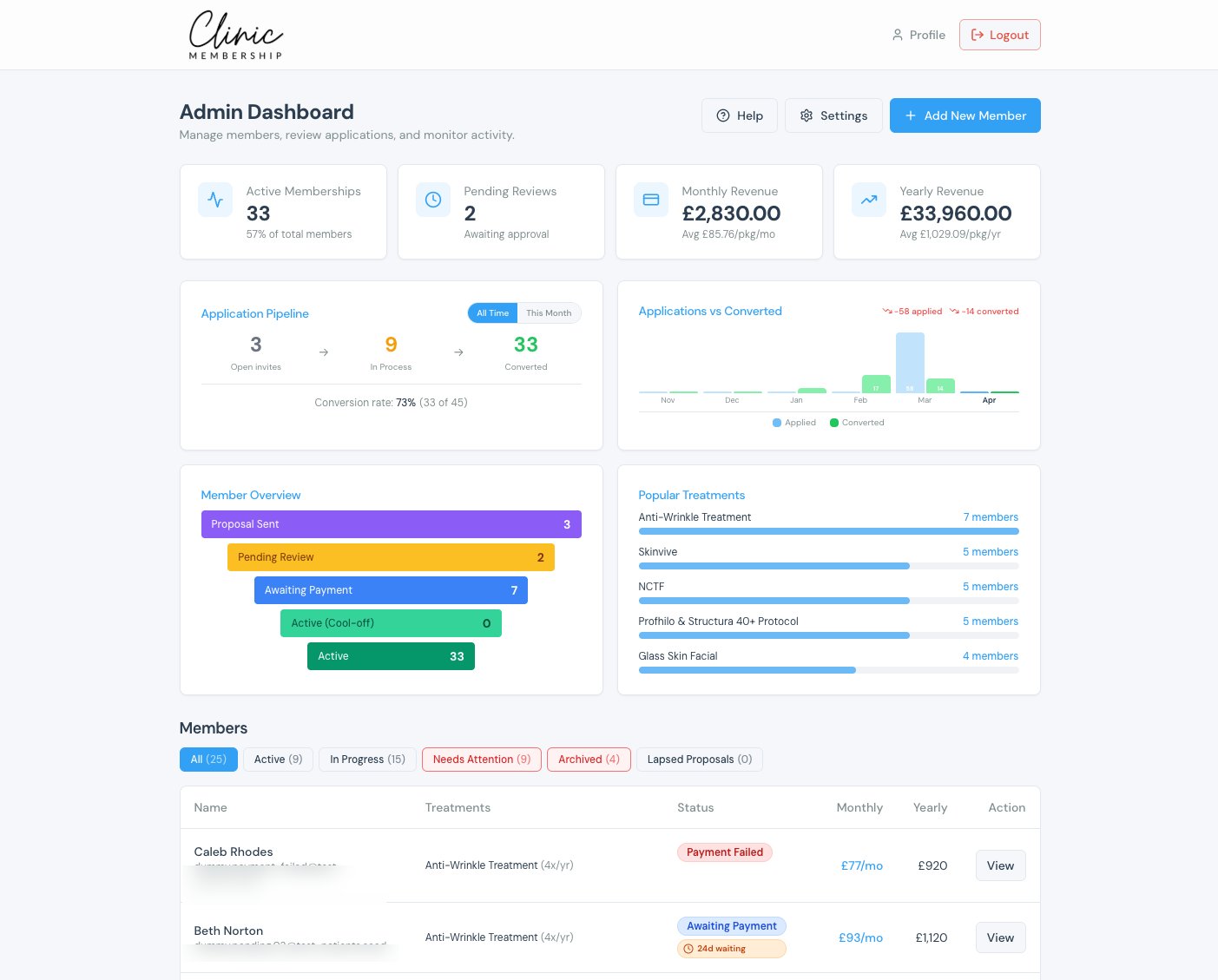
It bills. Payment is taken on a schedule you set, automatically, without you chasing anyone. The revenue is booked before the diary fills, not after.
It recovers. When a card expires or a payment fails (and it will, for perfectly innocent reasons) the system flags it and recovers it, instead of letting a paying member quietly slip out the back door because nobody noticed. That's the member who never meant to leave.
It reports. You can see your recurring revenue, your active members, your churn and your conversion in one place, this month versus last. You're running the clinic by numbers, not by feel.
None of that is a perk. It's plumbing. And plumbing is precisely what a loyalty stamp can't give you, because a loyalty stamp was never designed to carry money or measure retention.
Aesthetic clinic membership vs loyalty programme: the one test that matters
Here is the line I keep coming back to when I see the word "membership" used loosely. There's a single question that settles the aesthetic clinic membership vs loyalty programme debate, and it cuts through every bit of clever marketing: does it bill, recover and report on its own, or does it just stamp a card?
If the feature can take a recurring payment, recover a failed one, and tell you your churn rate, it's a membership engine. If it can't do all three, it's a loyalty layer with good marketing: no matter what the website calls it.
It's worth being strict about this, because the gap is easy to miss on a demo. A points tier and a membership plan can look almost identical on screen: both have a name, both have a price, both reward the patient. The difference only shows up at month-end, when one has quietly collected the revenue and recovered the card that bounced, and the other is waiting for the patient to choose to come back. One does the work; the other waits for the work to happen. I wrote a longer, practical version of this test as a built-in-versus-bolt-on checklist for owners comparing platforms, because it's the single question that separates the two.
Why it matters more in aesthetics than almost anywhere else
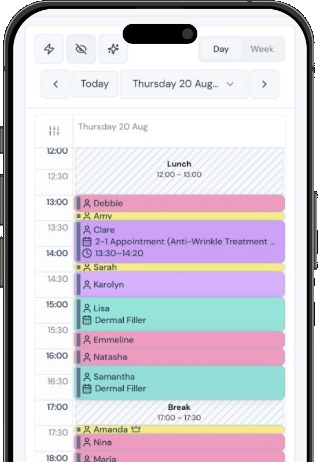
The treatments driving UK aesthetics right now, skin boosters, polynucleotides, the regenerative "primer" work everyone's asking for, don't make sense as one-offs. They work on a course, then maintenance, then maintenance again. The clinical reality is recurring. So your commercial model should be too.
That's the gap a loyalty programme can't close. A points tier doesn't structure a course of treatments, hold the deferred value of a plan a patient hasn't fully used yet, or bill the maintenance phase six months out. A purpose-built membership does, and it does it the way clinical courses are actually delivered, not the way retail rewards are. I've written separately about how package and membership billing works for ongoing treatments, because the billing mechanics are where the loyalty-versus-membership distinction stops being philosophical and starts being money.
Here's the number that made me build this in the first place. Roughly 35% of first-time aesthetic patients never come back; the repeat rate sits around 65% (American Med Spa Association). A loyalty card tries to win that third of patients back after they've drifted. A membership tries to never let them drift, because they're on a plan, the next appointment is already in the diary, and the value they've paid for is waiting for them. One model chases. The other holds.
The founder's version of the point
I didn't set out to build a loyalty programme, and I deliberately didn't bolt memberships onto something else as an afterthought. Memberships are the core of Clinic Membership: the recurring-revenue engine, with the rest of the clinic suite built around it: patients, calendar, payments and reports in one place. That's a positioning choice, and I'll defend it. When memberships are built in rather than bolted on, they bill, recover and report as one system. When they're an add-on to a tool designed for something else, you get the loyalty-card version: pretty, popular, and quietly leaking revenue.
So if a generalist platform or a big brand tells you they "do memberships" this year, I'd ask one founder-to-owner question: does it bill, recover and report on its own, or does it just stamp a card? The answer tells you whether you're buying recurring revenue or a marketing tier. If you want to see how a purpose-built membership engine compares, you can look at the plans here and decide for yourself. See pricing to get started free.