

A member signs up in January. They pay every month like clockwork. And then life gets busy. They miss a treatment window, then another, and by June they've paid for six months but only been in twice. On paper, that looks like easy revenue. In reality, it's one of the quietest risks in a membership programme: value your clinic has been paid for but hasn't yet delivered.
That gap has a name (deferred value) and most clinics aren't tracking it at all. This is a Product Value piece on why that matters, and what a purpose-built membership engine should do about it.
What "deferred value" actually means
Every membership is a promise. The patient pays now for treatments, credit or perks they'll use later. Until they use them, that value sits on your books as something you still owe: a liability, not a clean profit.
For a single member missing one appointment, it's trivial. Across a growing membership base, it compounds. You can end up with dozens of members carrying built-up credit or unredeemed benefits, all of it invisible in a diary that only shows who's booked in this week. When several of them decide to redeem at once (or ask for a refund on value they never used) the clinic that wasn't tracking it gets a nasty surprise.
There's a retention angle too. A member who has quietly stopped coming is a member drifting towards cancellation. Roughly a third of first-time aesthetic patients never return at all (American Med Spa Association), and the same pattern shows up inside membership bases: the ones who stop showing up stop feeling the value, and eventually stop paying. Unused value isn't just an accounting line. It's an early warning light.
Why a diary and a spreadsheet can't see it
Most clinics run this on some mix of a booking calendar and a spreadsheet. The calendar tells you who's coming in. The spreadsheet, if someone keeps it current, tells you what each member is owed. The problem is that the two never talk to each other, so nobody actually knows, at a glance, how much unused value is sitting in the programme this month.
This is the same fragmentation problem that shows up everywhere in clinic admin: the information exists, but it's scattered across tools that don't sync, so the owner is the integration layer. Deferred value is one of the first things to fall through the cracks, because it only becomes visible when it's already a problem: a member asking where their six sessions went, or a year-end that doesn't reconcile.
It's worth separating two ideas that often get muddled here. A membership isn't the same as a prepaid credit account, and we've written before about membership vs package billing for ongoing treatments. But whichever model you run, the value members have paid for and not yet used still needs tracking, and that's a job for software, not memory.
What a purpose-built membership engine should do
This is where a membership tool built for aesthetics earns its place. A few capabilities turn deferred value from a blind spot into something you manage on purpose:
Live credit and benefit balances. Every member's remaining credit, included treatments and any gift-voucher value should be visible in real time: to you and to the patient. No spreadsheet, no mental arithmetic. When a member books, the system shows what they have left and what it's worth.
One-go booking that surfaces remaining value. When a member books their membership treatments in a single flow, the tool should show remaining credit as they go. That does two jobs at once: it nudges members to actually use what they've paid for, and it keeps your deferred-value pile shrinking naturally instead of building up unseen.
Rebooking nudges for quiet members. A self-service portal that reminds patients when they were last in (and suggests when the next visit should be) catches the drifters before they become churn. The member who hasn't booked in three months is exactly the one carrying unused value.
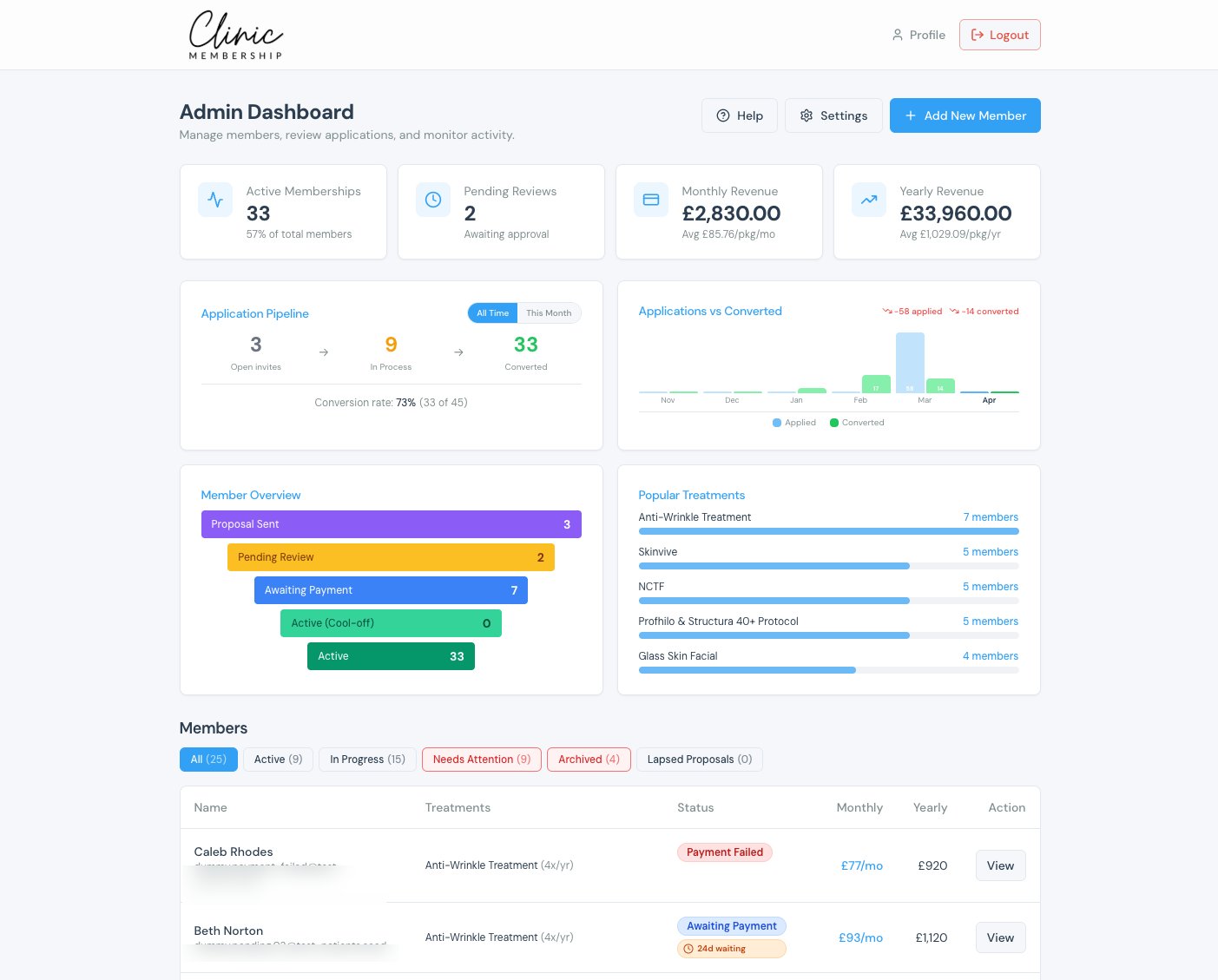
Reporting that shows the whole picture. Alongside recurring revenue and churn, you want a clear read on how much value is outstanding across the programme, so it never accumulates into a surprise. Running the clinic by the numbers means seeing the liabilities as clearly as the income.
Put together, that's the difference between a membership programme you can see and one you're hoping stays balanced. If you're weighing up tools, our guide to what to look for in a clinic membership platform covers this alongside the other capabilities that separate a real membership engine from a bolt-on.
The upside of tracking it well
Getting this right isn't only about avoiding nasty surprises. Members who use what they've paid for are members who feel the value, and members who feel the value stay. Retention is where the money is: a 5% lift in retention can lift profits by anywhere from 25% to 95% (Bain & Company / HBR). Deferred-value tracking feeds straight into that, because every nudge that turns unused credit into a booked appointment is a nudge towards a member who renews.
It also makes the clinic easier to run. When you can see outstanding value at a glance, you can plan quiet months, spot at-risk members early, and have honest conversations about credit before they turn into refund requests. The liability stops being a threat and becomes just another number you manage.
Most clinics don't lose sleep over deferred value because they can't see it. The ones that can, sleep better, and keep more members.
Clinic Membership is clinic management software for UK aesthetics clinics: patients, calendar, memberships, payments and reports in one place, with recurring revenue as the core. See how memberships, credit tracking and reporting work together at clinicmembership.co.uk/pricing. You can also see how we stack up as the best membership software for UK clinics.