
The treatments driving UK aesthetics right now don't work as one-off appointments. Polynucleotides, skin boosters, biostimulators and the rest of the regenerative category are built on rhythm: a short course of sessions a few weeks apart, then maintenance months down the line. Get the treatment spacing right and results compound. Get it wrong (sessions booked too close together, or a maintenance visit that quietly never gets booked) and the clinical outcome suffers along with the revenue.
That makes scheduling a clinical and commercial issue, not just an admin one. And it's exactly where a lot of clinic diaries fall short.
The cadence the trend is built on
Most regenerative protocols follow the same shape. A typical polynucleotide course runs to around three sessions spaced roughly three to four weeks apart, with maintenance usually recommended every six to nine months depending on the individual. Skin boosters and biostimulators follow their own course-then-maintenance pattern. The specifics vary by treatment and by patient. That's a clinical decision for the practitioner, not something software should override, but the principle holds: these treatments only deliver if the gaps between appointments are right.
This is the quiet story behind the 2026 treatment headlines. The shift from one-off, volume-led injectables towards collagen-stimulating, natural-look results means more patients on multi-session journeys. That's good for outcomes and good for recurring revenue, but only if the diary keeps every patient on track. The regenerative boom is, underneath, a scheduling problem.
Where manual scheduling leaks
Here's the uncomfortable bit. When a course is managed by memory, sticky notes or a basic calendar, gaps open up that nobody planned:
- A patient books their second session too early because the front desk didn't have the minimum gap to hand.
- A maintenance visit six months out never gets booked, because nothing prompted it: the patient simply drifts.
- A cancelled slot sits empty while three patients who'd have happily taken it never hear it opened up.
None of these look dramatic on the day. They show up later, as a thinner diary and patients who quietly stopped coming. And the more tools a clinic runs to manage all this, the worse it gets: clinics working across disconnected systems see 45% more no-shows and billing errors than those running on one connected platform (ProspyrMed, 2026). Every handoff between a booking app, a reminder tool and a spreadsheet is a place for a patient to fall through.
The retention maths makes the stakes plain. Across the sector, the average clinic keeps only around 65% of first-time patients, roughly a third never come back (American Med Spa Association, 2026). A patient on a properly spaced regenerative course is the opposite of that drift: a planned, repeat-visit relationship. But the difference between "planned" and "drifted" usually comes down to whether the system held the next appointment, or left it to chance.
What treatment spacing rules should actually do
Reminders alone don't fix this. A nudge to "book your next appointment" still leaves the patient and the front desk to work out when, and leaves the clinic exposed to sessions booked too close together. What a modern clinic diary should do is enforce the cadence automatically:
- Treatment-spacing rules that set a minimum gap between appointments, so patients can't book sessions too close together: the rule is applied at the point of booking, not policed after the fact.
- A smart wait list that lets patients say which days and times suit them and opt in to "let me know if something earlier opens." When a matching slot frees up, the system notifies them and lets them take it or swap into it, so a cancellation fills itself instead of sitting empty. (More on that in our guide to filling last-minute cancellations.)
- Built-in rebooking prompts that remember when a patient was last in and suggest when the next visit should be, so a six-month maintenance gap doesn't turn into a lost patient.
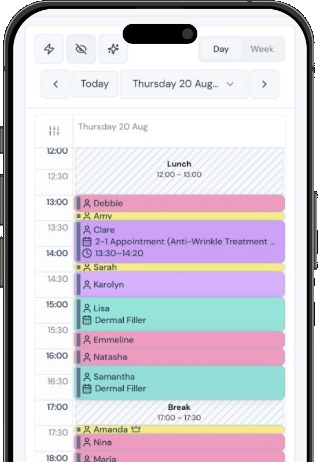
This is the difference between a calendar that records appointments and a system that protects the treatment journey. We've written before about why smart scheduling beats a basic booking calendar and how the right setup reduces no-shows: treatment spacing is the same idea applied to the clinical rhythm of regenerative care.
Spacing and memberships pull in the same direction
There's a natural fit here. A regenerative course-then-maintenance plan is a membership in everything but name: a defined set of sessions, a planned cadence, and an ongoing relationship rather than a one-off sale. When the diary enforces the spacing and the membership tracks the included sessions and credit, the two reinforce each other: the patient stays on plan because the system keeps them there, and the clinic earns predictable recurring revenue instead of chasing the next walk-in.
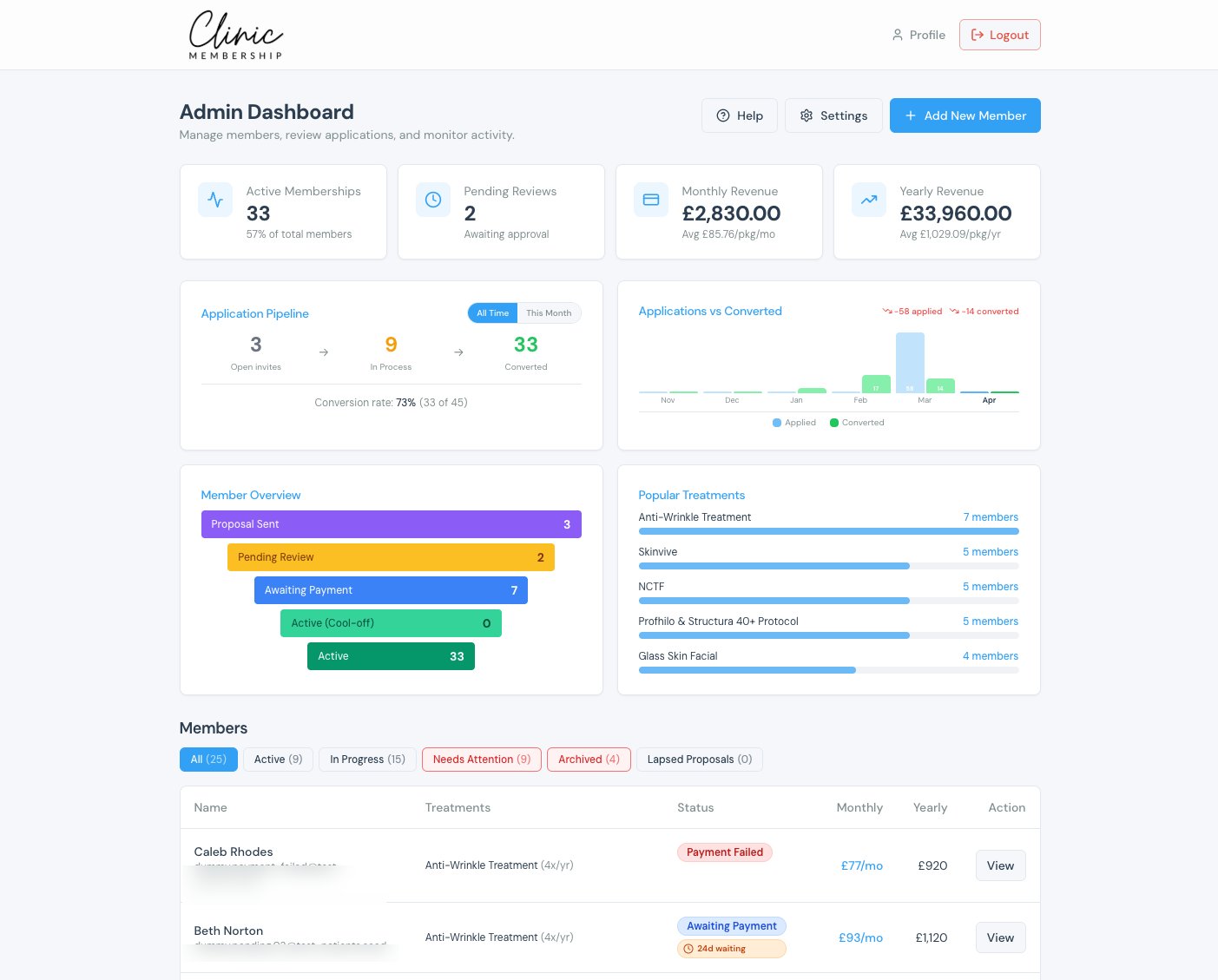
That's the core of what Clinic Membership is built to do: keep patients, packages and the calendar in one connected place, so the spacing rules, the wait list and the rebooking prompts all work off the same record. It's a small operational change with a large compounding effect, and it lands right as the treatments that depend on it are growing fastest. The UK aesthetics market sits at around £3.6 billion and is growing 8–9% a year (UCL, 2026), with regenerative treatments leading that growth. The clinics that turn those multi-session journeys into structured, well-spaced plans are the ones that will hold onto the upside.
The takeaway
Treatment spacing isn't a nice-to-have setting buried in your booking tool. For regenerative aesthetics, it's the difference between results that build and patients who drift, and between a diary that fills itself and one that leaks. If your current setup relies on the front desk remembering the gaps, it's worth asking what that's quietly costing you.
See how Clinic Membership keeps scheduling, memberships and patient records in one connected system at clinicmembership.co.uk/pricing, or compare the options in our guide to the best membership software for UK clinics.