
If you run a UK aesthetics clinic and you have been watching the news about people cancelling streaming tiles, it is fair to wonder whether clinic plans are next. The short answer sits in the UK subscription economy clinic membership context: patients already live inside subscriptions, many want to cut the noisy ones back, and a clinic plan is a different product altogether.
What Barclays says about UK consumer subscriptions
Start with the lived pattern, not a pitch deck. Barclays reports that 88% of UK adults hold a UK consumer subscription. Among those who hold one, the average spend is £50.60. That £50.60 is the average among the 88% who already subscribe. It is not an average across every adult in the country.
So the background noise for your patients is not "subscriptions are weird". It is "I already pay for several of these each month, and I am getting picky about which ones stay".
That is useful context when an owner hears cutback headlines and assumes every recurring charge is under the same cloud. General consumer subscriptions and a treatment plan that formalises visits someone was going to book anyway are not the same object.
The cutback objection, stated plainly
Here is the row that cuts against a lazy "everyone wants more memberships" claim, and it is worth putting on the table.
Barclays also finds that 59% of UK adults want to cut back on subscriptions, and 21% say they have already cancelled at least one. Those figures are the objection, not the proof that people are hungry for another tile on their phone.
If you quote 59% or 21% as evidence that patients want more subscriptions, you are misusing the row. The honest use is this: a thoughtful patient (and a thoughtful owner) will ask whether a clinic plan is just another thing they will regret in three months.
Answer that question with product shape, not with cheerleading.
Why a clinic plan is not another streaming tile
A streaming subscription is optional entertainment. Cancel it and the evening still happens. You find something else to watch, or you do not.
A clinic membership, done properly, is closer to a billing habit for treatment the patient was already going to buy. The visits still sit on a clinical rhythm you set. The plan does not invent demand out of thin air. It stops the same person re-deciding, re-enquiring, and re-paying from a cold start every cycle.
That is the sector difference. Cutback pressure hits the subscriptions people barely open. It is a weaker argument against a plan that replaces a pattern of booked treatments with a clearer commercial relationship around those same treatments.
If you want the adjacent conversation about how UK aesthetics has historically sold visit by visit, that sits in Do Patients Pay Monthly for Aesthetic Treatments in the UK?. This post stays on the cutback objection and the sector answer.
What owners should hear when patients say they are "cutting back"
When a patient says they are cutting subscriptions, they usually mean the pile of low-use digital services. They are sorting noise from value.
Your job is not to argue them into loving every recurring charge in their life. Your job is to make sure a clinic plan, if you offer one, is obviously in the value column:
- It covers treatment they already return for, on gaps you control.
- The monthly figure maps to something concrete in the diary, not a vague "access" promise.
- Payment is a recurring card on the same patient record as the plan, so failed payments surface as work you can finish rather than as a mystery gap six weeks later.
- The agreement is clear about what is included, what is not, and how cancellation works.
None of that requires pretending cutback sentiment does not exist. It requires designing a plan that survives an honest comparison with a streaming tile.
How to talk about it at the desk without sounding defensive
Reception does not need a macroeconomics brief. They need one sentence they believe.
Something like: "This is not another app subscription. It is how we hold the treatments you already book with us, on the schedule we agree, with the card payment sitting on your plan."
If the patient is mid-cutback and wary, do not push. Offer the plan to people who already rebook, and keep the first pilot small. Free on Clinic Membership covers up to 10 patient records, which is enough to run a real test without turning the whole diary upside down. Amounts for paid tiers live on pricing, not in this article.
Where Clinic Membership fits this conversation
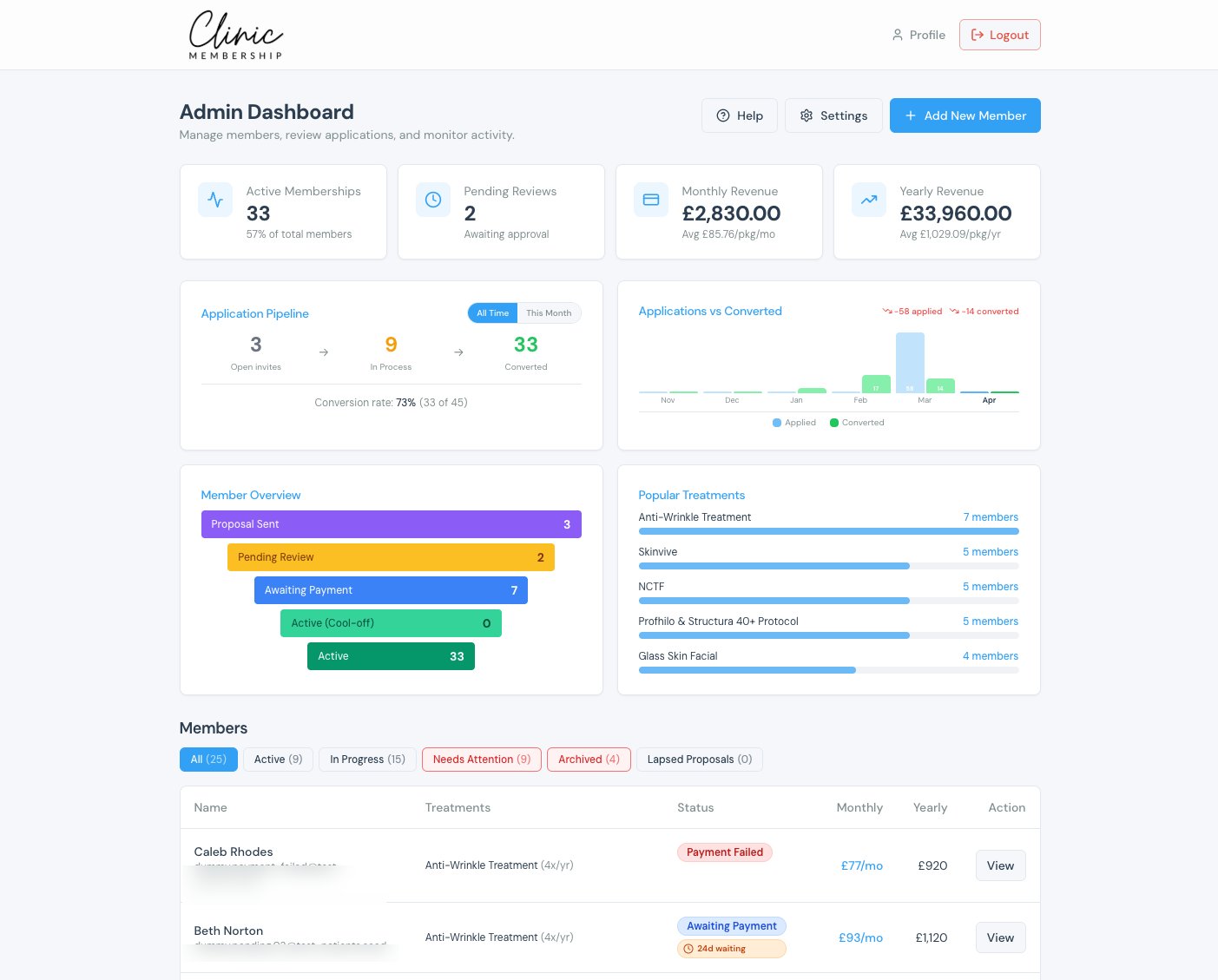
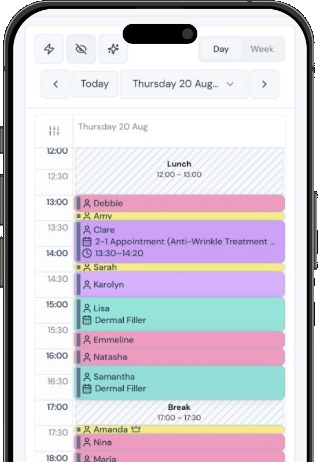
Clinic Membership is clinic management software for UK aesthetics clinics: patients, calendar, memberships, payments and reports in one place. Recurring card payments sit on the plan. The point for this angle is operational honesty. When someone joins, the plan and the payment share the patient record, so cutback-era questions ("what am I actually paying for?") have an answer on screen rather than in a spreadsheet chase.
If clinical notes and consent (EMR) are part of your stack, that sits with Documenti in the same sentence as the clinical side. Membership billing is the commercial relationship. Keep those jobs distinct.
Owners who want feature depth can open features. This piece is market context: the UK already runs on consumer subscriptions, cutback pressure is real, and a clinic plan earns its place by being treatment continuity rather than another forgettable tile.
A short owner checklist for cutback season
Before you freeze every membership idea because of a headline, check four things:
- Does the plan describe treatments people already buy from you, or does it invent a new habit you hope they will learn?
- Can you explain the monthly figure in one breath without comparing it to Netflix?
- Do failed recurring card payments land as a clear recovery task on the right patient?
- Can you run a pilot on a small set of records before you market the plan widely?
If any answer is no, fix the plan design. Do not blame the Barclays cutback row for a vague offer.
The short version
88% of UK adults already hold a UK consumer subscription, and among those holders the average is £50.60 (Barclays). 59% want to cut back, and 21% say they have already cancelled something. That is the climate, not a veto on clinic plans.
A clinic membership is not a streaming tile. It is a clearer way to bill treatment people were going to book anyway, on a rhythm you set, with recurring card payments on the same record as the plan. Cutback headlines make the comparison sharper. They do not make the category disappear.