
Every clinic owner knows the feeling. A gap opens in the diary that was booked twenty minutes ago. The room is ready, the products are out, and nobody walks in. It stings for a moment, you rebook the slot if you're lucky, and you move on.
The trouble is that a no-show is rarely a one-off. Across the sector, aesthetic clinics run no-show rates of roughly 15–25%, noticeably higher than the 5–10% typical of general medical practice (NextMotion, 2026). For a busy treatment room, that's not the odd empty hour. It's a structural leak in the one thing you can't make more of: chair time.
Today's a data day, so let's put some numbers around it, and then look at why membership clinics quietly sidestep most of the problem.
The maths of an empty chair
Start with the obvious cost: the treatment that didn't happen. If one in five booked appointments doesn't turn up, you're not running the clinic you think you are. You're running it at roughly four days a week while paying for five: the rent, the staff hours, the insurance and the kit all carry on regardless.
Then comes the cost most owners miss, because it hides. A no-show isn't just a lost hour; it's very often a lost patient. Around 35% of first-time aesthetic patients never come back after their initial visit (American Med Spa Association). A first appointment that ghosts you rarely rebooks itself, and winning a brand-new patient to replace them costs somewhere between five and twenty-five times more than keeping one you already have (Bain & Company). So the empty chair is really two costs stacked on top of each other: the session you lost today, and the lifetime of visits that patient may never make.
There's a technology angle here too, and it's a stubborn one. Clinics running on a patchwork of disconnected tools (a booking app here, a spreadsheet there, reminders sent by hand) see around 45% more no-shows than clinics on a single connected system (ProspyrMed, 2026). When the reminder doesn't fire, the deposit isn't taken, and nobody spots the pattern, the diary leaks faster than anyone realises.
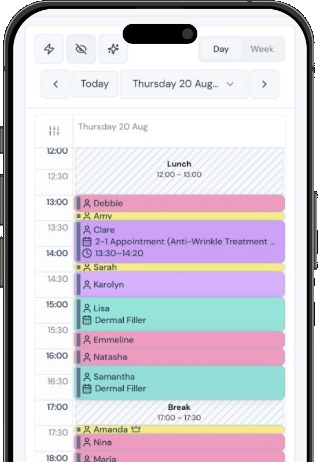
And there's the knock-on cost that never makes the spreadsheet: the scramble. A slot that empties an hour before it starts is almost impossible to refill on short notice, so someone at the front desk loses part of their afternoon phoning round a waiting list by hand, often for nothing. That's staff time spent patching a hole instead of looking after the patients who did turn up. The empty chair doesn't just cost you the session; it quietly taxes the rest of the day around it.
Why the reminder-only approach hits a ceiling
Most advice on no-shows stops at "send better reminders." Reminders help, and you should absolutely send them. But a reminder is a nudge, not a commitment. It asks a patient to remember; it doesn't give them a reason to show.
That's the ceiling. Once you've automated your reminders, the next reduction in no-shows doesn't come from nagging harder. It comes from changing the relationship. A patient who has paid nothing and committed to nothing has very little holding them to Tuesday at two. A patient who is a member, who has a plan running, credit sitting on their account, and a treatment they've already partly paid for, has every reason to turn up.
Why members rarely ghost
This is the part that doesn't show up in a reminders comparison, and it's the whole reason recurring-revenue clinics sleep better.
When a patient joins a membership, several things change at once. They've usually put a card on file, so the appointment isn't an abstract booking. It's part of something they're already paying for. They have membership credit or a prepaid course to use, which they lose the value of if they drift away. And they're on a plan with a rhythm to it, so the next visit isn't a decision they have to re-make every few weeks; it's simply the next step.
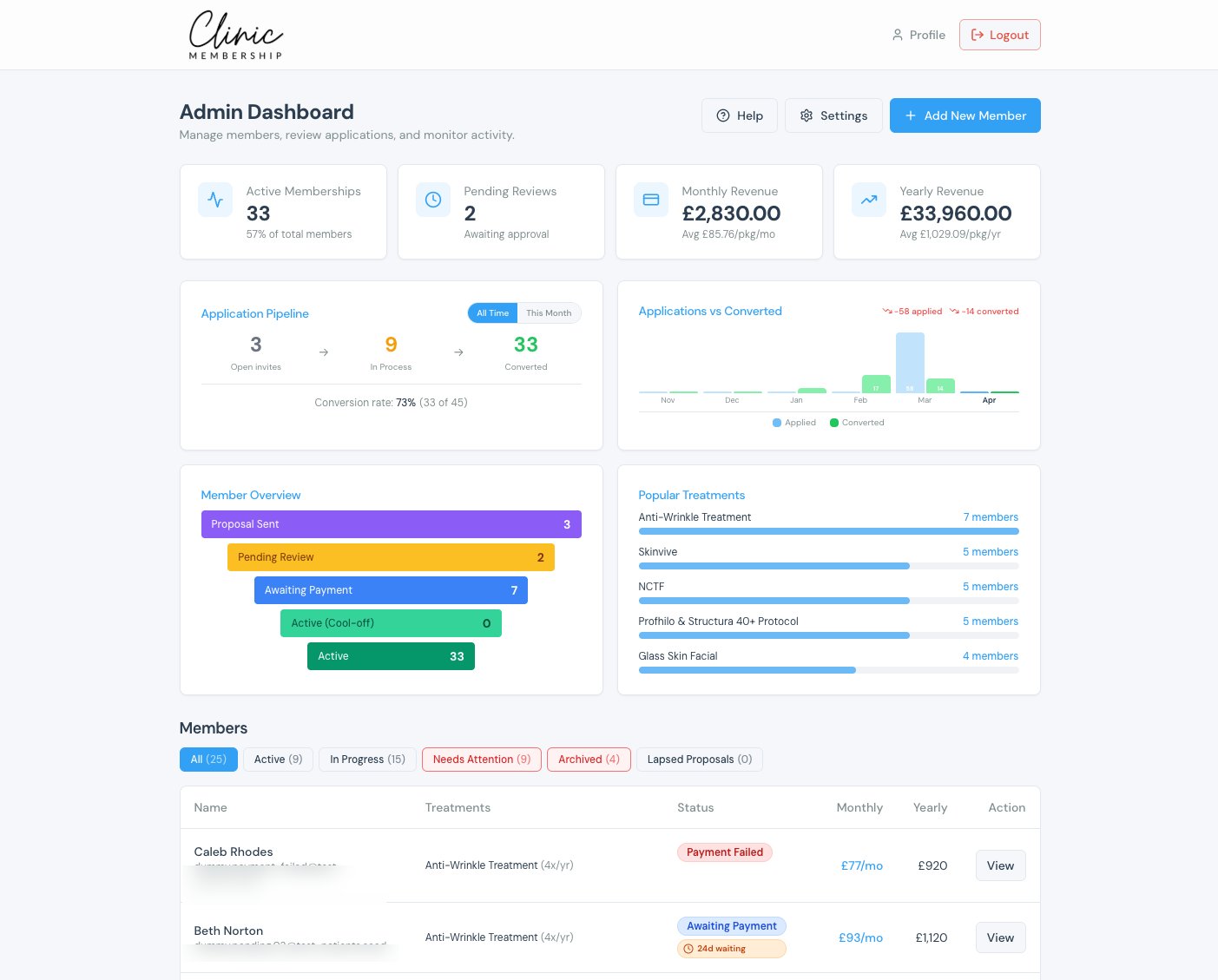
Good membership software leans into all of that. With Clinic Membership, the plumbing that keeps members showing up is built in rather than bolted on: recurring card payments run automatically, failed-payment alerts with one-click recovery stop a lapsed card from quietly becoming a lapsed member, and a self-service portal reminds patients when their last visit was and nudges them to book the next. Treatment-spacing rules keep bookings sensibly timed, and a smart wait list means that when a slot does free up, the next patient in line is offered it automatically, so the rare no-show costs you far less.
None of that requires you to become a full medical-records system or to rip out the tools you like. It just means the moments that usually cause a no-show: a forgotten appointment, an expired card, a patient who wasn't sure when to come back, are handled before they turn into an empty chair.
Turn a leak into a number you can watch
The clinics pulling ahead in 2026 aren't the ones with zero no-shows. Nobody has zero. They're the ones who've turned no-shows from a vague monthly frustration into a number they can see and act on, because their software shows them who didn't turn up, who's about to lapse, and how much recurring revenue is holding steady underneath it all.
If your no-show rate is sitting anywhere near that 15–25% band, the fastest win isn't another reminder template. It's giving more of your patients a reason to be there in the first place. That's what a proper membership model does, and it's exactly what Clinic Membership is built for.
See how a membership engine keeps chairs full and revenue predictable on our membership software for UK clinics page, dig into the detail in our guides on why a third of first-time patients never return and filling last-minute cancellations, or check what's included on pricing.