
If you run a UK aesthetics clinic, a lot of your best work happens across weeks, not in a single appointment. A skin-booster course, a maintenance cadence, a series of sessions that build on each other: the plan is where the results live. It's also where clinic owners quietly lose money, because a plan that runs across weeks is a plan that can slip: a patient books the first session, means to come back, and never quite does.
That's the gap behind a question we see more and more owners typing into a search bar, some version of "which aesthetic clinic software has built-in treatment plan features." What they're really asking is: how do I sell a course, keep a patient moving through it, and make sure nothing falls through the cracks between sessions? Here's a practical way to run aesthetic clinic treatment plans so more patients finish what they start.
Why the plan is where revenue leaks
Start with the number that should keep every clinic owner honest: roughly a third of first-time aesthetic patients never come back after their initial visit (American Med Spa Association, 2026). A treatment plan is your single best tool for changing that, because it turns a one-off appointment into a reason to return that both you and the patient already agreed on.
But only if the plan is actually managed. When course details live in a notebook, the diary, a payment app and a few reminder texts, sessions collide, credit gets forgotten and patients drift. Clinics running on disconnected tools see around 45% more no-shows and billing errors than clinics on one connected system (ProspyrMed, 2026). The plan doesn't fail because the treatment doesn't work. It fails because nothing is holding the plan together between visits.
The upside of fixing it is real: research from Bain & Company, popularised by the Harvard Business Review, found a five percent lift in retention can raise profits by anywhere from 25 to 95 percent. In a market worth around £3.6 billion and still growing 8 to 9 percent a year, finishing more of the courses you've already sold is some of the cheapest growth available to you.
So here's the how-to.
1. Map the course before you sell it
Before a patient ever books, write the plan down as a structure: how many sessions, in what order, with what gap between each. This isn't clinical advice. It's the operational shape of a course you already offer, turned into something your software can hold. When the plan is defined once, up front, every patient on it follows the same clear path, and your team stops rebuilding it from memory each time. Bespoke, named packages beat vague "3 for the price of 2" deals here, because a named plan is something a patient can see themselves completing. (More on that in our guide to bespoke treatment packages versus tiers.)
2. Set the spacing so sessions can't collide
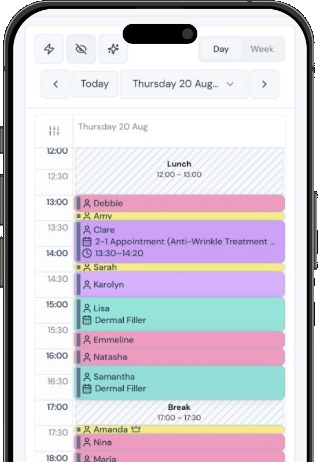
The most common way a course goes wrong is timing: two sessions booked too close together, or a follow-up that drifts so far it loses momentum. Build the minimum gap between sessions into the plan itself, so the system enforces it at the point of booking instead of relying on someone to remember. Get this right and the diary does the work for you: a patient simply can't book the next session too early, and the right interval is suggested automatically. We covered the mechanics of this in treatment spacing rules for aesthetic clinics.
3. Sell the whole plan, not one session at a time
If a patient pays session by session, every appointment is a fresh decision to keep going, and roughly a third of the time that decision goes the wrong way. Package the course as one commitment instead: a single payment for the plan, or a membership that rolls the sessions into a predictable monthly relationship. Now the patient has bought the outcome, not a single visit, and your clinic has the revenue on the books rather than hoping for it. If a rolling membership fits your treatments better than a one-off package, our overview of the best membership software for UK clinics walks through how that looks in practice.
4. Track remaining credit so nothing gets lost
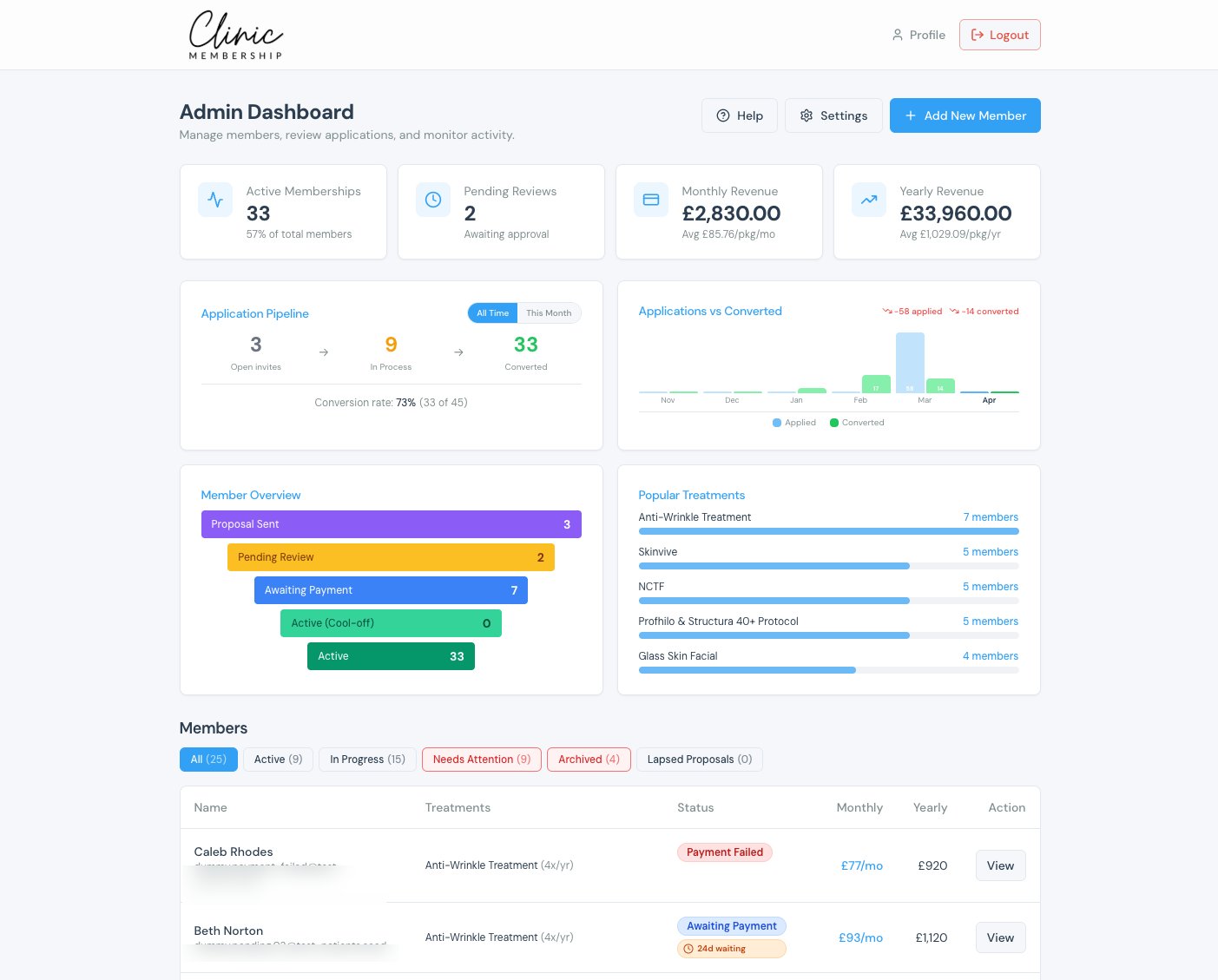
Once a plan is sold, someone has to know exactly how many sessions a patient has left, and "someone" should be the software, not a sticky note. When remaining credit is tracked automatically and visible to both the front desk and the patient, three things stop happening: patients don't quietly forget they've prepaid, your team never double-charges or under-delivers, and unused sessions don't sit as an invisible liability on your books. This is a business record, not a medical one: Clinic Membership keeps the patient's plan, credit and history in one place, but it isn't medical records software.
5. Automate the next booking
The single most valuable moment in any treatment plan is the handful of days after a session, when the patient is happy and the next appointment hasn't been booked yet. Don't leave it to a manual phone-round. Let the system prompt the next booking automatically, at the right interval, and give the patient a self-service way to book it themselves. If an earlier slot opens up, a smart wait list can offer it to the patients who wanted it, filling a gap that would otherwise cost you a session, with no admin at all.
One system beats five apps
Every step above gets harder the moment the plan is spread across separate tools. Map it in one place, take payment in another, chase the rebooking in a third, and you've rebuilt exactly the disconnected setup that drives the 45% more no-shows and billing errors. Run the whole plan (structure, spacing, packaging, credit and rebooking) in one connected system, and finishing courses stops being a matter of luck and admin, and starts being something your clinic just does.
That's the difference between a treatment plan that looks good on paper and one your patients actually finish. If you'd like to see how it works for your clinic, take a look at our plans and pricing.