
For years, the typical UK aesthetics appointment was an event. A patient booked ahead of a wedding, a holiday or a big birthday, came in for a noticeable result, and you might not see them again for a year, if at all. The 2026 clinic looks different. The defining shift this year isn't a single new treatment; it's a change in how often patients come through the door, and aesthetic treatment cadence at a UK clinic has quietly become an operations problem rather than a clinical one.
The trend: smaller, more often
Walk through any 2026 industry round-up and the same phrase keeps surfacing: the move away from dramatic, volume-led results toward subtle, "undetectable" ones. Practitioners are increasingly working in micro-doses: small amounts of toxin, regular skin boosters, and the regenerative treatments (polynucleotides, biostimulators, collagen-stimulating injectables) that the sector now describes as foundational rather than emerging. The whole point of this approach is that it doesn't announce itself. It maintains.
Maintenance has a rhythm. A patient on a micro-dosing or skin-health pathway isn't coming once a year for a big result. They're coming back every few weeks or every quarter for a small top-up. Commentators keep reaching for the same comparison: patients are starting to treat aesthetics the way they treat the gym. It's not a one-off purchase anymore. It's a routine.
That's genuinely good news for a clinic. Regular, predictable visits are the foundation of a stable business. But only if your operations are built to hold that rhythm, and most clinic diaries still aren't.
Why the old booking model leaks
Here's the quiet problem. When a treatment is an event, the patient owns the timing. They rebook when they remember, or when the next occasion looms. That works for a once-a-year filler appointment. It falls apart the moment the ideal cadence is every eight to twelve weeks, because life gets in the way and "I'll book when I'm due" turns into a three-month gap, then a six-month gap, then a patient you've quietly lost.
The numbers around retention have always been unforgiving. The American Med Spa Association reports that roughly a third of first-time patients never return after their first visit. In a market like the UK's, worth an estimated £3.6 billion and growing 8–9% a year, every one of those non-returners is leaked lifetime value. And the micro-dosing shift raises the stakes rather than lowering them, because a maintenance patient who drifts for six months hasn't missed one big appointment, they've missed four small ones.
The clinics that will win the routine-aesthetics era aren't the ones with the longest treatment menu. They're the ones whose systems remember the patient's cadence so the patient doesn't have to.
What "keeping up with the diary" actually looks like
This is where the operational side of the shift matters more than the clinical one. If patients are moving to a rhythm of regular, smaller visits, three things need to happen automatically, not on a sticky note, not in your head at 9pm.
The first is recall that fires on time. When a patient's interval is up, the prompt to rebook should reach them without you remembering to send it. A patient portal that shows someone when their last visit was, and nudges them toward the next one, turns "I'll book when I'm due" into a booked appointment. Our own rebooking-cadence guidance walks through how much of a clinic's revenue hides in that single gap.
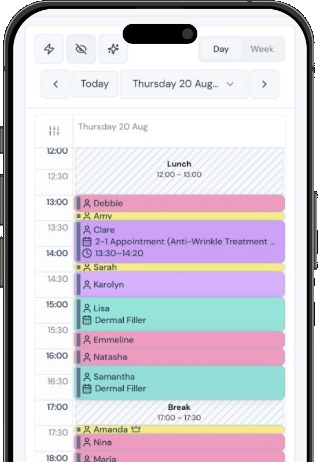
The second is spacing that protects the clinical result. Micro-dosing and regenerative courses only work at the right intervals, too soon and you're wasting product, too late and the effect lapses. Treatment-spacing rules that are enforced at the point of booking mean the diary itself keeps patients on the correct cadence, rather than relying on the front desk to catch it.
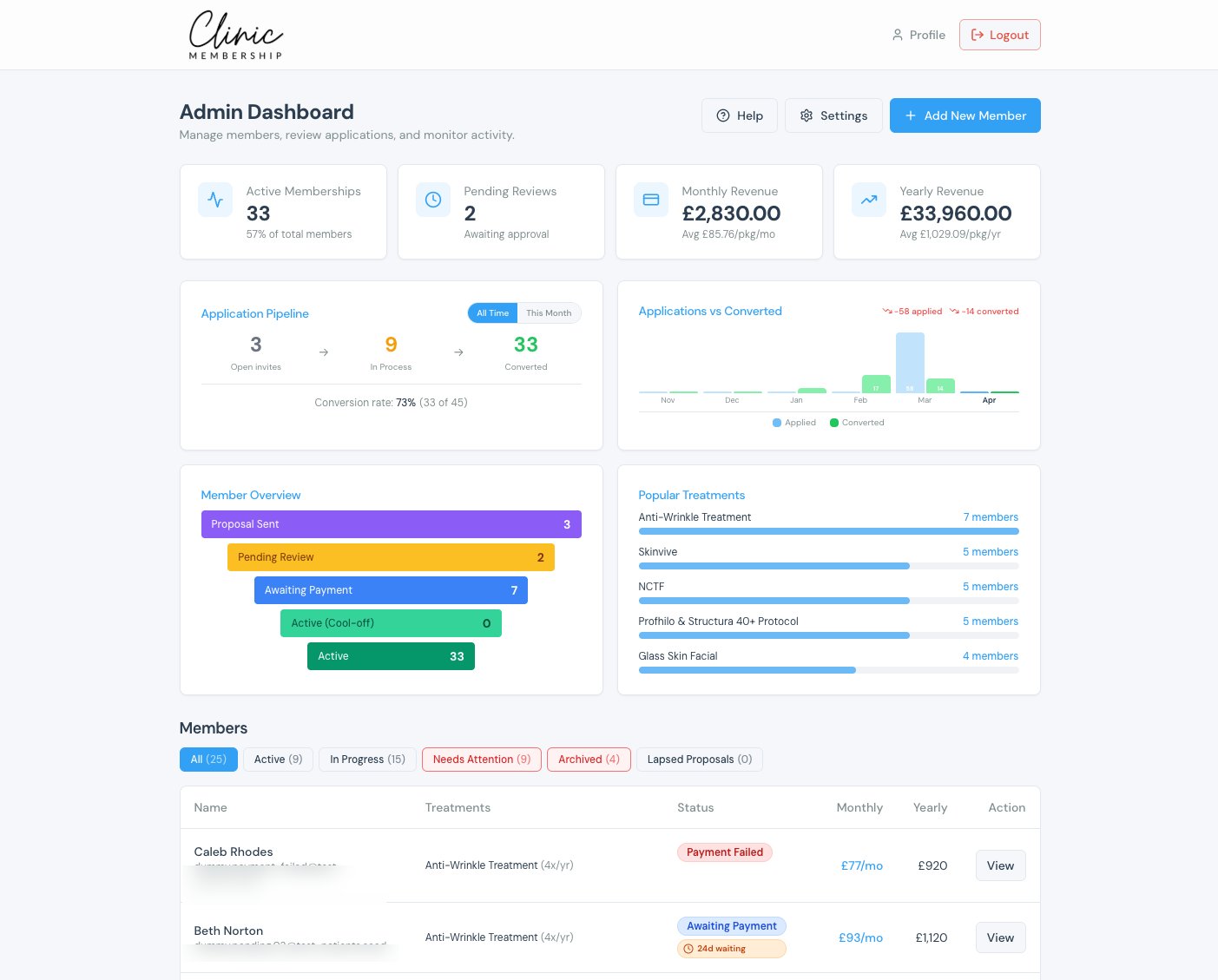
The third is a way to package the rhythm so both sides commit to it. A patient who has signed up to a plan (a set of regular treatments at a monthly price) has a reason to keep the cadence, and you have predictable, recurring income instead of a diary you re-fill from scratch every month. This is the part the big booking platforms are only now bolting on as a "membership button." A purpose-built membership engine treats the cadence as the product: bespoke packages, credit that carries between visits, and automatic renewal on recurring card payments so the routine doesn't depend on anyone remembering.
What is the right aesthetic treatment cadence for a UK clinic?
There's no single interval that fits every treatment, and that's exactly why aesthetic treatment cadence has become an operations question rather than a clinical footnote. A skin-booster course might run every four to six weeks for the initial phase, then settle into a maintenance visit each quarter. Regenerative injectables often follow a short course followed by top-ups. Micro-dosed toxin sits on its own shorter rhythm. The practical point for a clinic owner is that you are no longer managing one cadence. You're managing several overlapping ones across a growing book of regular patients, and no amount of memory or spreadsheet discipline scales with that.
The clinics coping well have stopped asking each patient to track their own interval. They set the correct spacing once, per treatment, and let the system hold it: the recall goes out on time, the next slot is offered before the gap opens, and the plan renews in the background. The cadence stops being something the front desk chases and becomes something the software simply maintains.
The read for clinic owners
The micro-dosing trend is usually written up as a clinical story: what's in the syringe, why undetectable is in. The more useful read for a clinic owner is operational. Patient behaviour is moving from occasional to regular, and regular only compounds into revenue if your systems hold the interval. A diary designed for once-a-year events will quietly leak the exact patients this trend is handing you.
Aesthetics becoming a habit is one of the best structural gifts the UK market has offered clinics in years. The clinics that capture it will be the ones that stopped treating each appointment as a standalone booking and started treating the cadence as the thing they run.
If your clinic is moving toward regular, plan-based treatment, it's worth checking that your software can actually hold that rhythm, recall, spacing and recurring plans in one place rather than three. You can see how Clinic Membership approaches it, and compare plans on our pricing page.