
Every so often the market tells you what it wants, if you're willing to sit and listen. Over the last month I've spent longer than I'd like to admit reading the search terms that bring clinic owners to us: the exact phrases people type into Google before they ever land on a page. And a pattern has formed that I can't stop thinking about.
The question has changed.
A couple of years ago, the searches were tentative. "Do aesthetic clinics need software?" "Is clinic management software worth it?" People were still deciding whether the category was for them. That question has more or less been settled. What owners type now is far more specific, and far more revealing. Phrase after phrase takes the same shape: which aesthetic clinic software has built-in loyalty features. Which software has built-in memberships and package features. Built-in treatment plans. Built-in reporting.
Built-in. Over and over. That one word is doing a lot of work.
What "built-in" really means
When someone searches for software with a feature built in, they're not asking whether the feature exists somewhere in the world. They already know it does. They're asking whether it comes as part of the thing they're buying, or whether they'll have to bolt it on afterwards, from somewhere else, and hope the two halves talk to each other.
That's a scar, not a spec. It's the sound of an owner who has been burned before. Who bought a booking system, then a separate payment tool, then a spreadsheet for memberships, then a reminder app, and spent the next year acting as the human glue between all of them. When you've lived that, you stop asking "does it have the feature?" and start asking "is it actually in here, or am I about to build another patchwork?"
I find this genuinely encouraging, because it's the exact conversation we've been trying to have since day one. The whole reason Clinic Membership exists is that memberships, in particular, are almost always sold as a bolt-on: a plug-in bolted onto a calendar, a payment add-on with a monthly surcharge. And a bolt-on behaves like a bolt-on. It sits to one side of the patient record instead of inside it. It bills on its own little island. It gives you a button, not an engine.
The cost of the patchwork isn't the subscription. It's the admin
Here's the part owners feel but rarely put a number on. The real cost of a bolted-together clinic isn't the stack of monthly fees, painful as those are. It's the hour a day you spend being the integration nobody sold you. Copying a new patient's details from the booking tool into the records app. Chasing a failed membership payment by hand because the payment tool doesn't know the diary exists. Reconciling who's actually an active member versus who quietly lapsed three months ago.
None of that is clinical work. None of it is time with a patient. It's the tax you pay for a system that was assembled rather than designed. And it compounds, quietly, until one busy month it tips over and something important slips.
That's why I think the "built-in" search wave matters beyond keywords. It's owners drawing a line. They've decided the glue work isn't theirs to do anymore.
Why the answer has to be the whole system
The temptation, when you see search demand like this, is to bolt on a matching feature and call it done. Loyalty's trending? Ship a loyalty tab. Memberships? Add a plan builder. But that just recreates the problem one layer up: a feature that's technically present but still lives apart from the patient, the diary and the money.
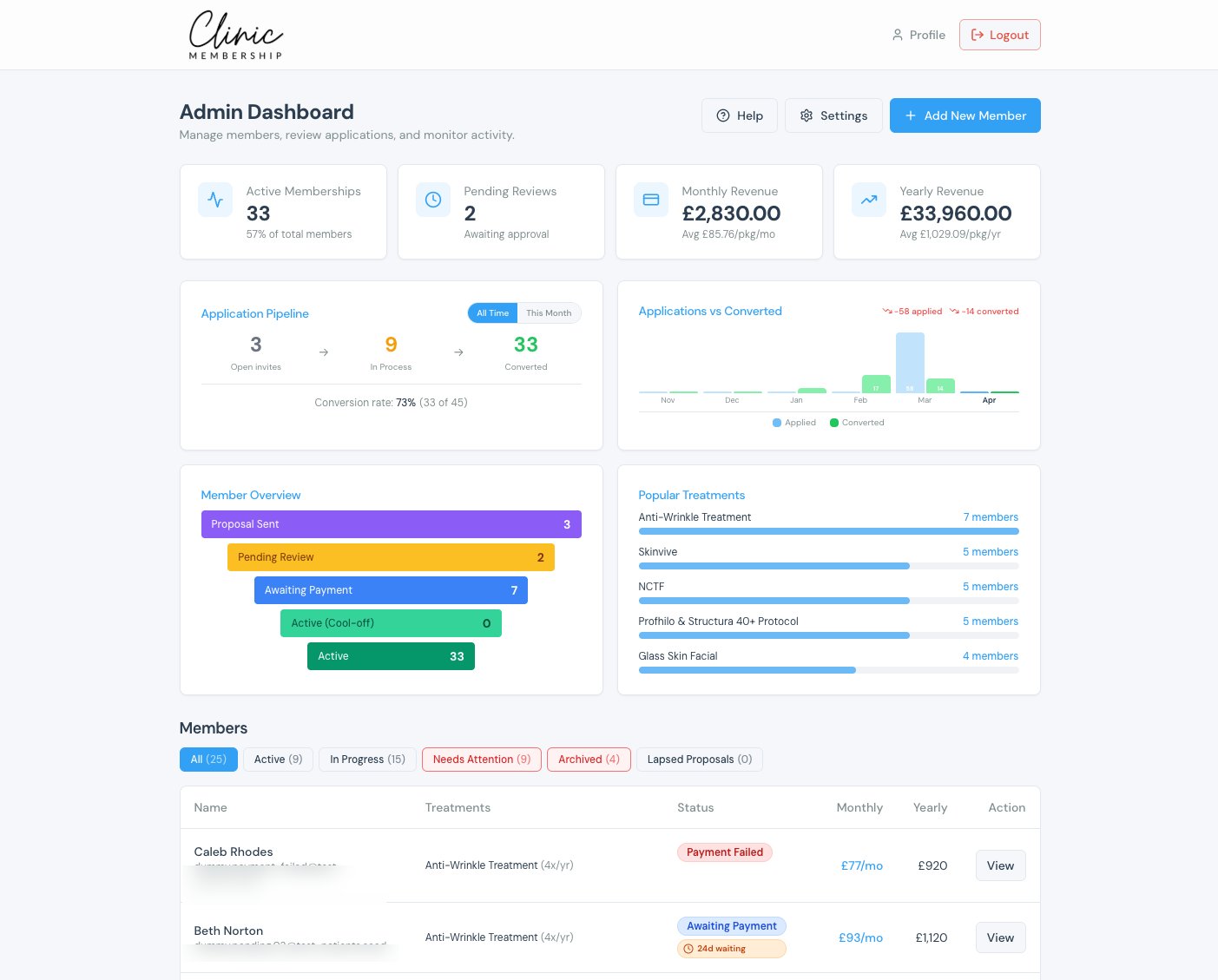
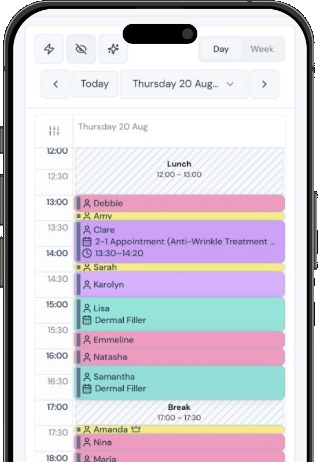
What owners are actually asking for is coherence. Not a full medical-records system: a connected patient hub, where one record carries their contact details, their membership status, their invoices and their treatment history in the same place. A calendar that stays in sync with that record. Recurring payments that know when a card fails and can recover it without you lifting a finger. Reports that pull from all of it, so your recurring revenue, your active members and your churn are numbers you can see rather than numbers you have to assemble. That's not four features in a trench coat. It's one system doing the heavy lifting so you don't.
The industry standard is that keeping a patient is far cheaper than winning a new one, and that a good chunk of first-time patients (the American Med Spa Association puts it at roughly a third) never come back at all (Source: American Med Spa Association, 2026). You don't fix that with a bolt-on button you have to remember to press. You fix it with a system that remembers for you: that nudges the rebooking, tracks the membership credit, and flags the member who's drifting before they cancel.
The question I'd ask if I were buying today
If I were a clinic owner shopping this week, I'd take the "built-in" instinct that so many of us are already searching with and push it one step further. Not just "does this have memberships?" but "when a member books, does the system already know their plan, their credit and their next suggested visit, or am I going to be told that's a separate module?" The answer to that tells you whether you're buying an engine or a button.
The market has quietly worked this out for itself. The searches gave it away. Owners aren't looking for more tools to manage. They've got plenty. They're looking for one fewer thing to hold together by hand.
That's the clinic we're building for. Built in, not bolted on.
Curious what "built in" should actually cover before you commit? We keep a plain-English checklist of what to look for in aesthetic clinic software with built-in memberships, and you can see how Clinic Membership brings patients, calendar, memberships, payments and reports into one place, or compare the best membership software for UK clinics. When you're ready, the pricing is simple and there's a free tier to start on.
: Benjamin Norman, Founder, Clinic Membership