
If you run a UK aesthetics clinic, you already know the shape of a Tuesday morning. Someone is on the phone trying to rebook. Someone else is waiting at the desk. You are holding the needle, or you are about to, and the diary is in a different place from the payment, which is in a different place from the membership list you promised yourself you would start last month. The new clinic management app is our answer to that Tuesday, not another tool to add to it.
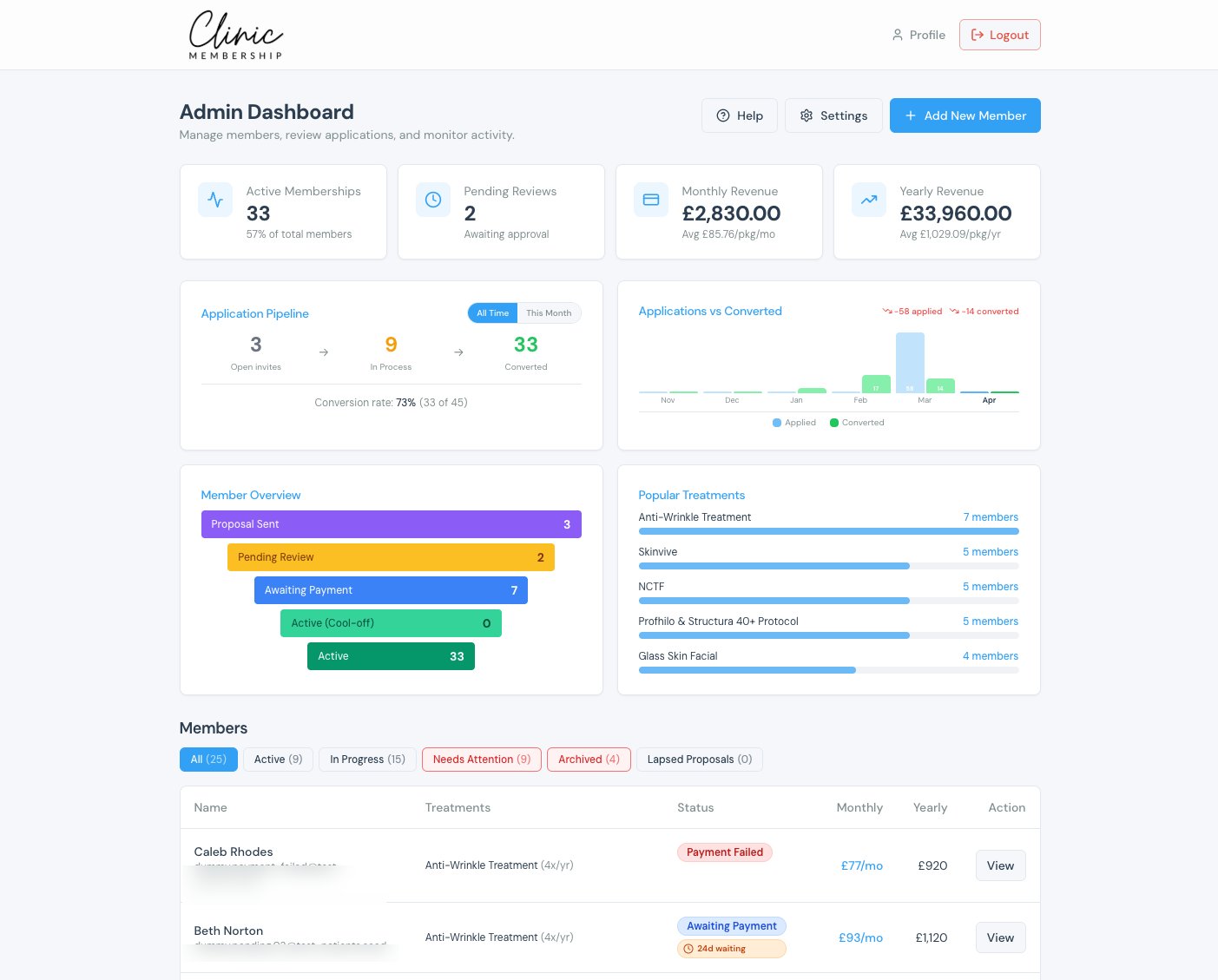
Clinic Management is the app both Clinic Membership and Documenti run inside. Front of house and in clinic, on one app, with payments running through it. Clinic Membership is the clinic management software that sits underneath: patients, calendar, memberships, payments and reports in one place. This post is about the app that lets you use all of that without jumping.
The patchwork you are already running
Most small clinics do not choose a patchwork. They grow into one.
The diary starts in one product because that is what you needed first. Payments live with a card machine because that is what the accountant asked for. Memberships, if they exist at all, live in a spreadsheet, because the system that books the appointment was never built to hold a plan. The virtual assistant or the call-answering service is still reading from a diary they cannot write to. You are the person who knows how it all fits together, which means you are also the person who cannot take a day off.
That is the cost. Not a licence fee. Your attention, every time two systems disagree about whether Mrs Khan is due in on Thursday.
A clinic management app does not fix that by adding a nicer calendar. It fixes it by making the diary, the patient record, the plan and the till the same object. When reception books a visit, it sits on the patient. When a member pays, the plan updates. When someone cancels, the waitlist can see the gap. None of that is clever. It is what one place actually means.
Front of house and in clinic, without jumping
Clinic Management is the app. Clinic Membership is the clinic management software underneath it. You do not have to remember the distinction to use it. You just have to stand at reception and then walk into the room without changing product. The same patient, the same diary, the same payment. Clinic Membership runs the day to day. If you need secure clinical notes or consent forms, Documenti, our sister EMR, connects to it. They connect. That is the whole integration claim.
You do not need a tour of screens you cannot see from here. The homepage walkthrough is the public version of how a clinic day is supposed to feel: set up, run the day, then grow with memberships when you are ready.
What the clinic management app actually does
Here is the marketed suite, in the order a clinic actually uses it.
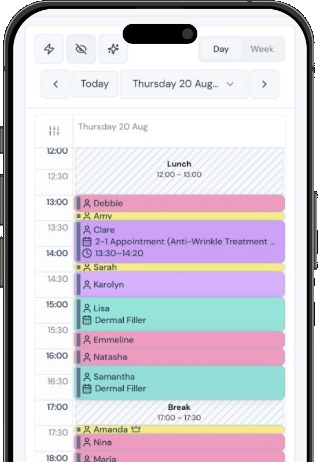
The calendar is the diary, online booking and the waitlist in one place. Appointments sit on the patient record, not in a side tool that reception has to reconcile later. Patients can book a slot themselves. Reception spends less time chasing gaps, because the waitlist is watching the same diary.
Treatment booking rules are yours, enforced at the point of booking. Reviews stay inside the window you set. Spacing between visits is the gap you decided, not a guess a patient makes on a public calendar. Back-to-back bookings you would refuse do not appear as available. The patient sees the next eligible date. You keep the clinical decisions. The software keeps the diary honest.
The membership treatment planner works from the plan, not from a reminder list on someone's phone. It finds real slots and lets a member book several appointments at once. That is an operational move: one sitting, several dates, the plan doing the arithmetic.
Patient-aware booking knows whether someone is new, returning or lapsed. Consultation-first rules, intake waitlists and lapsed-patient flows change what that person can book, without staff checking every time.
Automated follow-up is aftercare, rebooking and review requests on the timing you set, per treatment. The emails go out because the visit happened, not because someone remembered to send them.
UK bank holidays are a setting, not a yearly argument. Pick England and Wales, Scotland or Northern Ireland. The diary stays blocked on public holidays for a rolling two years. Patients cannot book online when you are shut.
None of those is a screenshot. They are the capabilities on the site today.
Booking rules, waitlists and UK bank holidays
The fear that keeps aesthetics owners off online booking is a good fear.
Patients return on a rhythm you set. A public calendar that offers every empty slot is not helpful. It is how you end up with a review booked too soon, or a new patient in a slot that should have been a consultation first, or a bank holiday Monday filling up while you are closed.
The waitlist is the other half of that. Someone cancels. Matching patients who already told you their ideal days get a one-click link, or they move earlier. The gap does not sit there until you notice it at six in the evening.
Bank holidays look small until they are not. England and Wales, Scotland and Northern Ireland do not share a calendar. A rolling two-year block means you set it once and stop being the person who remembers the August bank holiday every year. That is exactly the kind of day a public calendar gets wrong if nobody has told it.
Memberships stay in the same system
If you have tried to run memberships on top of a diary that does not know they exist, you already know the failure mode. The plan lives in one place. The appointment lives in another. The card is somewhere else. Failed payments surface as a gap in the diary weeks later, not as an alert the morning they fail.
Clinic Membership was built so the plan, the diary and the payment are the same system. Recurring card payments only. You look at pricing when you want the numbers. This post will not quote them.
A digital membership agreement is a commercial document. It is not a clinical consent form. Keep the two words apart. The first belongs to Clinic Membership. The second belongs to Documenti.
Clinical notes stay with Documenti, our sister EMR
Clinic Membership is not an EMR. Documenti, our sister EMR, handles clinical notes and consent forms. Those two names belong in the same sentence. Drop the name and the products collapse into each other.
Secure clinical notes for UK aesthetic clinics is the page that sets this out. Reception lives in Clinic Membership: contact details, memberships, payments, invoices, point of sale (POS) and reports. Practitioners open their daily list in Documenti. Patients and appointments sync. Notes do not leak the other way. Front of house never sees the clinical record.
That is as deep as the claim needs to go for this launch: they connect. Nothing more is being promised here.
Live in under 60 minutes
You can be live in under 60 minutes. Point the website importer at your clinic site. It pulls the first hour of setup: name, branding, services. You connect Stripe and go. Auto-onboarding runs on every plan, including Free.
The free plan is up to 10 patient records. That is a real clinic, not a demo with dummy names. No card required to start. Cancel anytime. Data is kept for 30 days if you leave.
If you want the longer version of why setup is an hour rather than a sequence of onboarding calls, we already wrote Clinic Software Setup Should Take an Hour, Not Weeks. This post will not restate it. The app is the thing that makes that hour usable in the room, front of house and in clinic, without the patchwork.
The app itself lives at app.clinicmembership.co.uk. It is a login wall from here, which is as it should be. You do not need a gallery of invented screens. You need to know the Tuesday morning has somewhere to go.