

Someone has quoted you a setup fee. Maybe it was called implementation, or onboarding, or a one off configuration charge. Either way there is a number sitting in front of you that has nothing to do with the monthly price, and you want to know what you pay upfront to get started with clinic software before you agree to anything.
That is a fair question and it deserves a plain answer. This post is about the shape of the cost rather than the size of it, because the shape is the part that catches people out. Every amount belongs on our pricing page, not in a blog post that might be out of date by the time you read it.
What you pay upfront to get started with clinic software, itemised
There are only four places a starting cost can hide, and it helps to name them.
The licence. The monthly or annual fee for the software itself. This is the number every vendor puts on their pricing page, and it is the number you have probably already compared.
The setup or implementation fee. A one off charge to configure the system for your clinic. Sometimes it buys real work. Sometimes it buys a call and a spreadsheet template.
The migration. Getting your existing patients, treatments and appointments out of wherever they currently live and into the new thing. That might be another system, or it might be a paper diary and a filing cabinet.
Your own hours. The evenings and weekends you spend typing, checking and re-checking. Nobody invoices you for these, which is exactly why they get left out of the comparison.
The first two are visible. The second two are the ones that actually decide whether the move was worth it.
The catch is rarely the monthly price
Clinic owners are good at comparing monthly fees. It is a single number on a public page and it takes a minute.
The trouble is that the monthly fee is the one cost that behaves itself. It is the same every month, you agreed to it knowingly, and you can cancel it. The costs that hurt are the ones that arrive once, arrive early, and arrive at the exact moment you have the least appetite for them, which is the week you are trying to run a clinic and learn a new system at the same time.
If you are nurse-led or working out of a single room, that week is not abstract. The person answering the phone is the person holding the needle. Every hour spent copying patient records across is an hour not spent treating, and it is an hour nobody quoted you for.
What free actually covers here
Our Free plan is free forever and it gives you up to 10 patient records. No card required to sign up, and nothing expires after two weeks.
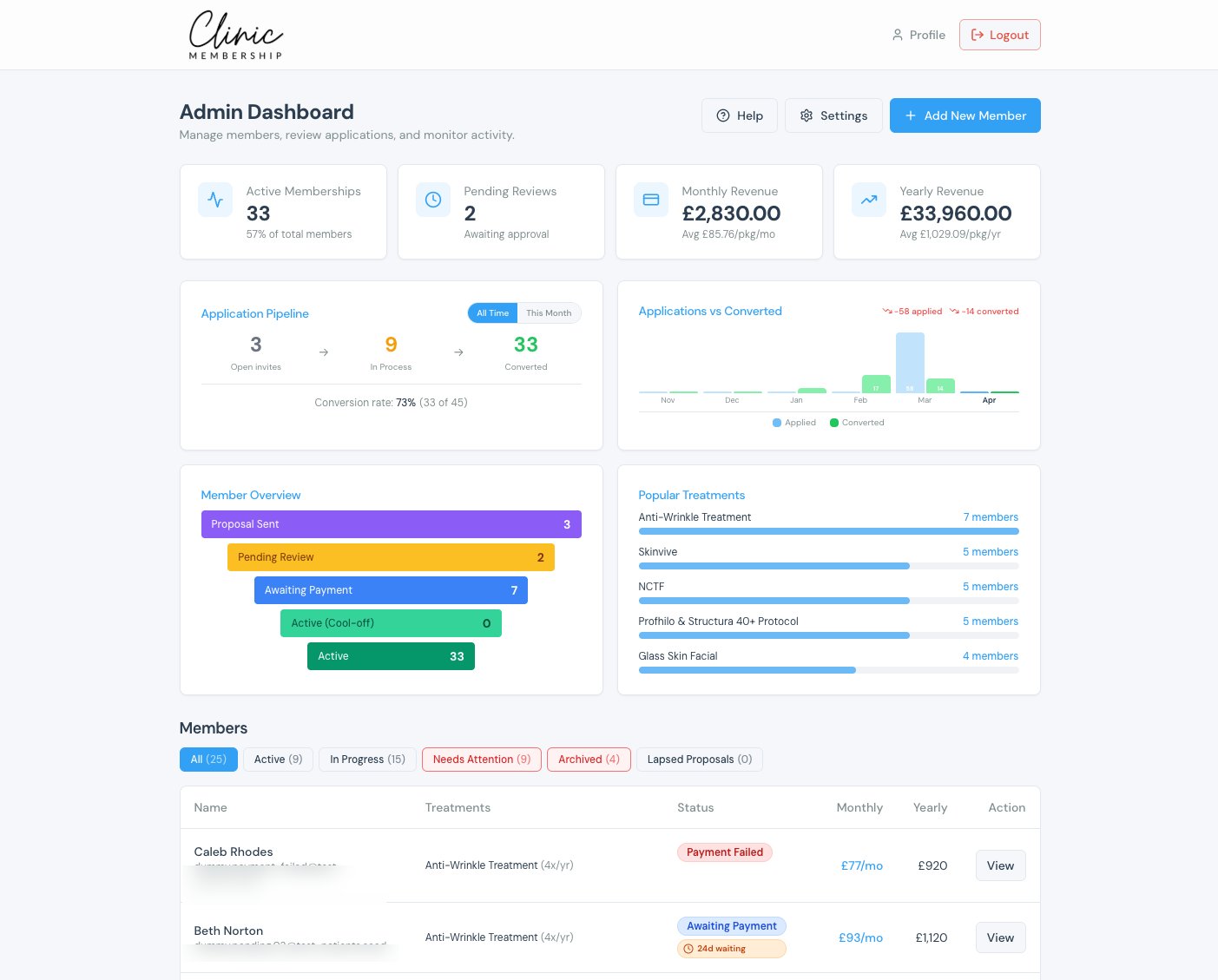
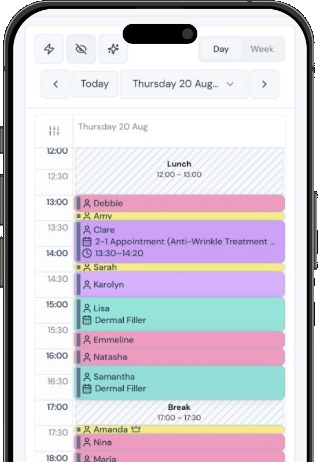
It is not a demo account. You get the calendar, the patient records, memberships and reports, which is enough to run a real clinic day rather than a pretend one. The point of it is that you can find out whether the thing suits you using your own patients and your own treatments, before you have paid anybody anything.
That matters more in aesthetics than it does in most sectors, because your working pattern is unusual. Your patients come back on a rhythm you set. Your treatments need spacing. A system that looks fine in a demo can fall over the first time you try to hold a course of treatments as credit rather than as four separate bookings, and you will only discover that with your own data in front of you.
The cost that hides behind the word onboarding
Ask what onboarding includes and you will get one of two answers.
The first is a fee, a project plan and a date a few weeks out. The second is that you do it yourself, which sounds cheaper and often is not, because the hours are simply moved onto you.
There is a third answer and it is the one worth looking for: the system does most of it without you. Our setup reads your existing clinic website and pulls in your settings, your branding and your treatment list, on every plan including Free. That is why we say a clinic can be live in under sixty minutes, and the sixty minutes only means anything because of the mechanism behind it. A promise of fast setup with no explanation of how is just a promise.
You will still need to import your patients if you are coming from another system or from paper notes, and that is a step you do yourself inside the app. It is documented, it is not a project, and it is not a phone call with a salesperson.
Four questions to ask any vendor before you hand over a card
Take these to whoever you are considering, including us.
- Is there a one off fee of any kind before the first monthly payment? Not "is there a setup fee", because the charge often has a different name. Ask about the total before month one.
- Who does the data migration, and what happens if it goes wrong? If the answer is that you do it, ask to see the import screen before you commit rather than after.
- What does the price do when I add a practitioner, a room or a location? A per seat price is a growth tax, and it is the cost that grows quietly rather than the one you agreed to.
- What am I tied into, and how do I leave? Contract length, notice period, and what happens to your patient data afterwards. A vendor that answers this one comfortably is telling you something.
For what it is worth, our answers are: nothing before month one, you import your own patients and the help centre walks you through both routes, the Founders plan carries no per member surcharges and includes unlimited clinicians and team members, and there are no long term contracts. You can cancel any time.
What happens when you outgrow free
At some point you pass 10 patient records and you have a decision to make. By then you will have been running your actual clinic on the thing for a while, which is a much better position to decide from than a sales call.
The paid plan is a flat monthly figure. It does not go up because you added a second injector or because your membership list grew, and the number you see on the pricing page is the number before VAT. Check the pricing page for the current figures rather than trusting any blog post, ours included.
If you want to go deeper on the two costs this post has deliberately left alone, we have written about how long setup should actually take, about what an integration charge is really telling you, and about why per practitioner pricing behaves like a tax on growth.
The short version
You should be able to find out what a piece of clinic software costs you to begin, in writing, before you speak to anyone. If you cannot, that is the answer.
Start on the free plan, put ten real patients in, run a real week, and then decide.