
Pull twelve months of takings for almost any UK aesthetic clinic and the line rarely sits flat. It climbs through late spring, spikes across summer, drops away in August, then rebounds in autumn before tailing off towards the new year. Plotted out, it looks less like steady growth and more like the teeth of a saw, up, down, up, down.
Most clinic owners treat each tooth as its own little drama: a brilliant June, a worrying August, a relieved October. But this seasonal revenue pattern isn't random, and it isn't really a demand problem. It's a retention pattern in disguise, and once you see it that way, the quiet months stop being something to survive and start being something to plan for.
The summer peak is real, and predictable
The UK aesthetics market is worth roughly £3.6 billion and still growing 8–9% a year (UCL, 2026), but that growth doesn't arrive in even monthly instalments. It bunches.
From May through July, weddings, holidays and a calendar full of social occasions pull people towards anti-wrinkle treatments, skin boosters and "look refreshed for the photos" appointments. Diaries fill. New patients walk in who've never booked an aesthetic treatment before. For a few weeks, it feels like the clinic could run itself.
The trouble is what that peak is made of. A large share of summer demand is event-driven and one-off: someone books for a specific date, gets the result they wanted, and has no particular reason to come back once the wedding photos are in. That's the first tooth of the saw forming.
The August lull isn't bad luck
Then comes the dip. Clients are away, budgets are stretched after summer, and the event-driven bookings have already happened. August is the month most owners describe as eerily quiet: the phone slows, the diary thins, and fixed costs carry on regardless.
Here's the uncomfortable part: across the industry, around 35% of first-time patients never return after their initial visit (American Med Spa Association, 2026). The clinics that hold patients best keep 60–70% of them coming back; the average clinic sits well below that. So when a summer surge of first-timers isn't converted into something ongoing, the August lull isn't bad luck. It's the bill for treating the summer as a series of one-off appointments rather than the start of a relationship.
The demand was there. It simply walked back out of the door.
The autumn rebound, and the part nobody operationalises
September and October bring the third tooth: the rebound. After a summer of sun exposure, patients come back for skin boosters, peels, resurfacing and the regenerative treatments (polynucleotides and biostimulators among them) that have become the defining 2026 story in UK aesthetics. These are rarely one-and-done. They're sold as courses, then maintenance: a planned sequence of visits spaced weeks apart, with top-ups months later.
That cadence is the clue. The most in-demand treatments of the year are, by their clinical nature, recurring. Patients increasingly talk about their skin the way they talk about fitness, something you maintain, not something you fix once. Yet most clinics still bill these courses appointment by appointment, leaving the rhythm to chance. The treatments are recurring; the revenue isn't.
The sawtooth is a retention test, not a demand test
Step back and the pattern is clear. Each summer brings a fresh wave of patients. Each August reveals how many of them you actually kept. Each autumn offers a second chance to build something ongoing, and then the cycle repeats, with the same gaps in the same months, year after year.
A clinic that converts even a portion of its summer first-timers into ongoing care doesn't experience August the same way. Patients on a structured plan visit roughly 2.9 times a year on average (ProspyrMed, 2026), and those visits don't all fall in July. They're spread, which is exactly what turns a row of peaks and troughs into something closer to a level line.
This is why more than 70% of UK aesthetic clinics now run a membership or subscription model of some kind (Consulting Room / Anti Wrinkle Clinic, 2026). The question for most owners is no longer whether to offer plans. It's whether their summer peak is quietly feeding next year's August lull, or being banked as year-round cadence.
How membership flattens the line
Flattening the sawtooth doesn't mean working harder in August. It means changing what happens in June.
When a first-time summer patient leaves with a bespoke plan rather than a single result, three things change. Their next visit is already scheduled, so it doesn't depend on them remembering to rebook. Their payments are spread monthly, which removes the sticker shock of paying for a course of treatment all at once. And the autumn skin-booster or peel they were always going to want becomes part of an existing relationship, not a cold re-sell.
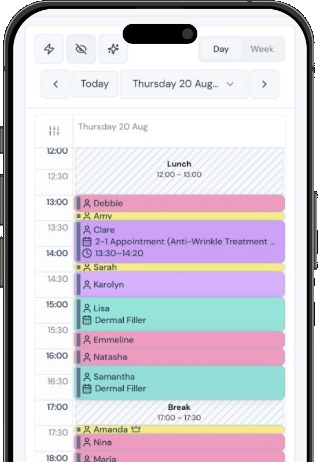
It also takes the rebooking off your plate. Instead of someone in the team trying to remember who's due a top-up, the next visit is planned in from the start and the reminder happens on its own. That's the difference between hoping a patient comes back and knowing roughly when they will, and it's the part that quietly fills the diary in the months a one-off model leaves empty.
That's the mechanism. A membership turns the wedding-season walk-in into an autumn regular, and the autumn course into a year-round commitment: the same patients, the same treatments, simply billed and booked as the ongoing care they already are. The peaks don't disappear; they stop being followed by a cliff.
The clinics that ride the sawtooth spend every August hoping the phone rings. The clinics that flatten it spent the previous June making sure it didn't have to.
Where to start
You don't need to overhaul anything this week. Start by pulling your own twelve-month revenue line and finding your teeth: your peak month, your lull, your rebound. Then look at one number: how many of last summer's new patients you still see today. That single figure tells you whether your busiest season is building your business or just borrowing from your quietest one.
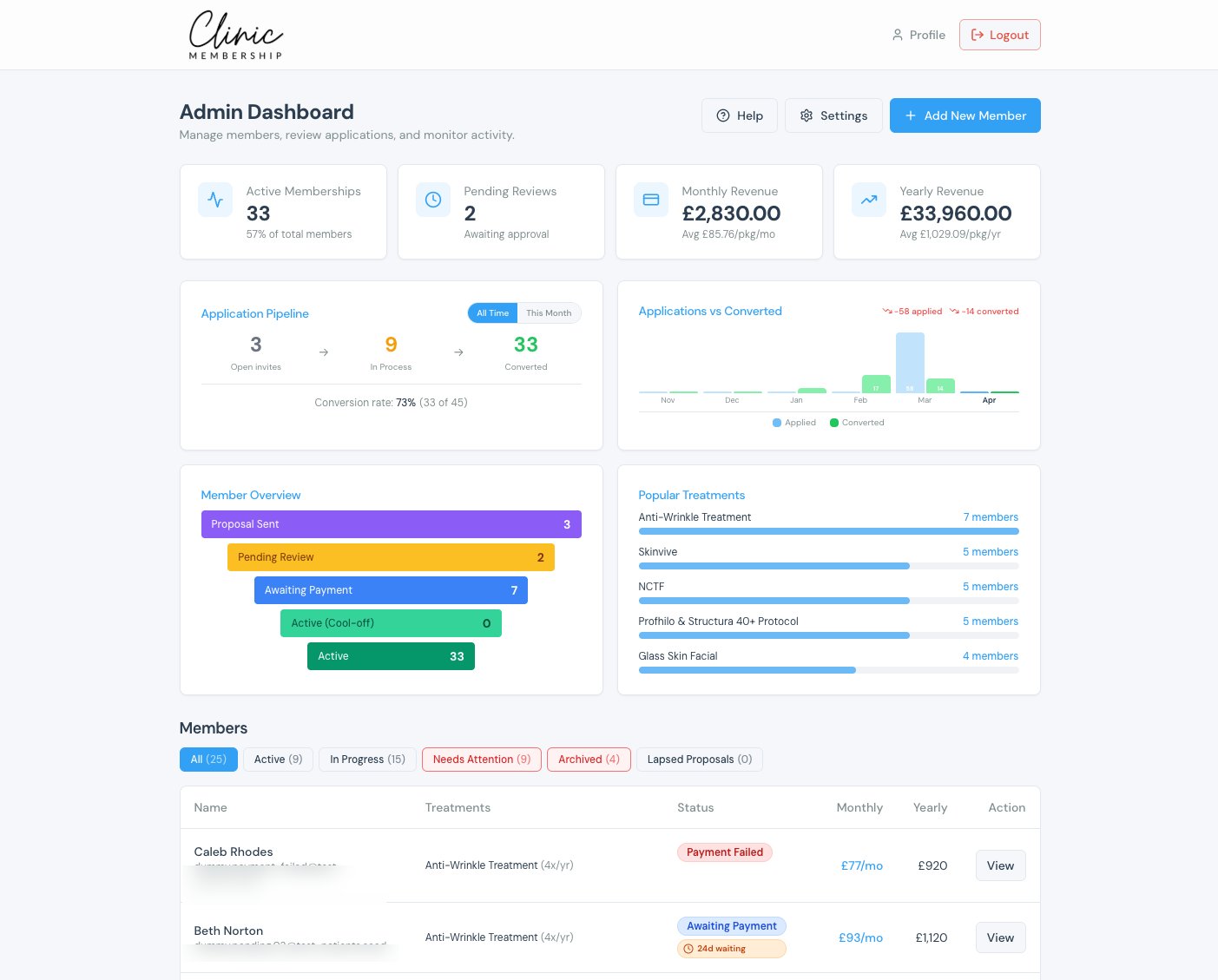
Clinic Membership is built for exactly this, turning one-off visits into recurring plans, with bespoke packages, spread payments and the booking cadence handled for you, so your revenue stops swinging with the calendar. See how it compares at clinicmembership.co.uk/pricing.
Related reading: How UK clinics turn quiet months into recurring revenue · Managing quiet periods in your clinic · Wedding season is your retention test · Building recurring revenue in an aesthetics clinic