
Something quiet has happened to the UK aesthetics market, and most of the coverage has missed it. While the headlines chase the newest injectable and the next regulatory update, the way clinics actually make their money has been changing underneath everyone. The short version: UK clinics moving to memberships are now the majority, not the early adopters.
Around 60% of UK aesthetics clinics are now building membership or subscription models of some kind, with roughly 40% introducing structured treatment plans alongside them (Consulting Room / Anti-Wrinkle Clinic / PolicyBee, 2026). That is not a fringe experiment. That is six in ten clinics deciding that pay-per-treatment, on its own, is no longer enough to run a stable business on.
If you are in the other four, this piece is for you, not as a warning, but as a map of where the market has already gone.
What the data actually says
For years, the aesthetics business model was simple and brutal: fill the diary, deliver the treatment, hope they come back. Revenue was a series of one-offs, and every quiet week landed straight on the bottom line.
The shift to memberships is the market's answer to that volatility. When a majority of clinics start designing recurring plans, it tells you two things. First, patients are willing to commit to ongoing care when it is packaged well, memberships give them a way to plan and budget their treatments rather than deciding, appointment by appointment, whether to rebook. Second, owners have worked out that predictable monthly revenue is worth more to them than a slightly higher one-off ticket. A clinic that knows what next month looks like can hire, invest and plan; a clinic living treatment-to-treatment cannot.
That is why the structured-treatment-plan number matters just as much as the membership one. Roughly four in ten clinics are now formalising courses and maintenance into planned, priced programmes. The fastest-growing treatments (skin-health courses, regenerative protocols, maintenance regimes) are naturally recurring anyway. Clinics are simply catching their billing up to how the treatments already work.
You can see the same story in the revenue data: the move away from pure pay-per-treatment toward hybrid and membership-led income is one of the clearest trends in UK clinic revenue this year.
What the other four in ten are about to learn
Here is the uncomfortable part for the clinics still running on one-off appointments.
When retention is left to chance, it leaks. Across the sector, around 35% of first-time patients never return (American Med Spa Association, 2026). In a pay-per-treatment model, every one of those lost patients is pure loss. You paid to acquire them, treated them once, and never saw the return. There is no system quietly bringing them back, because there is no system at all.
A membership changes the default. Instead of hoping a patient rebooks, you have given them a reason to stay and a structure that assumes they will. The clinics moving to memberships are not doing it because subscriptions are fashionable. They are doing it because retention is now being designed into the business model rather than left to luck, and once a competitor down the road offers a well-run plan, "we'll call you when you're due" stops being competitive.
The economics reinforce it. A 5% lift in retention can raise profit by anywhere from 25% to 95% (Bain & Company / Harvard Business Review). You do not need to win more patients to grow; you need to keep the ones you already have coming back. Memberships are the most direct tool the market has found for doing exactly that.
Moving to memberships properly is the real gap
Here is where the six-in-ten figure hides a catch. Building "a membership" and building a membership programme that actually holds patients are not the same thing, and the gap between them is where most of the value sits.
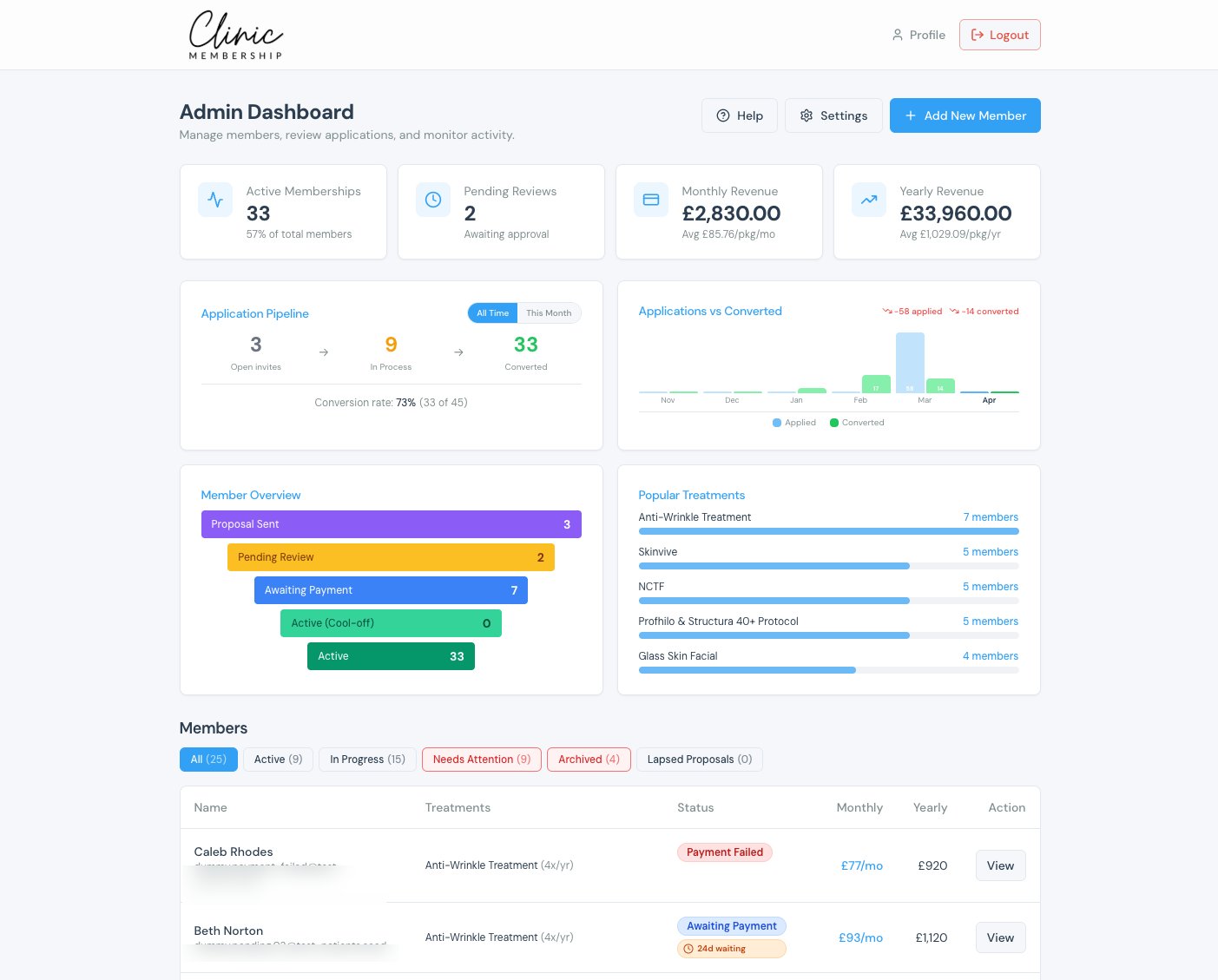
Plenty of clinic tools now let you take a recurring payment. Far fewer give you a genuine membership engine: bespoke plans with the durations and perks your treatments actually need, live tracking of what each member has used and what they have left, automatic renewals and failed-payment recovery so revenue does not quietly slip away, and reporting that tells you your recurring revenue, active members and churn at a glance. A payment button is not a membership programme. It is a way to charge for one you still have to run by hand. (If you are weighing up options, it is worth learning how to spot a real clinic membership engine before you commit.)
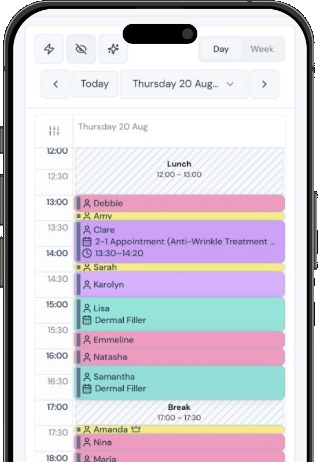
This is also where the "one system to run it" point lands. The clinics getting the most out of the shift are not bolting a membership tracker onto three other apps. They are running memberships, patients, calendar, payments and reports from one connected place: the case for clinic management software that treats memberships as a core capability, not an afterthought. When your diary, your patient records and your recurring billing all talk to each other, a membership stops being extra admin and starts being the thing that quietly runs your retention for you.
For a clinic building this from scratch, the sequence matters. The owners doing it well tend to build the recurring revenue first and let the rest of the offer grow around it, so that even the quiet months carry a predictable base.
The takeaway
The market has already voted. With six in ten UK clinics now building memberships and four in ten formalising treatment plans, the question has quietly flipped. It is no longer "should we add a membership?" It is "how much longer can we compete without one?"
The good news for the clinics still on the fence: you are not late, and you are not behind on some unrepeatable trend. You are looking at a proven, majority move with clear data behind it, and the tools to make it work are far simpler than they were even a year ago. Retention designed in, not left to chance. That is the whole shift, in five words.
If you are ready to see what a purpose-built membership programme looks like for your clinic, take a look at Clinic Membership and explore the plans and pricing . There is a free tier to start with, no card required.