
There's a quiet shift happening in male aesthetics, and most UK clinics are still treating it as a novelty rather than a growth strategy. Men are booking treatments in numbers that would have looked improbable five years ago, and the treatments they choose happen to be the ones best suited to a membership model. If your clinic isn't thinking about how to turn male patients into long-term members, you're leaving one of the market's fastest-growing demographics to find its way out of the funnel after a single visit.
Here's the data, and here's the model that fits it.
Male aesthetics: the numbers are no longer a footnote
The headline stat is hard to ignore: male aesthetics enquiries are up 30% year on year (Adoreal, 2026). That's not a blip. It sits on top of a longer trend. The British College of Aesthetic Medicine reports that the number of men undergoing aesthetic treatments has risen 70% since 2021, and BAAPS recorded a 26% rise in male face and neck lift procedures between 2023 and 2024.
Men now make up around 21% of all aesthetic patients, with an average age of 58 (Adoreal, 2026), while the fastest-growing demand sits in the 25–40 bracket. In other words, this isn't one cohort. It's a widening base, from younger preventative patients through to older men investing in maintenance.
All of this is happening inside a UK aesthetics market worth roughly £3.6 billion and growing 8–9% a year (UCL, 2026). Male patients aren't a side market. They're a meaningful share of where that growth is coming from.
Why male treatments are quietly membership-shaped
Here's the part most clinics miss. The treatments men typically book aren't one-off, dramatic interventions. They cluster around skin health, hair restoration, preventative anti-wrinkle work and ongoing maintenance: treatments that only work when they're repeated on a schedule.
Men tend to start small and practical: a course of skin boosters, anti-wrinkle treatment, or a hair-health protocol. Once they see results, they keep going. That behaviour (regular, planned, repeat visits) is the exact shape of a membership. A patient who needs to come back every few weeks for a course, then every few months for maintenance, isn't an ad-hoc booking. They're a member who hasn't been offered a plan yet.
This matters because of a simple retention truth: subscribed patients visit 2.9 times a year on average (ProspyrMed, 2026), and it costs between 5 and 25 times more to acquire a new patient than to keep one you already have (Bain & Company). When a male patient finishes a course and disappears, you pay the acquisition cost all over again to win the next one. When you put that same patient on a structured plan, the next twelve months are already booked. For the wider case on turning that pattern into predictable income, see how recurring revenue works in aesthetics clinics.
The mistake clinics make with new male patients
Most clinics treat a man's first appointment as a transaction. He books, he's treated, he pays, he leaves, and whether he comes back is left to chance and a reminder email.
The problem is that male patients are often newer to aesthetics. They don't have years of habit telling them when to rebook. If the clinic doesn't give them a clear path (a plan that spaces their treatments correctly, tracks their course, and prompts the next visit), they default to doing nothing. The treatment worked, but the relationship didn't form.
A membership closes that gap. Instead of hoping he remembers, you give him a plan that does the remembering: the right interval between sessions, the maintenance cadence built in, and the billing handled in the background so the only decision he makes is to keep going.
What a male-ready membership actually looks like
You don't need a separate product for male patients. You need a membership engine flexible enough to build plans around the treatments they actually book.
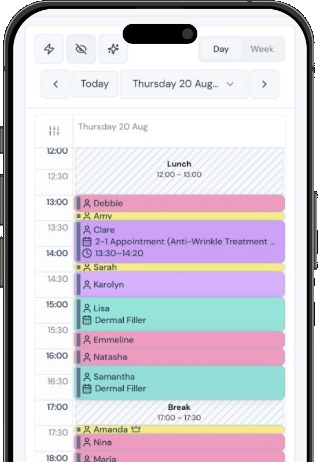
In practice that means a few things. Bespoke plans you can name and shape around a real protocol (a skin-health course, a maintenance schedule, a preventative package) rather than a generic loyalty discount. Treatment-spacing rules that stop sessions being booked too close together, which matters enormously for course-based work. A patient portal that shows a member exactly when his last visit was and nudges the next one. And recurring billing that runs quietly in the background, so a missed card doesn't quietly become a lost member.
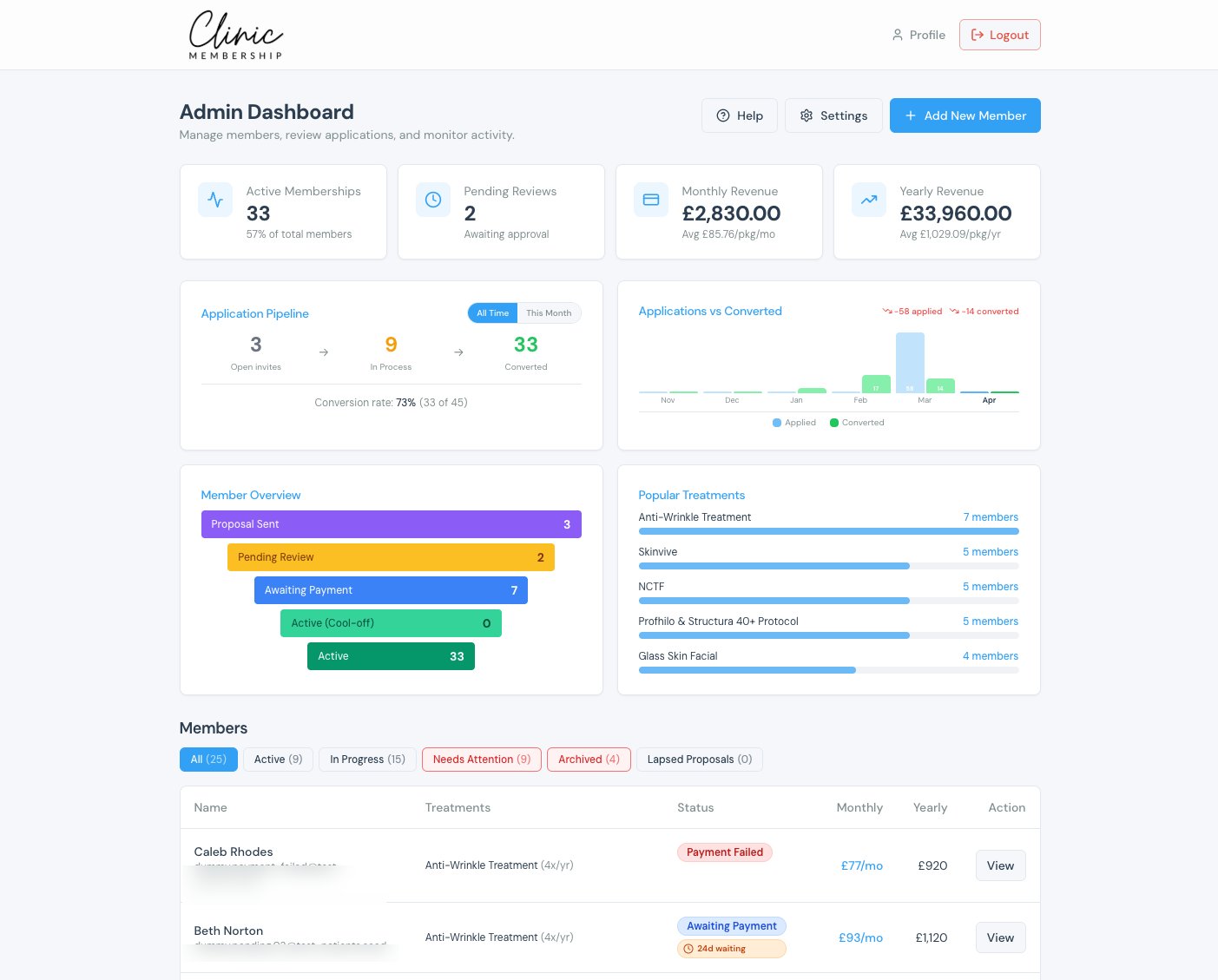
It also means you can see what's working. When male-oriented plans live inside a proper membership engine, you can watch which protocols members stay on, spot the ones that quietly lapse, and adjust the offer before a patient drifts away. You're not guessing whether the male side of the clinic is growing. You can see the recurring revenue building month on month, and you keep that visibility without ripping out the booking system you already rely on. That only works when memberships sit inside one connected clinic management system, not a spreadsheet on the side.
That's the difference between a membership that's bolted on as a perk and one that's built to run a clinic. The first offers a discount. The second turns a growing demographic into predictable, recurring revenue: the same shift more UK clinics are making as they go membership-led.
The window is open because nobody's claimed it
The most striking thing about male aesthetics right now isn't the growth. It's that almost no one in the clinic-software conversation is connecting that growth to the membership model. The trend is widely reported. The link to recurring revenue is not. That makes it a genuine opportunity for clinic owners who move first: build the plans, position them for male patients, and own the relationship before the rest of the market notices the same numbers.
A man booking his first course of skin boosters this month is, on the current data, statistically likely to want more. The only question is whether he books them with you, on a plan, or somewhere else, one appointment at a time.
If you're weighing up tools, it's worth comparing how UK membership software stacks up before you commit. For how regenerative treatments (skin boosters, polynucleotides and longevity protocols) are reshaping membership design, read our piece on the regenerative aesthetics membership trend in the UK. For plan design aimed at men, read male-friendly membership plans for UK clinics. If your clinic is ready to turn its fastest-growing patients into members rather than one-off bookings, that's exactly what Clinic Membership is built for. See what's included on each plan.