
Nobody sat down one morning and decided to run their clinic on five different apps.
It happened gradually. A booking system, because the phone was ringing during treatments. A card reader, because patients wanted to tap. A spreadsheet for plans and packages, because nothing else quite handled them. A separate tool for reminders. A folder of consent forms that lives somewhere between a laptop and a filing cabinet.
Each one solved a real problem on the day you bought it. Together they've become the problem.
That's the shift happening across UK clinic software in 2026: owners moving away from a patchwork of point tools and towards a single system that holds the whole clinic. Here's what's driving it, what fragmentation actually costs, and what genuinely changes when everything lives in one place.
The patchwork was never a decision
It's worth being fair to yourself about how this happened, because the story clinic owners tell themselves is usually "I should have planned this better."
You didn't have the option. Aesthetics is a young sector and the software followed the sector. You bought a booking tool when booking was the bottleneck. You added payments when payments were. Every purchase was rational; the sum of them is a stack nobody would design on purpose.
The tell is simple. Ask yourself how many logins it takes to answer one question: is this patient due back, and did they pay for the last course? If the answer is more than one, you're running a patchwork.
What fragmentation actually costs you
The obvious cost is the monthly fees, several separate tools, each with its own bill and its own renewal date. But that's the small one, and it's not the one that hurts.
The real cost is that no single place holds the whole patient. Their diary sits in one system. Their payment history sits in another. Their treatment course lives in a spreadsheet that only you fully understand. Nothing is missing, exactly. It's just that no one thing can see all of it at once.
That has three practical consequences.
Things fall between the tools. Not through carelessness. Because the handover between two systems is always a person, and people are busy. The patient who was meant to rebook at twelve weeks doesn't get chased, because the system that knows about week twelve isn't the system that sends messages.
You do the integrating. When your tools don't talk, you're the integration layer, retyping, reconciling, cross-checking on a Sunday evening. We've written before about the real cost of stitching clinic tools together; the punchline is that the price is almost never the licence fee. It's your Sunday.
You can't see your own business. This is the one that quietly costs the most. If bookings, payments and plans live in three places, then rebooking rates, recurring revenue and churn live nowhere. You can feel that a month was busy. You can't tell whether it was profitable, or whether the patients who came were new or returning.
Why 2026 is the year clinics are consolidating
Two things have changed at once, and together they've moved consolidation from "nice idea" to "this year's job".
First, what clinics sell has changed. Memberships and structured treatment plans have gone from a fringe idea to something a large share of UK clinics are actively building. You can see it in the trade press, in what clinics are asking for, and in the features software vendors have rushed to bolt on over the last two years. That's a genuine shift in what the software has to do. A booking tool plus a card reader handles one-off appointments perfectly well. It does not handle a patient who pays monthly, has treatments in credit, and is due for a review in March.
Second, where growth comes from has changed. Zenoti's 2026 Check-In data on UK aesthetic clinic profitability found revenue growing around 7%, while like-for-like revenue fell about 2%, with visits from existing patients up roughly 4%. In plain terms: the top line is holding up, but it's being held up by patients coming back rather than by each visit being worth more. We looked at what that means for clinic growth in our piece on UK clinic growth and retention.
Put those together and the conclusion is uncomfortable but useful. The growth that's available right now lives in your existing patient base, and your existing patient base is precisely the thing a fragmented stack can't show you.
It also explains why the maths favours consolidation. Bain & Company's long-standing finding is that keeping a patient costs somewhere between five and twenty-five times less than winning a new one. If that's true, then software that makes retention visible is worth more than another tool that helps you acquire.
What actually changes with one system
Consolidation isn't about tidiness. It's about what becomes possible when the pieces can see each other.
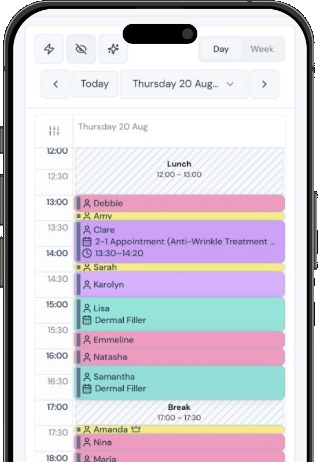
One patient, one screen. Contact details, appointment history, plan status, invoices and what they had last time, together, not scattered. That's the consolidated patient record most clinics assume they already have and, on inspection, don't. (To be clear: this is a clinic management record, not full medical-records software.)
Work that happens without you. When the calendar knows what the payment system knows, reminders, waitlists and failed-payment recovery can run on their own. The right question on a demo isn't "can it do this?", nearly everything can. It's "what does this do while I'm with a patient?"
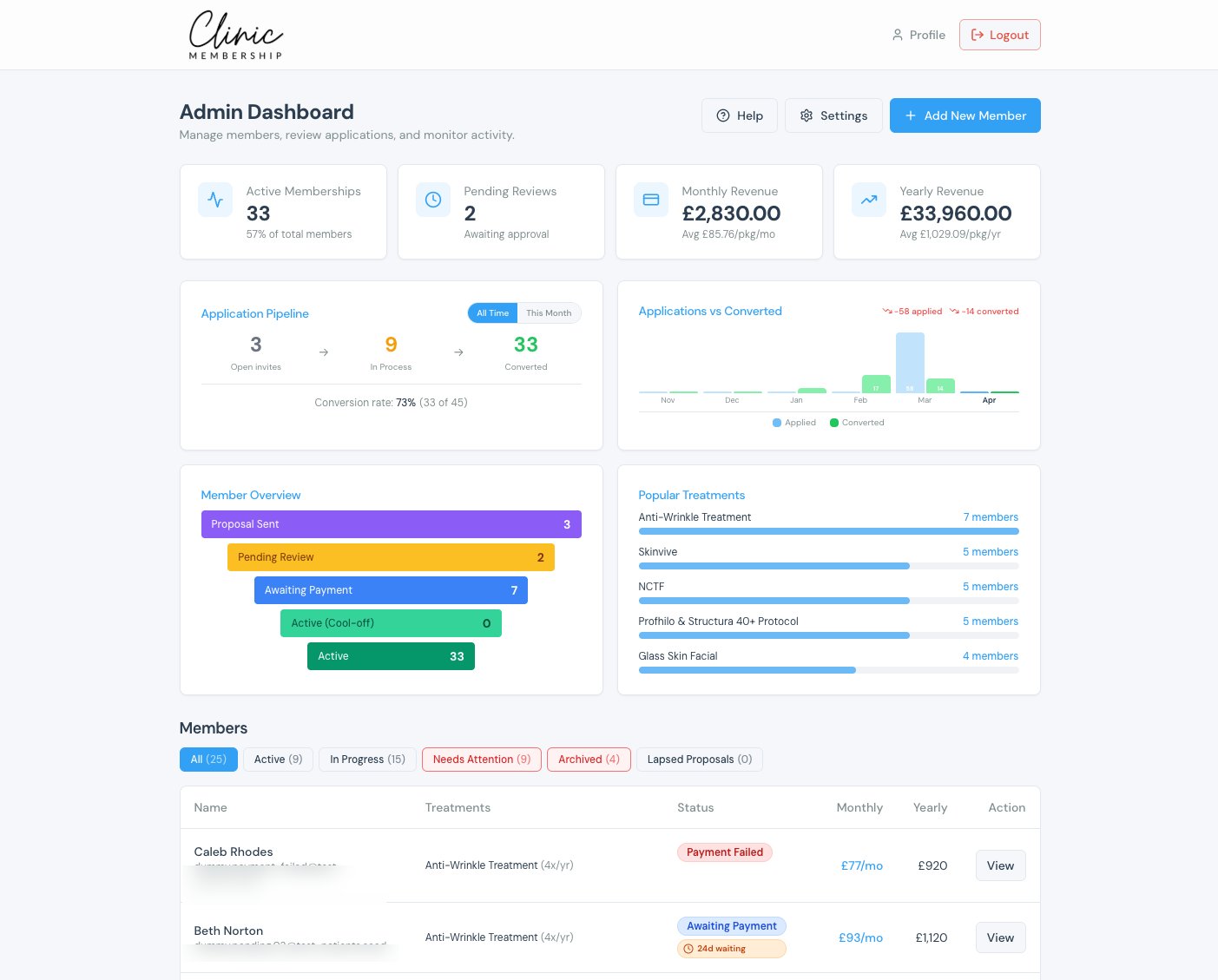
Numbers you can act on. Recurring revenue, active members, churn and conversion in one dashboard, updated in real time. Not a report you assemble; a screen you open on a Monday.
One bill instead of several. Worth saying plainly: consolidating usually costs less than the stack it replaces, and it removes the per-tool creep that arrives every time you add a practitioner. Our own pricing is flat and clinic-level for exactly that reason.
Where memberships fit in
One last thing, because it's the piece most stacks handle worst.
For a growing number of clinics, memberships aren't a side feature any more. They're a core part of what the software has to run. And most systems still treat them as an add-on: a way to record that a plan exists, without billing it, chasing it when a payment fails, or reporting on it.
That's why we built Clinic Membership as a full clinic management suite with memberships at the centre rather than bolted on the side: patients, calendar, features, payments and reports in one place, with recurring card payments and live membership reporting built in. If you're weighing up options, we've set out what to look for in membership software for UK clinics.
Stop the patchwork. Start the system.